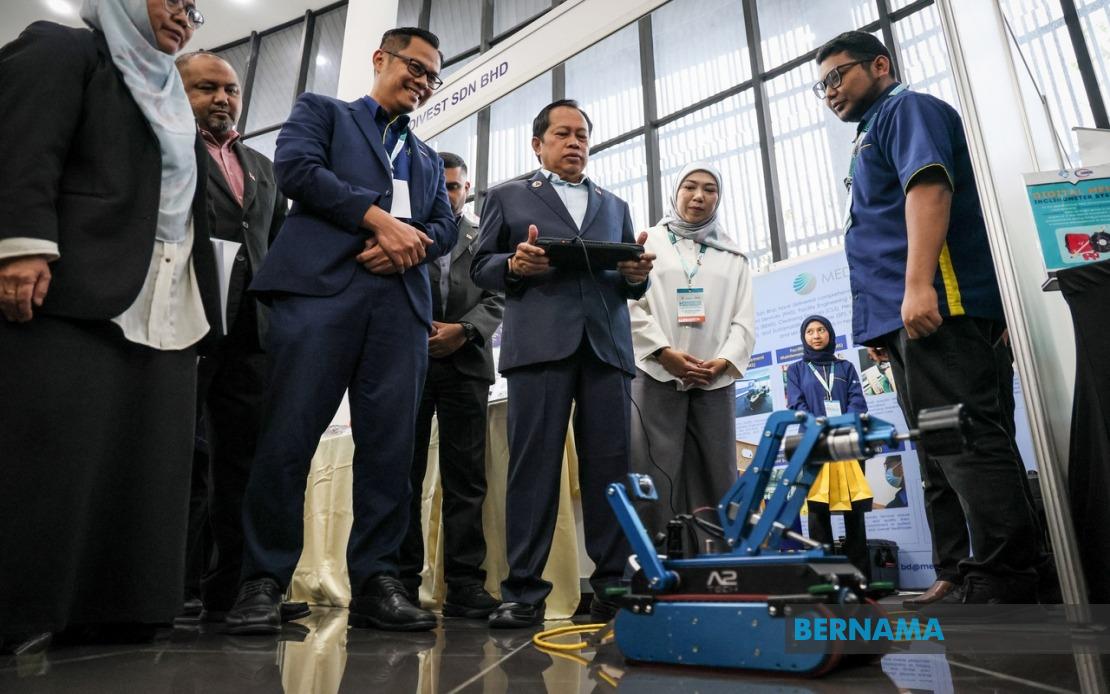
Malaysia's Works Ministry is making a concerted push to attract contractors into the facility management and maintenance subsector, identifying a significant gap between market opportunity and industry participation. Deputy Works Minister Datuk Seri Dr Ahmad Maslan revealed that the sector recorded RM39.59 billion worth of projects between 2023 and 2025, yet remains severely underpenetrated with only 468 FM contractors currently registered under the F01 and F02 specialisations. The disparity between project volume and contractor availability presents what ministry officials describe as a considerable untapped opportunity for construction companies willing to diversify their operations and develop new revenue streams.
Data compiled by the Construction Industry Development Board (CIDB) documented 1,541 facility management and maintenance projects during the three-year window, underscoring the scale of work available across Malaysia's building and infrastructure portfolio. The statistics suggest that the typical FM contractor registered with the ministry is managing multiple projects simultaneously, and the current supply of specialist service providers cannot adequately meet demand across the country's diverse asset base. This supply-demand imbalance creates attractive conditions for new entrants, particularly those seeking alternative business models beyond traditional construction work.
Ahmad's appeal reflects a strategic shift in how Malaysia's construction sector approaches infrastructure stewardship. Historically, government and private investment has concentrated on the construction phase of major projects, with maintenance treated as a secondary concern once infrastructure reached completion. This approach, while delivering new assets, has contributed to premature deterioration of roads, buildings, bridges and other public facilities across the country. By encouraging contractors to specialise in ongoing asset management, the ministry signals recognition that infrastructure longevity and cost-effectiveness depend equally on quality maintenance throughout an asset's operational lifespan.
The economic logic behind this repositioning is compelling for Malaysian contractors facing intense competition in conventional construction markets. Facility management and maintenance typically generate steady, predictable revenue streams rather than the feast-or-famine cycle characterising project-based construction work. A contractor holding multiple FM contracts across residential, commercial or public sector facilities enjoys revenue diversification and reduced exposure to cyclical market downturns. For small and medium enterprises in particular, transitioning into FM services offers pathways to sustainable growth without requiring the substantial capital investments demanded by large-scale construction operations.
To support this sector transformation, the Construction Industry Development Board launched CIS 33:2026 – a comprehensive Facility Management Good Practice Guide during the Contractors Convention 2026: NexGen Builders held in Butterworth. This new standard provides a systematic, sustainable and standardised framework governing FM practices across Malaysia's construction industry. The guidance document establishes common protocols for asset owners, facilities managers, contractors and other stakeholders, creating clearer expectations and more professional service delivery standards. By establishing industry norms, CIS 33:2026 reduces information asymmetries that might otherwise deter contractors from entering an unfamiliar market segment.
The timing of this initiative reflects broader infrastructure challenges facing Malaysia. The country's aging public facilities, from schools and hospitals to municipal buildings and transport infrastructure, require substantial investment in preventative and corrective maintenance. Simultaneously, economic pressures on government budgets have created demand for more efficient asset management approaches. Contractors offering integrated, professional FM services can help public agencies extend asset lifespans while controlling maintenance costs through systematic planning and quality service delivery. This creates a virtuous cycle where institutional clients benefit from improved infrastructure management while FM contractors access substantial, reliable contract opportunities.
Regional context amplifies Malaysia's opportunity in this sector. Rapid urbanisation across Southeast Asia has generated comparable infrastructure management challenges in neighbouring countries, and Malaysian contractors developing FM expertise domestically could eventually export these capabilities regionally. Singapore's construction sector, considerably smaller than Malaysia's, has already professionalised FM practices extensively, creating a successful model that Malaysian companies might adapt to local conditions. As regional economies mature and infrastructure portfolios expand, demand for sophisticated FM services should grow across the Association of Southeast Asian Nations.
The barriers to entry, while real, appear surmountable for established contractors. Transitioning requires staff retraining, process development and client relationship building rather than major capital expenditure. Contractors must shift from project management mindsets emphasising completion timelines to service management approaches prioritising long-term client satisfaction and asset performance. This cultural and operational change, while significant, lies well within the capabilities of experienced Malaysian construction firms already managing complex operations across multiple sites. The newly published CIS 33:2026 standard provides a roadmap for this transition, reducing the uncertainty that might otherwise inhibit market entry.
Government policy support extends beyond sectoral guidance. The Works Ministry's public endorsement of FM opportunities, amplified through high-profile events like the Contractors Convention, signals stable institutional demand and reduces perceived business risk. Public agencies looking to professionalise their infrastructure management functions will increasingly specify compliance with CIS 33:2026 standards, creating formal requirements that favour registered FM contractors. This regulatory alignment, while gradual, creates market conditions favouring sector growth and contractor investment in FM capabilities.
The financial scale of the opportunity cannot be overstated. At RM39.59 billion across three years, Malaysia's FM sector generates approximately RM13.2 billion annually. For context, this rivals or exceeds many segments of conventional construction activity, yet operates with a fraction of the contractor workforce. The sector's growth trajectory appears positive, as infrastructure stocks continue expanding and ageing simultaneously. A contractor securing even modest market share in this segment could substantially improve profitability and revenue stability compared to traditional project-based construction work.
However, successful participation requires more than government encouragement. Contractors must invest in developing FM-specific expertise, staff certifications and quality management systems that distinguish professional service providers from basic maintenance operators. Industry associations and professional bodies will likely play crucial roles establishing credibility standards and facilitating knowledge transfer. The upcoming years will reveal whether this policy initiative successfully attracts sufficient contractor participation to address Malaysia's infrastructure management needs while creating viable business opportunities throughout the construction sector.

