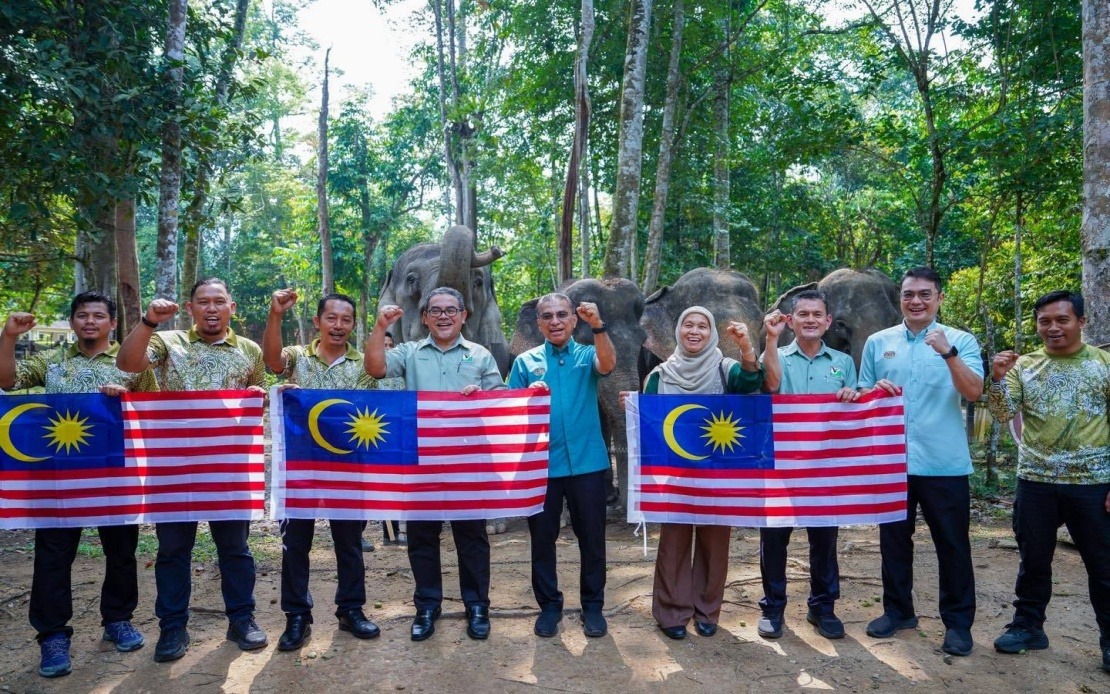
The Ministry of Natural Resources and Environmental Sustainability (NRES) is charting a course toward innovative remedies for the growing challenge of human-wildlife conflict that has become increasingly difficult for authorities to manage across the country. Speaking in Tangkak, Deputy Minister Syed Ibrahim Syed Noh outlined the government's commitment to addressing a phenomenon that has emerged as one of the most pressing environmental and public safety issues facing the nation, requiring coordinated action between multiple stakeholders and fresh thinking beyond traditional wildlife management.
The escalation of these confrontations—particularly involving wild elephants straying into human settlements and agricultural zones—reflects deeper tensions between conservation imperatives and development pressures. The Department of Wildlife and National Parks (Perhilitan), operating under NRES, has recognised that conventional approaches to animal relocation and conflict mitigation are proving insufficient as habitats shrink and human communities expand into previously undisturbed territories. The ministry's intention to develop methodologically novel solutions signals acknowledgement that the current framework requires substantial recalibration.
Syed Ibrahim emphasised that the government's approach prioritises the welfare of wild animals alongside human safety, rejecting the notion of passive neglect. Rather than simply allowing conflicts to proliferate unchecked, Perhilitan maintains continuous surveillance of incidents and engages in careful monitoring of relocated fauna. The distinction the deputy minister drew—between active intervention and deliberate restraint—reveals the philosophical tension underlying wildlife management policy. Officials are conscious that aggressive capture and confinement of wild animals, particularly elephants with distinct behavioural needs, often proves counterproductive and inhumane.
The case of Sulong Chalil exemplifies both the complexities and the human dimensions of this challenge. The adult male elephant, relocated to a forested area in Gerik, Perak, undertook an extraordinary journey covering hundreds of kilometres on an injured leg to return to its natural habitat in Gua Musang, Kelantan. This remarkable feat of animal determination, which captured public attention through viral footage, underscores a critical reality: elephants possess powerful homing instincts and psychological attachments to their original territories that cannot be overridden through forced displacement. The incident challenges assumptions about the feasibility of long-distance relocation as a durable solution to human-wildlife conflict.
Understanding elephant behaviour has become central to formulating effective policy responses. Unlike many animal species that can adapt to new environments, elephants exhibit complex social structures, territorial memory, and psychological resilience that makes them singularly difficult subjects for artificial habitat transition. They cannot simply be relocated and expected to remain peacefully in their new surroundings if their original territories exert emotional and behavioural pull. This reality compels policymakers to reconsider whether relocation addresses the root causes of conflict or merely postpones confrontation.
The underlying driver of escalating human-wildlife conflict lies in habitat fragmentation and land conversion across Malaysia. As forested areas yield to agricultural expansion, residential development, and infrastructure projects, wild animals encounter shrinking territories where their traditional ranges once existed. Elephants in particular require vast stretches of undisturbed forest to sustain viable populations, and when such space disappears, conflict becomes almost inevitable rather than incidental. The deputy minister acknowledged this reality, noting that wildlife must now contend with transformations wrought by settlement expansion and economic development.
The government's stated intent to formulate new methodologies signals potential engagement with innovative approaches that might include habitat restoration, wildlife corridors that permit safe animal passage between protected zones, community-based conflict mitigation programmes, and compensation schemes for farmers experiencing crop damage. Such strategies represent evolution beyond reactive management toward proactive environmental planning. Early indicators suggest the ministry recognises that sustainable solutions demand integration of wildlife conservation with agricultural and development planning rather than treating these sectors as inevitably antagonistic.
The involvement of multiple parties in studying solutions reflects understanding that human-wildlife conflict transcends narrow departmental mandates. Agricultural communities bearing economic losses from wildlife damage, local authorities managing development pressures, conservation organisations advocating for species protection, and indigenous communities with traditional land relationships all possess stakes in policy outcomes. Genuine innovation likely requires bringing these diverse perspectives into systematic dialogue rather than relying solely on top-down technical interventions.
Syed Ibrahim's commendation of Perhilitan's efforts regarding Sulong Chalil suggests awareness that frontline wildlife officers operate under significant constraints and deserve recognition for navigating impossible choices with limited resources. The deputy minister's statement that continuous monitoring occurred while permitting the elephant to roam indicates acceptance of an adaptive management philosophy that tolerates some degree of uncertainty and accepts animal agency rather than demanding total human control over wildlife movement.
For Malaysian readers, the significance extends beyond immediate conservation concerns. The government's investment in addressing human-wildlife conflict carries implications for food security, rural livelihoods, and the sustainability of development patterns. As Southeast Asia's forests continue experiencing pressure from economic expansion, Malaysia's experience with elephant conflicts and policy responses offers potential lessons for neighbouring countries facing similar pressures on wildlife populations and habitats.
The timeline for formulating and implementing new methodologies remains unclear, and Deputy Minister Syed Ibrahim provided no specific targets or resource allocations. The ministry's characterisation of this work as ongoing study rather than imminent policy announcement suggests that comprehensive solutions may require years of development and testing. Stakeholders awaiting concrete policy shifts should anticipate a gradual transition toward more integrated approaches rather than sudden programmatic changes.

