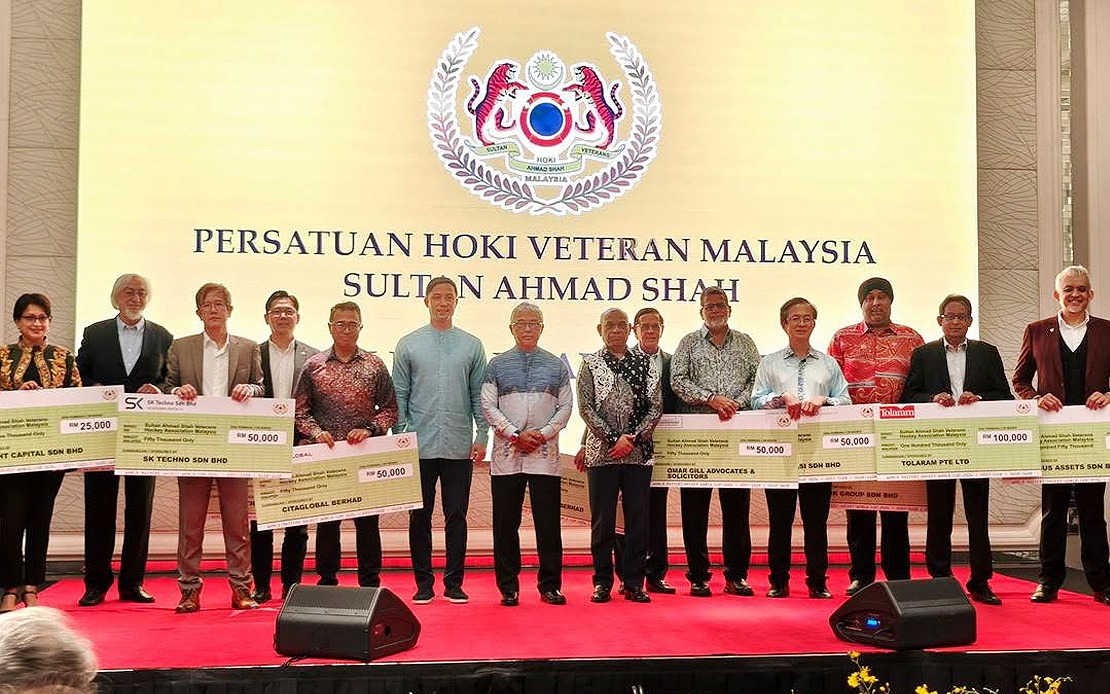
Malaysia's veteran hockey contingent has received a substantial financial injection of RM1.36 million to prepare for next year's Masters Hockey World Cup, one of the sport's most prestigious tournaments for retired players. The Sultan Ahmad Shah Malaysian Veteran Hockey Association announced the funding package during a Royal High Tea Ceremony in Kuala Lumpur, with the championship itself scheduled to unfold across the Netherlands and Belgium from July 22 to August 16, 2026. The financial commitment underscores the nation's determination to maintain competitive representation in global veteran sports competitions and reflects broader efforts to keep retired athletes engaged and supported.
Tengku Arif Temenggong Tengku Fahad Mu'adzam Shah, president of the association, explained that the funds emanate from contributions gathered from multiple sponsors and supporters across the country. This diversified funding approach signals growing recognition within Malaysian sports circles of the value that veteran athletes bring to national pride and international standing. The breadth of contributions also suggests that this initiative enjoys backing beyond traditional sports ministry channels, incorporating corporate partners and private donors committed to sustaining competitive participation in global tournaments. The comprehensive financial package addresses several critical operational needs that often challenge veteran sports teams competing internationally.
The RM1.36 million allocation will cover the full spectrum of tournament-related expenses, from accommodation and international travel to logistical coordination and on-ground preparation activities. Importantly, the funding framework also includes provisions for direct financial assistance to individual veteran players who might otherwise struggle with personal participation costs. This welfare component reflects a recognition that many retired international-level athletes, despite their past accomplishments, may face genuine financial constraints when considering expensive overseas competition. By subsidising participation for deserving former national team players, the association aims to resurrect their involvement in international competition and ensure that Malaysia fields its strongest possible roster.
The tournament structure itself spans five distinct age categories, each with designated venues across multiple Dutch and Belgian cities. Competitors aged 40 will contest matches at HC Schiedam in the city of Schiedam, while the 45-year-old and 50-year-old divisions will base themselves at HC Rotterdam, with both age groups' preliminary phases running until August 1. The two oldest categories—60-year-olds and 65-year-olds—compete at separate venues: HC Olympia in Antwerp, Belgium, and BHV Push in Breda, the Netherlands, respectively, with their competition window extending through August 16. This geographic distribution across both nations reflects the international collaborative framework governing the Masters Hockey World Cup.
The Masters Hockey World Cup holds distinctive significance within the veteran sports ecosystem as the preeminent biennial championship bringing together elite retired players from across the globe. The competition traces its institutional lineage to 2012, when two major organisations—the International Masters Hockey Association (IMHA) and the World Grand Masters Association (WGMA)—merged to establish World Masters Hockey as a unified governing body. The 2026 staging represents the eighth iteration since that organisational consolidation, demonstrating sustained growth and institutionalisation of veteran hockey as a serious competitive arena. The tournament's evolution reflects broader global trends normalising continued athletic participation beyond traditional professional careers and recognising the value of maintaining competitive standards among retired athletes.
Malaysia's participation across multiple age brackets signals a deep talent pool of experienced hockey players who remain competitive at the international level. The five-category format allows the nation to showcase veterans spanning different eras of Malaysian hockey development, from players who competed in earlier decades to those more recently retired from professional or semi-professional circuits. This multi-generational representation creates opportunities for knowledge transfer and mentorship within the Malaysian veteran hockey community while simultaneously strengthening national competitiveness across all age divisions. The breadth of participation demonstrates that Malaysian hockey has maintained a continuous pipeline of quality players across successive generations.
The Royal High Tea Ceremony, graced by Sultan of Pahang Al-Sultan Abdullah Ri'ayatuddin Al-Mustafa Billah Shah, who serves as official Patron of the Sultan Ahmad Shah Malaysian Veteran Hockey Association, elevated the tournament announcement to a matter of state significance. This high-level endorsement signals governmental and royal support for veteran sports initiatives and reflects the importance attached to maintaining Malaysia's international sporting profile across all demographic categories. Such ceremonial backing often translates to enhanced credibility when appealing for additional sponsorships and demonstrates that veteran sports receive recognition equivalent to mainstream competitive athletics. The Sultan's involvement underscores that participation in international competitions represents a matter of national honour regardless of competitors' ages.
From a regional perspective, Malaysia's proactive funding approach positions the nation competitively against other Southeast Asian veteran hockey programs. The allocation suggests confidence that Malaysian veteran players possess the capability to contend against teams from established hockey nations in Europe and globally. International veteran competitions frequently serve as platforms for showcasing national sporting infrastructure and historical depth—testament to a country's hockey heritage and ongoing commitment to athletic excellence. By investing substantially in this biennial championship, Malaysia signals that its hockey tradition remains vibrant and that the nation views veteran competitors as legitimate representatives of national sporting prestige.
The funding mechanism also raises interesting questions about sustainable support models for veteran athletes across Southeast Asia. Many regional nations lack comparable systematic funding frameworks for retired sports competitors, leaving talented former professionals unable to pursue international opportunities. Malaysia's approach could potentially establish a template for how developing sporting nations can maintain competitive presence in specialised global tournaments without proportionally massive budget allocations. The diversified funding model—drawing from multiple corporate and private sources rather than centralised government expenditure—offers flexibility and resilience that might appeal to other countries seeking to balance fiscal responsibility with sporting ambition. This pragmatic approach demonstrates that effective international competitiveness doesn't necessarily require enormous financial outlays if organised strategically.

