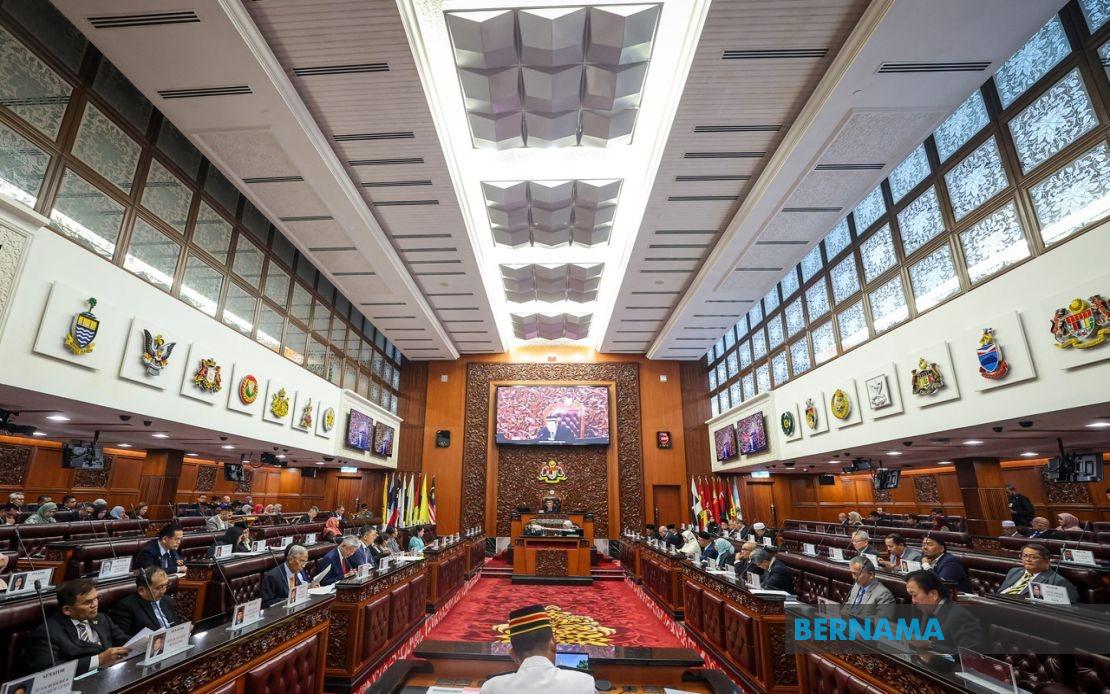
The Dewan Negara brought its Second Meeting of the Fifth Term to a conclusion on August 4 after a productive 10-day sitting that yielded the passage of 12 distinct legislative measures. The extended parliamentary session, which commenced on July 20, demonstrated the upper house's capacity to handle a substantial legislative workload while simultaneously addressing broader policy concerns through dedicated debate on matters of national importance.
During the sitting, the upper chamber processed legislation spanning multiple critical sectors of Malaysian governance and commerce. Among the most significant bills approved was the Cybercrimes Bill 2026, which represents a comprehensive overhaul of Malaysia's digital security framework. The Road Transport (Amendment) Bill 2026 addresses evolving transportation regulations, while the Witness Protection (Amendment) Bill 2026 strengthens mechanisms for securing testimony in sensitive legal proceedings. Additional criminal justice measures included the Sexual Offences against Children (Amendment) Bill 2026, which enhances protections for vulnerable populations.
The legislative agenda also reflected Malaysia's commitment to promoting fair market competition and protecting business interests. The Competition (Amendment) Bill 2026 and the Competition Commission (Amendment) Bill 2026 were approved to modernise the regulatory framework governing commercial practices. These measures take on particular significance given growing concerns about market concentration and anti-competitive behaviour in Malaysia's increasingly digital economy. The passage of these bills signals the government's intent to strengthen institutional capacity for maintaining market integrity.
Additional legislation approved included the National Trust Fund Bill 2026, demonstrating parliamentary attention to financial stewardship and social welfare mechanisms. The Padi and Rice Control (Amendment) Bill 2026 reflected ongoing government interest in stabilising agricultural markets and ensuring food security—matters of enduring importance in Malaysia's rural regions. The Social Work Profession Bill 2026 represents a significant milestone for the social services sector, establishing professional standards and regulatory frameworks for practitioners in a field crucial to community welfare and social cohesion.
Communications infrastructure and information governance also received legislative attention through the passage of the Communications and Multimedia (Amendment) Bill 2026 and the Malaysian Communications and Multimedia Commission (Amendment) Bill 2026. These measures address the evolving regulatory requirements of Malaysia's digital communications landscape. Complementing this framework, the Statistics Bill 2026 was approved to govern data collection and statistical practices, establishing standards essential for informed policymaking across government and the private sector.
Beyond the legislative agenda, the Dewan Negara utilised an adjournment speech debate format—the first such session convened since 2022 under Standing Order 16—to examine two substantive policy matters. Senators engaged in detailed discussion regarding the accelerating threat posed by cross-border e-commerce platforms such as Pinduoduo and Temu to Malaysia's micro, small and medium enterprise ecosystem. This debate reflected growing awareness among legislators that the rapid internationalisation of digital retail channels poses genuine structural challenges to traditional retail and small business sectors, necessitating policy responses.
The second motion addressed electoral accessibility for Malaysia's auxiliary police members, specifically examining mechanisms for early voting or postal voting options. This debate highlighted parliament's engagement with questions of democratic participation and the practical challenges facing uniformed personnel in exercising voting rights. The discussion underscores parliament's recognition that enabling broader participation mechanisms strengthens democratic legitimacy and fairness.
Dewan Negara Speaker Datuk Awang Bemee Awang Ali Basah, in his closing remarks, emphasised the value generated through the legislative process by bringing together senators from diverse professional backgrounds and geographic constituencies. The speaker highlighted how this heterogeneous composition strengthens the upper house's function as an institutional check on executive power and enhances the quality of law-making through the introduction of varied perspectives and specialised expertise. This observation carries particular relevance in Malaysia's parliamentary system, where the Dewan Negara's deliberative role complements the directly elected Dewan Rakyat.
In closing the session, Speaker Awang Bemee invoked the approaching National Day and Malaysia Day celebrations as an opportunity for national reflection. He called upon all parliamentary members and political actors to reaffirm their commitment to defending national sovereignty and upholding constitutional supremacy. The speaker emphasised the continued centrality of the Federal Constitution as the governing framework for Malaysia's diverse polity and stressed the indispensable role of the rule of law in preserving national unity and institutional legitimacy.
The completion of this parliamentary session demonstrates the functioning of Malaysia's legislative machinery and the capacity of the Dewan Negara to process complex legislation while addressing contemporary policy challenges. The breadth of legislation—spanning cybersecurity, commerce, agriculture, social services, and communications—reflects the wide-ranging responsibilities of modern government. For Malaysian businesses and citizens, these legislative outcomes will shape regulatory frameworks across multiple sectors in the coming months and years, making the Dewan Negara's deliberative work of immediate practical consequence.

