Malaysian universities are gaining firmer control over generative artificial intelligence deployment through a comprehensive framework introduced by the Ministry of Higher Education in 2024, with Deputy Minister Adam Adli Abdul Halim confirming that the guidelines have substantially improved institutional capacity to manage the technology responsibly while safeguarding academic standards. Speaking at the Sijil Pelajaran Malaysia Excellence Awards ceremony held at the Melaka International Trade Centre on July 22, Adam Adli outlined how the ministry's foundational guidelines have enabled individual universities to develop customised policies reflecting their unique institutional contexts, creating a tiered governance structure that combines national principles with campus-level implementation.
The emergence of generative AI in higher education has presented Malaysian institutions with both opportunities and significant risks, as students increasingly have access to tools capable of producing essays, research papers, and creative assignments with minimal human effort. Rather than imposing blanket prohibitions, the ministry's approach acknowledges that AI represents a transformative technology that cannot be simply banned but must instead be integrated thoughtfully into academic life. This pragmatic positioning reflects international best practice and recognises that Malaysian graduates will inevitably encounter AI-driven tools throughout their professional careers, making technological literacy increasingly essential.
Universities have responded by establishing detailed standard operating procedures and response mechanisms specifically designed to address AI-related academic misconduct. These frameworks go beyond traditional plagiarism detection, which struggles to identify AI-generated content, and instead create transparent expectations about when and how students may leverage these tools. The declaration requirement—where students must explicitly acknowledge their use of generative AI in academic work—serves a critical pedagogical function by forcing conscious reflection on the boundary between legitimate tool use and academic dishonesty. This transparency-first approach treats AI as analogous to other research aids rather than something inherently suspect.
The declaration mechanism addresses a fundamental challenge in the AI era: distinguishing between a student who uses AI appropriately as a drafting or brainstorming aid and one who outsources their entire intellectual contribution to an algorithm. By requiring students to document their engagement with generative AI, universities create an audit trail that allows educators to assess the proportionality of tool use relative to the assignment's educational objectives. A student declaring that they used ChatGPT to generate initial outlines for a research paper presents a different picture than one submitting AI-generated content wholesale without acknowledgment. This system respects student autonomy while maintaining institutional responsibility for academic quality.
However, Adam Adli's remarks underscored that declaration alone is insufficient; students must continue observing fundamental academic practices including proper research methodology, appropriate citations, and critical engagement with sources. The risk is that generative AI might enable a new form of academic shirking whereby students combine AI-generated passages with superficial citations, creating the appearance of legitimate scholarship without genuine intellectual work. Malaysian universities are therefore emphasising that AI serves as a supporting tool within a broader educational ecosystem that remains anchored in disciplined thinking and authentic learning.
The consequences for violating these standards can be severe, with academic integrity breaches potentially resulting in disciplinary action including revocation of qualifications. This escalation reflects institutional recognition that academic credentials represent meaningful achievements, and that institutions must protect their reputational value by maintaining standards. For Malaysian employers and professional bodies that recognise degrees from local universities, maintaining the credibility of these credentials is essential; a degree from an institution perceived as lax on integrity becomes less valuable in the job market. The threat of serious consequences serves both as deterrent and as a signal that universities take their quality-assurance responsibilities seriously.
The broader context of these guidelines reflects Malaysia's positioning as a regional education hub competing for international student enrolment and recognition. Southeast Asian universities have increasingly emphasised academic excellence and research output, and allowing widespread AI-enabled academic dishonesty would undermine these competitive advantages. By establishing clear governance frameworks, Malaysian institutions demonstrate to international partners, accreditation bodies, and employers that they remain committed to educational rigour despite technological disruption. This standards-setting also facilitates cross-institutional consistency, reducing the risk that students could game different policies by choosing institutions with laxer regulations.
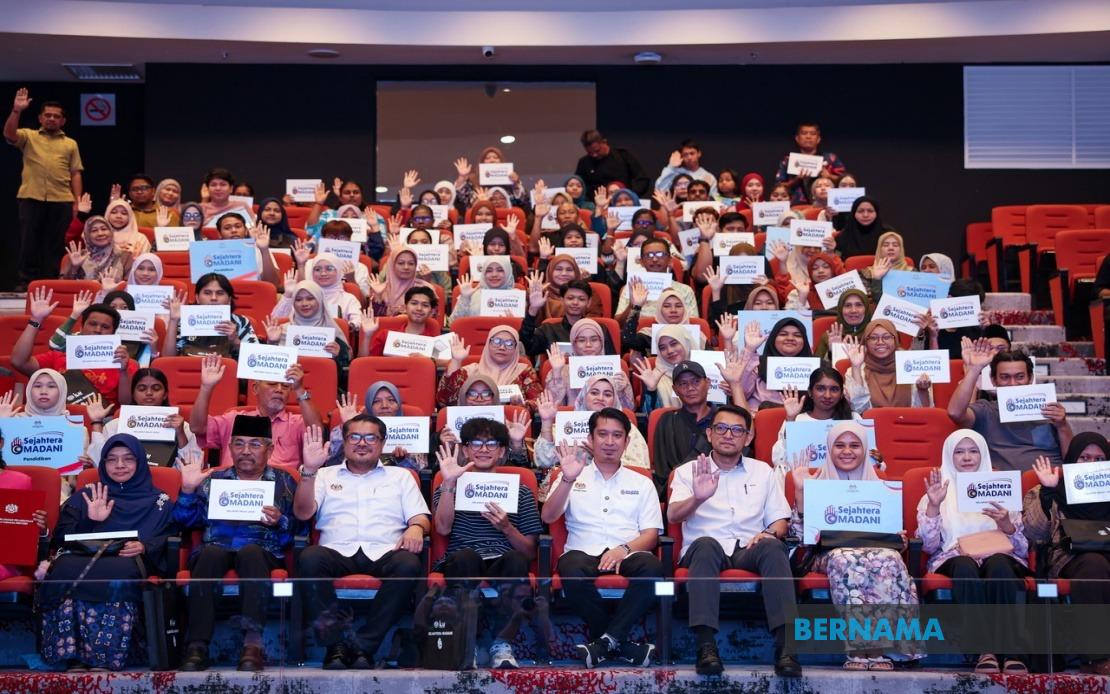
Beyond academic integrity concerns, the ministry's framework acknowledges that generative AI poses questions about educational access and equity. The statement that technology cannot replace academic discipline implicitly recognises that students from better-resourced backgrounds may have greater access to premium AI tools and broader exposure to technology in general. Malaysian universities, particularly those serving first-generation students and households with limited digital resources, must ensure that AI integration does not exacerbate existing educational inequalities. The provision of tablets to outstanding university students through the Sejahtera MADANI initiative represents a complementary effort to ensure technological access does not become a barrier to academic success.
The guidelines also reflect growing recognition that many legitimate pedagogical uses of generative AI exist alongside clear misuses. Students might appropriately use AI to explore alternative explanations of complex concepts, test their understanding through dialogue with an AI system, or even generate multiple essay outlines to refine their thinking. Prohibiting these activities entirely would handicap students relative to professionals in fields increasingly using AI productivity tools. The ministry's framework therefore supports a more nuanced position: AI use is acceptable when it enhances learning and skill development, but unacceptable when it substitutes for genuine intellectual engagement.
Implementation challenges remain evident from Adam Adli's acknowledgment that cases of misuse continue to occur despite the guidelines. Enforcing these policies requires faculty development so that educators can recognise AI-generated content and understand how to have meaningful conversations with students about their learning processes. Many Malaysian academics, particularly in non-technical disciplines, may lack experience assessing AI-related integrity violations and interpreting borderline cases. Universities will need to invest in professional development and possibly procure AI detection tools, though the cat-and-mouse dynamic between detection and evasion techniques suggests technological solutions alone will prove insufficient.
Looking forward, Malaysia's experience with these guidelines may inform broader Southeast Asian approaches to AI governance in higher education. As Thailand, Vietnam, Indonesia, and other regional neighbours grapple with similar challenges, Malaysia's practical framework offers an instructive middle path between restriction and laissez-faire approaches. The emphasis on declaration, clear expectations, and severe consequences for misuse provides a model that respects student agency while maintaining institutional integrity standards. Whether this framework ultimately succeeds will depend on consistent implementation across diverse institutions and ongoing refinement as both the technology and pedagogical understanding continue evolving.

