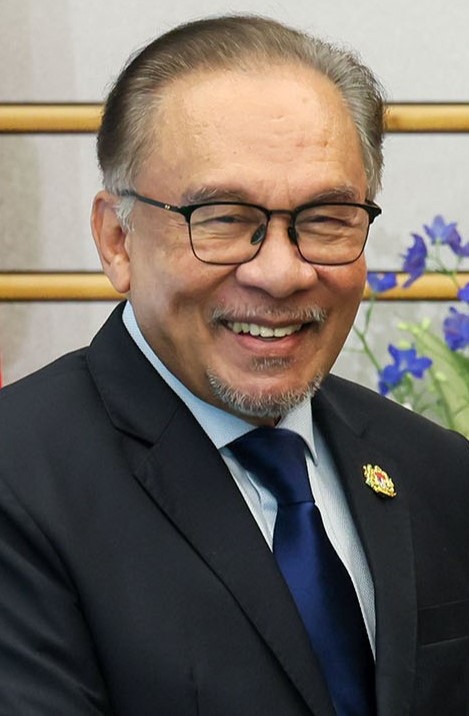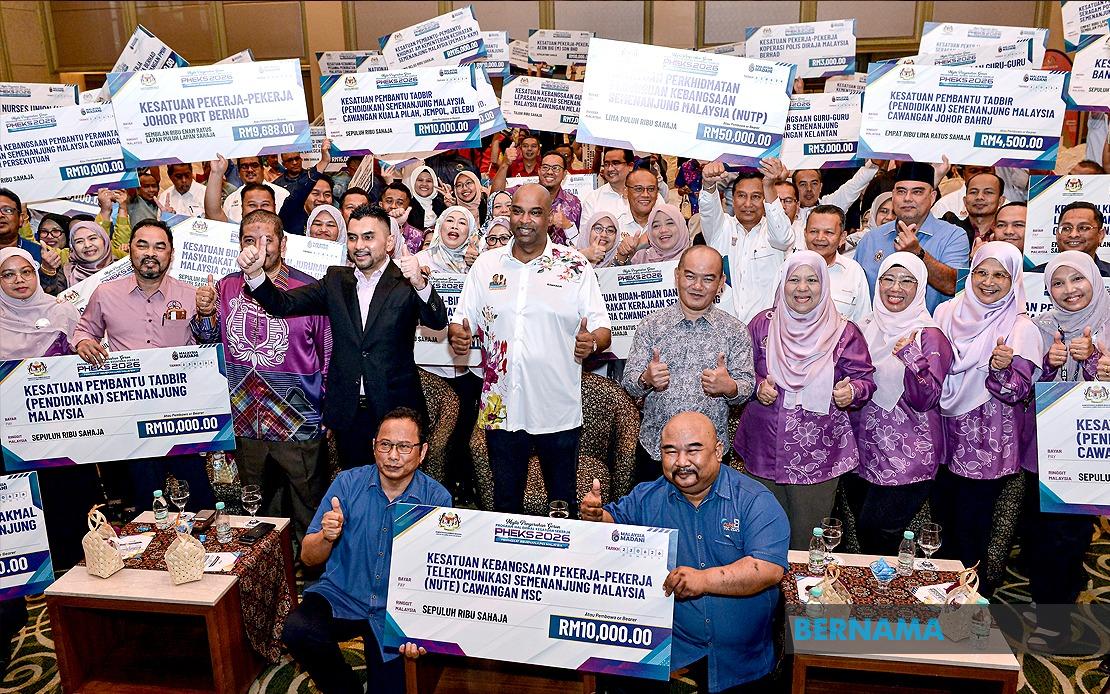
The proportion of Malaysia's working population holding union membership remains comparatively modest at around six per cent, according to Human Resources Minister Datuk Seri R. Ramanan, who underscored the significant untapped potential within the labour movement during a major grant allocation ceremony in Kuala Lumpur this week.
The minister attributed the persistent gap partly to insufficient understanding among workers regarding what labour organisations actually deliver and why membership matters beyond crisis management. This perception gap represents one of the central challenges facing Malaysia's industrial relations framework, as many employees view unions primarily as last-resort problem-solvers rather than proactive institutions designed to shape workplace conditions and advance long-term interests. Ramanan expressed optimism that participation rates could climb substantially with improved communication and education efforts reaching employees across sectors and skill levels.
He articulated a forward-looking vision of union involvement, stressing that effective labour organisations function as preventive mechanisms that establish standards and safeguards before disputes emerge. This reframing of the union role—from reactive grievance handlers to strategic architects of harmonious workplaces—reflects evolving thinking within Malaysia's Ministry of Human Resources regarding how organised labour can contribute to economic stability. The minister noted that unions represent government partners in constructing fair economic systems, rather than adversarial forces, placing organised labour squarely within a tripartite framework encompassing employers, workers, and state regulators.
To strengthen this movement, the government has committed RM6.1 million toward the Peninsular Malaysia Workers' Union Affairs Programme for 2026. The funding allocation demonstrates official recognition that union capacity and reach require sustained investment. Of this sum, RM3.5 million targets core institutional functions including training provision, educational initiatives, research activities, technological digitalisation, and governance enhancement programmes that equip union leadership with contemporary management practices. The remaining RM2.6 million addresses community-facing activities through outreach and corporate social responsibility undertakings designed to raise union visibility and demonstrate tangible value to potential members.
Ramanan indicated that future government allocations would depend significantly on how effectively existing funds are deployed and the governance standards demonstrated by recipient organisations. This performance-based approach ensures accountability while signalling that the ministry views union strengthening as an investment requiring measurable returns, not simply a subsidy to labour groups. The condition implicitly encourages unions to demonstrate improved service delivery, financial transparency, and strategic impact—metrics increasingly important to policymakers evaluating labour policy effectiveness.
The broader context reveals a Malaysian labour market where technological disruption and economic transformation have accelerated substantially. The minister highlighted artificial intelligence and automation as workplace realities requiring urgent workforce adaptation, positioning upskilling and continuous learning as non-negotiable priorities for maintaining employment security. This emphasis on technological readiness reflects genuine anxieties within Malaysia's business and policy communities regarding whether workers possess sufficient capabilities to navigate digital-era labour demands.
Addressing this challenge directly, the Ministry of Human Resources has allocated RM110 million toward skills enhancement programmes, including the Jelajah AI MyMahir initiative administered through TalenCorp. These investments signal government commitment to equipping Malaysian workers with competencies in artificial intelligence and other emerging technologies essential for competitive advantage within increasingly automated industries. For unions, this technological transition presents both an organisational imperative and a potential recruitment opportunity, as workers facing automation anxieties may increasingly value collective representation addressing retraining access and displacement protections.
Current union statistics reveal an organised labour landscape spanning 786 registered organisations representing approximately 1.06 million members as of December 31, 2025. While these figures demonstrate substantial institutional presence, the six per cent participation rate indicates that roughly 16 million Malaysian workers remain outside formal union structures—a vast unorganised constituency that includes gig economy participants, informal sector labourers, and traditional employees who simply have not joined. This fragmentation creates vulnerabilities for workers lacking collective representation while limiting union influence over broader labour market standards and practices.
The low unionisation rate carries implications extending beyond labour relations statistics into economic and social policy domains. Weakly organised workforces typically experience greater wage stagnation, longer working hours, and reduced workplace safety protections compared to unionised sectors. For Malaysia, where aspirations toward developed-economy status depend partly on workforce productivity and quality-of-life improvements, the current organisation level suggests substantial scope for enhancing worker welfare while simultaneously strengthening labour's voice in economic governance structures. The minister's acknowledgment that workers must understand union benefits before joining identifies education as the critical intervention pathway.
The government's framing of unions as collaborative economic partners rather than labour movement opponents represents a significant rhetorical shift with practical implications. By positioning organised labour within tripartite structures emphasising consensus-building and mutual benefit, policymakers attempt to reduce adversarial tensions that sometimes discourage unionist sentiment among workers fearing retaliation or workplace disruption. This approach may prove particularly important in multinational manufacturing sectors and services industries where worker reluctance to unionise stems partly from concerns about employer hostility or competitive disadvantages relative to non-union jurisdictions elsewhere in Southeast Asia.
Looking ahead, union growth will likely depend on multiple reinforcing factors working simultaneously—enhanced member communications explaining tangible benefits, technological platforms making union participation convenient, successful advocacy campaigns addressing workplace issues affecting specific industries or occupational groups, and sustained government support through funding and policy frameworks. The RM6.1 million commitment represents an important symbolic statement regarding official commitment to organised labour, yet the scale of this investment relative to the broader challenge of engaging 16 million unrepresented workers suggests that durable unionisation growth will require sustained multiyear initiatives rather than one-off funding allocations.
For Malaysian employers and policymakers contemplating labour market trends, the current six per cent unionisation rate reflects both weakness and latent strength. Weak union organisation correlates with lower immediate labour costs and greater management flexibility, yet creates risks of worker dissatisfaction, retention challenges, and potential industrial instability if grievances accumulate unaddressed. Stronger organised labour typically correlates with more stable, predictable industrial relations frameworks—an arrangement increasingly valued by foreign investors and multinational enterprises prioritising operational certainty over wage minimisation. Thus, moderate unionisation growth might ultimately serve business interests as effectively as official labour policy rhetoric suggests.