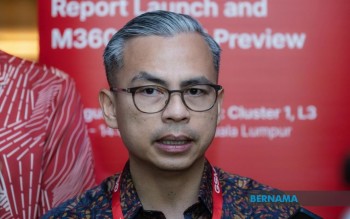
Malaysia has secured a significant platform to reinforce its standing as Southeast Asia's technology hub following Kuala Lumpur's selection as host city for M360 ASEAN 2026, scheduled for September 9 and 10. Communications Minister Datuk Seri Fahmi Fadzil characterized the honour as a pivotal moment for Malaysia's digital economy, noting that this represents the first time the prestigious GSM Association-organized event will be held both within Malaysia and across the entire ASEAN region. The gathering is expected to catalyze discussions and collaborations that will reshape how the region approaches telecommunications infrastructure, artificial intelligence deployment, and cross-border connectivity initiatives.
The event's significance extends beyond Malaysia's borders, as it will convene an expansive coalition of stakeholders whose collective decisions will influence the trajectory of Southeast Asia's digital transformation. Industry executives, technology vendors, academic researchers, investment professionals, and government officials from across ASEAN member states are anticipated to participate, creating an unparalleled networking opportunity. This convergence of diverse expertise and institutional perspectives offers Malaysia a chance to demonstrate thought leadership on regional digital policy while positioning local companies and entrepreneurs to engage with international investors seeking footholds in Asia's fastest-growing markets.
According to projections highlighted by GSMA in conjunction with the conference announcement, the economic stakes of this gathering are substantial. Mobile technologies and related services are forecast to contribute US$1.4 trillion to the Asia-Pacific economy by 2030, representing a 40 per cent increase from the current US$1 trillion baseline. This trajectory underscores why Southeast Asian governments and businesses view digital infrastructure investment as economically imperative, and why hosting an event of this calibre offers Malaysia a distinct advantage in shaping regional priorities and standards.
Fahmi emphasized that M360 ASEAN 2026 will furnish a dedicated platform for ASEAN member states to collectively chart the digital sector's future direction. Discussions will encompass strategies for expanding broadband coverage across the region, developing frameworks for responsible AI adoption, and identifying mechanisms through which governments can leverage connectivity to drive economic inclusion. For Malaysia specifically, the conference provides visibility for the country's own digital ambitions and regulatory approaches, potentially influencing how neighbouring countries structure their telecommunications and technology policies.
The conference agenda reflects four converging strategic priorities that GSMA has identified as defining Asia-Pacific's next phase of digital growth. Rapid artificial intelligence proliferation stands foremost, as economies across the region grapple with integrating AI into existing sectors whilst managing workforce disruption and talent gaps. This challenge is particularly acute in Southeast Asia, where digital skills remain unevenly distributed and rural populations often lack foundational connectivity necessary for AI-driven services.
Decline in digital trust represents a second critical concern demanding regional attention. Cybersecurity breaches, data privacy violations, and the proliferation of misinformation have eroded public confidence in digital platforms and government digital services throughout Southeast Asia. Malaysia, like its neighbours, faces mounting pressure to implement robust data protection frameworks and enhance transparency in how personal information is collected, processed, and secured. M360 ASEAN 2026 will likely showcase regulatory approaches and technological solutions that regional governments are deploying to restore digital trust.
Building more resilient digital infrastructure constitutes the third priority. Southeast Asia's telecommunications networks remain vulnerable to natural disasters, physical infrastructure damage, and cyber-attacks. The region's experience with monsoon flooding, typhoons, and seismic activity demands that digital infrastructure be designed with redundancy and rapid recovery capabilities. Discussions at the conference will likely explore investment mechanisms, public-private partnership models, and technical standards that can enhance infrastructure resilience across geographically dispersed ASEAN member states.
The fourth priority addresses growing interest in digital sovereignty—the capacity for nations to control data flows, establish local technology ecosystems, and reduce dependence on foreign technology providers. This concern reflects broader geopolitical dynamics, as countries increasingly view digital autonomy as integral to national security. For Malaysia and other ASEAN nations, balancing the benefits of foreign investment and technology transfer with the imperative to develop indigenous technological capabilities presents an ongoing policy challenge. Regional dialogue on digital sovereignty at M360 ASEAN 2026 will likely illuminate how countries are attempting to navigate this tension.
For Malaysia specifically, hosting this inaugural event offers tangible advantages in telecommunications sector development. The conference will attract investment capital seeking regional expansion opportunities, enable Malaysian technology companies to establish connections with larger regional and international players, and position Kuala Lumpur as a preferred destination for future tech-focused conferences and events. The visibility generated by successfully hosting M360 ASEAN 2026 may influence where technology firms choose to establish regional headquarters or research and development facilities.
The conference also provides Malaysia an opportunity to showcase its own regulatory framework and digital infrastructure investments. The government's ongoing efforts in spectrum allocation, 5G deployment, and the development of Malaysia Digital Economy Blueprint can be contextualized within regional benchmarking discussions. By presenting Malaysia's approaches alongside those of other ASEAN members, policymakers can assess comparative progress and identify areas for accelerated development or policy adjustment.
Fahmi's emphasis on AI and responsible innovation reflects Malaysia's recognition that artificial intelligence represents both tremendous opportunity and significant risk for developing economies. Southeast Asian nations must ensure that AI deployment creates broad-based economic benefits rather than concentrating wealth and opportunity among a small technological elite. M360 ASEAN 2026 discussions on responsible AI development may inform Malaysia's own national AI strategy and inform how the country approaches AI governance through existing and future regulatory bodies.
The selection of Kuala Lumpur as host city also carries symbolic significance for Malaysia's regional positioning. It signals international confidence in Malaysia's capability to host high-level international events and reflects recognition of the country's evolving role in digital economy leadership. As technology becomes increasingly central to Southeast Asian development, conferences like M360 ASEAN 2026 serve as venues where national competitiveness is both demonstrated and negotiated. Malaysia's successful hosting of this event will enhance its credibility as a reliable venue for future technology-focused regional gatherings.
Looking ahead, the outcomes and discussions from M360 ASEAN 2026 will likely influence how Malaysia approaches several outstanding digital policy questions: the pace and scope of 5G rollout to underserved areas, the framework for regulating artificial intelligence applications in financial services and healthcare, the balance between surveillance capabilities for public safety and privacy protections for citizens, and the mechanisms through which Malaysia can develop indigenous technology capabilities. By engaging substantively with regional peers on these challenges, Malaysia positions itself to benefit from shared learning and collective problem-solving approaches that transcend national borders.

