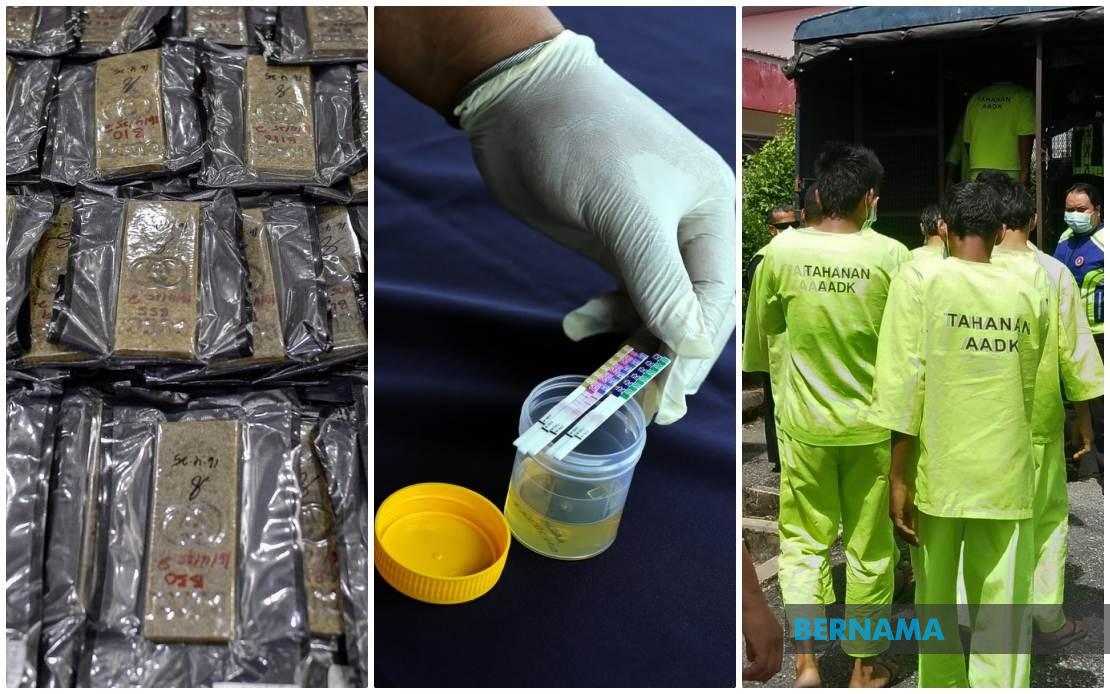
Malaysia's battle against synthetic drug abuse is intensifying, with Home Minister Datuk Seri Saifuddin Nasution Ismail revealing that the nation documented 141,817 cases of synthetic drug abuse in the previous year alone. During parliamentary question time, the minister painted a stark portrait of an escalating crisis that shows no signs of stabilisation, pointing to the upward trajectory of reported incidents from 145,526 cases in 2023 to 192,852 cases last year across all drug categories combined.
The dominance of synthetic substances in Malaysia's drug landscape represents a fundamental shift in consumption patterns. Amphetamine-Type Stimulants, commonly known as ATS, now account for approximately 70 per cent of all drug abuse incidents nationwide, eclipsing traditional narcotics that once defined the country's drug enforcement challenges. This transition underscores how Malaysian drug users have increasingly migrated toward synthetic alternatives, driven by factors ranging from accessibility through online platforms to perceived potency and novel legal grey areas.
Geographic analysis reveals deeply troubling regional concentrations. Data collated from the Ministry of Health, National Anti-Drugs Agency, Narcotic Addiction Rehabilitation Centres, and the Royal Malaysia Police demonstrates that east coast states have emerged as particularly vulnerable hotspots for synthetic drug proliferation. The minister specifically identified Pendang, Kuala Krai, Bachok, Besut, and Mersing as districts registering the highest abuse rates, suggesting that remote and semi-urban areas may lack adequate enforcement resources or prevention infrastructure compared to major metropolitan centres. This regional skew indicates that the problem extends beyond urban drug markets into smaller towns and rural communities.
Methamphetamine, locally known as syabu, has become the primary substance fuelling synthetic drug abuse across these affected regions. The shift away from cannabis, heroin, ketum, and morphine demonstrates how market dynamics and drug trafficking networks have reoriented supply chains toward synthetic stimulants. These substances offer traffickers advantages including easier international smuggling, higher profit margins, and strong consumer demand among younger demographics seeking stimulant effects.
An emerging and particularly alarming threat is fentanyl, an opioid derivative that authorities have only recently begun detecting in significant quantities within Malaysia. Although fentanyl abuse has not yet reached the severity levels observed with ATS drugs, its presence in adulterated vapes and other products signals an ominous trajectory. The substance's extraordinary potency—reportedly dozens of times stronger than morphine—creates acute overdose risks and demands proportionate regulatory responses. The government has consequently amended both the Drug Dependants Act and the Dangerous Drugs Act 1952 to include fentanyl as a scheduled substance, enabling law enforcement to pursue trafficking and consumption cases.
Demographically, the abuse problem concentrates heavily among younger Malaysians. Data indicates that nearly 75 per cent of all drug abuse cases this year have involved individuals aged 15 to 39 years old. This youth concentration raises concerns about long-term societal impacts, including diminished educational attainment, impaired workforce development, and intergenerational effects on affected families. The prevalence among adolescents and young adults suggests that prevention and early intervention strategies must target schools, universities, and workplace environments more effectively.
The prison system reflects the profound institutional consequences of drug abuse nationwide. An extraordinary proportion of Malaysia's incarcerated population carries drug-related convictions or pending charges—approximately 70 out of every 100 inmates. In certain facilities such as Machang, drug-related cases comprise nearly the entire inmate population, transforming prisons into de facto drug rehabilitation institutions rather than conventional correctional facilities. This concentration strains rehabilitation resources and complicates broader institutional management.
Technological advancement has inadvertently created enforcement blind spots that traffickers exploit systematically. Online platforms selling purported merchandise often mask illicit drug transactions, with minimal regulatory oversight of goods exchanged through digital channels. The anonymity afforded by internet commerce, combined with cryptocurrency payment systems and international shipping networks, has substantially complicated traditional drug interdiction strategies. Customs authorities and the National Anti-Drugs Agency face mounting challenges in monitoring and intercepting products moving through digital marketplaces.
Government agencies have mobilised multifaceted countermeasures spanning prevention, education, and enforcement dimensions. The National Anti-Drugs Agency implements community-based prevention initiatives, educational programmes within schools and tertiary institutions, and family-centred interventions. Workplace drug testing programmes complement these efforts. Coordination between the agency, Royal Malaysia Police, and Customs Department attempts to establish comprehensive enforcement coverage, though resource constraints and territorial coordination challenges persist.
The aggregate statistics underscore the scale of Malaysia's drug challenge in regional context. Since January of the current year, recorded drug abuse cases have reached approximately 192,000 across all substance categories, translating to 560 cases per 100,000 Malaysians. When measured against Southeast Asian comparators and global prevalence rates, Malaysia's burden remains substantial, particularly given the synthetic drug specialisation concentrated in specific geographic corridors.
The east coast corridor's particular vulnerability warrants focused policy attention and resource allocation. Rather than treating drug abuse as a uniformly distributed national problem, targeted interventions recognising regional risk profiles may prove more cost-effective. Enhanced enforcement capacity in Pendang, Kuala Krai, and adjacent districts, combined with community-based prevention programmes tailored to local contexts, could interrupt supply chains and reduce demand simultaneously.
Looking forward, Malaysia's synthetic drug crisis demands sustained political commitment, adequate funding for enforcement and rehabilitation infrastructure, and coordination across governmental silos. The emergence of fentanyl signals that trafficking networks continuously evolve to incorporate newer, more dangerous substances. Without proactive adaptation of legal frameworks, enforcement capabilities, and prevention strategies, synthetic drug abuse will likely accelerate further, particularly among vulnerable youth populations in geographically disadvantaged regions.