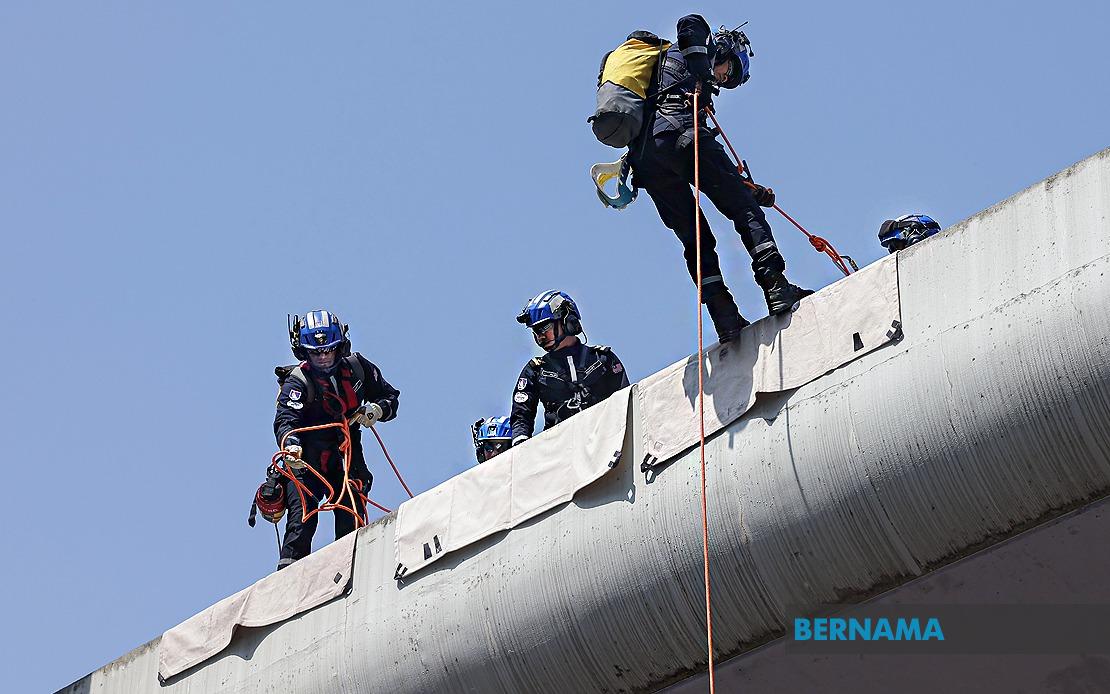
Malaysia's Special Search and Rescue Team (SMART) remains on high alert for immediate deployment to Nepal to bolster search and rescue efforts in the aftermath of severe flooding that has devastated the Himalayan nation. According to the National Disaster Management Agency (NADMA), the team's mobilization is contingent upon formal approval from the Nepalese Government and an official request for international assistance. The deployment framework reflects established protocols governing cross-border humanitarian interventions, where host nations typically retain authority over the admission and coordination of foreign rescue assets.
NADMA underscored that coordination mechanisms are already active with Malaysia's Foreign Ministry to facilitate a seamless transition once diplomatic clearance materializes. This interagency coordination exemplifies the structured approach Malaysia adopts when responding to regional disasters, ensuring that technical rescue capabilities align with diplomatic channels and bilateral relationships. The agency framed this readiness as emblematic of Malaysia's broader commitment to supporting disaster-affected communities across Asia, reinforcing the nation's role as a responsible regional actor in humanitarian emergencies.
SMART's commander, Senior Fire Superintendent I Abdul Manaf Che Isa, conveyed the team's operational readiness despite competing commitments. Remarkably, SMART personnel are simultaneously preparing for participation in Malaysia's 69th National Day parade scheduled for August 31, yet maintain deployment readiness on a moment's notice. This dual preparation underscores the professional calibre and flexibility demanded of elite rescue units, which must balance ceremonial national duties with the unpredictable nature of emergency response. The commander's remarks emphasized that preparedness is an intrinsic institutional characteristic rather than a reactive posture adopted only when crises emerge.
Prime Minister Anwar Ibrahim announced the government's decision to dispatch SMART to Nepal, framing the intervention within the MADANI administration's stated development philosophy. Beyond search and rescue operations, SMART has been tasked with locating and repatriating Malaysian citizens affected by the floods, a dual mandate that reflects both humanitarian and consular responsibilities. The team will also coordinate with the Malaysian Embassy in Kathmandu to ensure comprehensive support mechanisms are established for affected nationals, including welfare monitoring and logistical assistance throughout the recovery phase.
The Malaysian government's financial contribution of US$1 million (approximately RM4.03 million) signals substantive commitment beyond personnel deployment. This monetary assistance is designated for immediate victim relief and longer-term post-disaster reconstruction initiatives, acknowledging that successful disaster response extends well beyond the acute emergency phase. For Nepal, which faces significant economic constraints, such multilateral financial support proves critical in scaling recovery operations and restoring essential infrastructure and services disrupted by flooding.
Nepal's recent floods represent a recurring vulnerability for the nation, situated in the monsoon-influenced Himalayan region where seasonal rainfall intensification routinely triggers inundation events. The disaster underscores the interconnectedness of regional environmental challenges and the necessity for cooperative approaches to disaster management. Malaysia's proactive stance in offering specialized rescue capabilities positions the country within a network of mutual aid relationships that characterize Southeast Asian and South Asian diplomatic ties, particularly regarding non-political humanitarian crises.
For Malaysian readers, this deployment carries significance beyond altruism. The presence of SMART operations in Nepal reinforces Malaysia's standing as a nation possessing advanced disaster response infrastructure and technical expertise. This visibility enhances soft power in regional forums and demonstrates concrete capabilities that extend Malaysia's diplomatic influence through practical demonstration rather than rhetoric alone. Additionally, for Malaysian expatriates and business communities operating in Nepal, the government's commitment to locating and assisting affected nationals provides reassurance that official mechanisms prioritize citizen welfare during international emergencies.
The operational deployment of SMART to Nepal follows established protocols honed through previous international interventions. Malaysia has deployed specialized rescue teams to multiple regional disasters, developing institutional knowledge and pre-positioned relationships that accelerate mobilization when crises occur. This accumulated experience ensures that when Nepal's government formally approves SMART's entry, the team will arrive with vetted procedures, equipment configurations optimized for Himalayan conditions, and coordination templates already adapted from previous operations in comparable geographies.
From a strategic perspective, Malaysia's multi-dimensional response—combining elite personnel, financial resources, and diplomatic coordination—reflects a sophisticated understanding of contemporary disaster response. International rescue operations succeed not merely through technical proficiency but through alignment of military-style operational discipline with humanitarian objectives and respect for host nation sovereignty. By positioning SMART on standby rather than unilaterally deploying, Malaysia demonstrates diplomatic sophistication while maintaining operational tempo, allowing rapid response once formal authorization arrives from Kathmandu.

