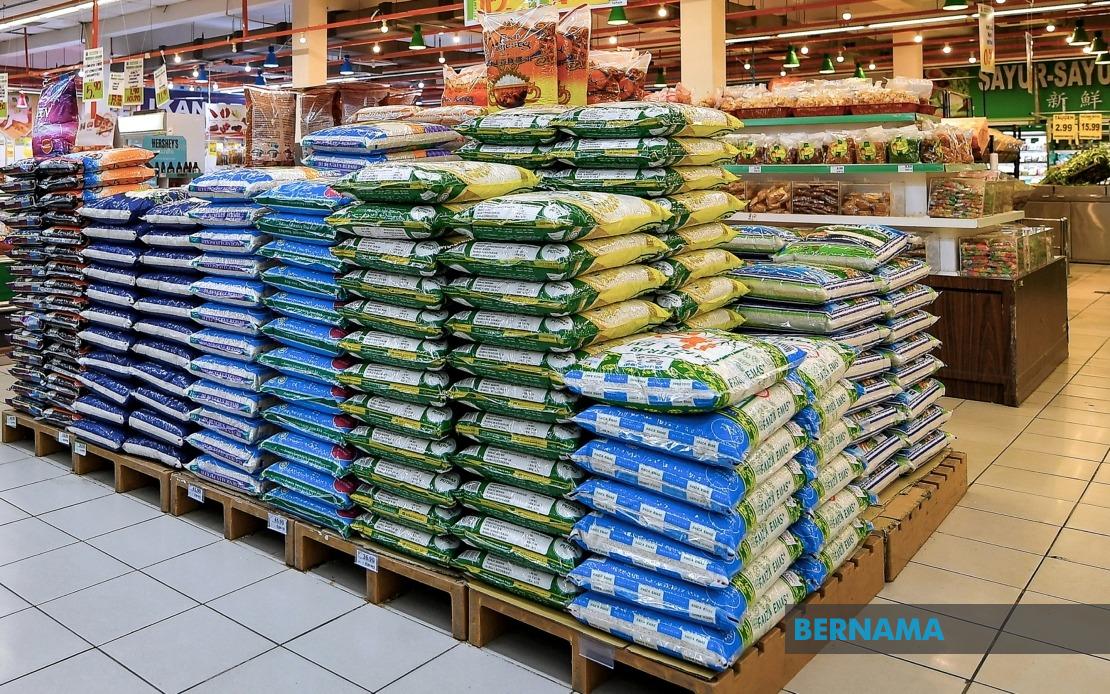
Malaysia's food security framework remains resilient despite mounting global supply chain disruptions, with the government confirming that domestic rice reserves are sufficient to meet national consumption requirements for the next six months. Economy Minister Akmal Nasrullah Mohd Nasir delivered the reassurance during a briefing on international commodity pressures, underscoring the administration's commitment to shielding households from volatile market conditions that have destabilised food supplies across multiple regions. The statement comes as policymakers worldwide grapple with unprecedented inflationary pressures and logistical bottlenecks affecting agricultural output and distribution networks.
The emphasis on price stability reflects a deliberate policy choice by the federal government to prioritize consumer welfare during an economically uncertain period. Akmal Nasrullah confirmed that the price of Local White Rice (BPT), the standard measure of rice cost for Malaysian families, will not experience upward revision despite international headwinds that might typically trigger domestic cost adjustments. This commitment carries particular significance for lower-income households, where rice consumption represents a substantial portion of monthly food expenditure and remains deeply embedded in Malaysian culinary and cultural traditions. The pledge effectively transfers market volatility risk from consumers to government institutions and producers, a strategy that requires careful fiscal management and supply chain oversight.
The government's confidence in supply adequacy stems partly from deliberate stockpiling strategies pursued over recent years. Maintaining a six-month buffer of rice reserves—sufficient to sustain the entire population should external supplies be completely interrupted—reflects lessons learned from previous global food crises and regional disruptions. This strategic reserve methodology has become increasingly common among Southeast Asian nations seeking to reduce vulnerability to geopolitical shocks or extreme weather events that might compromise trade routes or production in major rice-exporting countries such as Thailand, Vietnam, and India. For Malaysia, which imports approximately 30 percent of its rice requirements, such reserves provide essential insurance against sudden supply cutoffs.
The commodity price commitments were ratified during a National Economic Action Council (MTEN) meeting chaired by Prime Minister Datuk Seri Anwar Ibrahim at the Parliament building, indicating that food security decisions emanate from the highest levels of executive authority. The inclusion of food price stability within broader economic planning discussions suggests the government views agricultural inputs and consumer purchasing power as interconnected elements of macroeconomic policy rather than isolated sectoral concerns. This integration reflects recognition that uncontrolled food inflation can cascade through the economy, eroding real wages, reducing consumer confidence, and ultimately destabilizing political and social cohesion—risks that policymakers treat with appropriate seriousness.
Producers themselves face distinct pressures that the government has begun to address through targeted financial support mechanisms. The distribution of RM45.98 million to 118,908 paddy farmers across Peninsular Malaysia through the Paddy Farmers Plowing Incentive scheme demonstrates acknowledgment that domestic rice production cannot be sustained by price controls alone. Malaysian paddy farmers operate within increasingly challenging environmental and economic parameters: climate variability has intensified pest pressures and unpredictable precipitation patterns, while input costs—particularly for fertiliser, fuel, and labour—have escalated substantially. Without producer support, farmers would face margin compression that might discourage cultivation, ultimately undermining the domestic production capacity that underpins the government's six-month buffer strategy.
The incentive programme represents an attempt to maintain farming viability while keeping consumer prices stable, addressing both sides of an inherent tension in agricultural policy. By subsidizing farmer inputs rather than controlling retail prices directly, the government seeks to preserve production incentives and domestic cultivation capacity. This approach differs from straightforward price controls, which can reduce producer motivation and lead to supply shortages—the classic economic dilemma that has plagued food policy in numerous developing economies. However, the sustainability of this dual support model depends on government fiscal capacity and political will to maintain funding, particularly if global commodity cycles worsen or climate impacts accelerate crop losses.
Regional context amplifies the significance of Malaysia's domestic rice security arrangements. Southeast Asia remains vulnerable to supply disruptions originating far beyond the region's borders, with major producing nations occasionally implementing export restrictions during domestic shortages. India's periodic decisions to curtail rice exports in response to internal demand or weather stress have reverberated through regional markets, demonstrating how policies in distant capitals can affect Malaysian household budgets. Vietnam, another crucial supplier, faces comparable pressures from climate change and competing demands. Malaysia's strategy of building self-sufficiency gradually while maintaining strategic reserves represents a pragmatic middle path between complete import dependence and the enormous capital requirements that would accompany full self-sufficiency through intensified domestic production.
The government's messaging also addresses deeper anxieties about cost-of-living pressures that have accumulated across multiple essential commodities. Malaysian consumers have experienced cumulative price increases in cooking oil, fuel, utilities, and transport over recent years, eroding purchasing power despite nominal income growth. By explicitly committing to rice price stability, the administration signals responsiveness to living standards concerns that influence electoral sentiment and social stability. This political dimension underscores how agricultural and food policy intersect fundamentally with governance legitimacy—a reality that shapes decision-making across the region, where food security connects directly to regime durability and public confidence in state competence.
Looking forward, the sustainability of Malaysia's current food security posture hinges on factors both within and beyond government control. Domestically, the government must ensure that farmer support mechanisms are calibrated to maintain production without creating fiscal burdens, while coordinating with the private sector to optimize storage infrastructure and distribution efficiency. Internationally, the stability of regional supply chains remains contingent on political developments, climate patterns, and global trade dynamics that no single nation can fully manage. The six-month buffer provides temporal breathing room rather than permanent immunity from disruption, making it essential that policymakers continue monitoring external threats while progressively enhancing domestic production capacity and diversifying supply sources where feasible. For Malaysian consumers and farmers alike, the current policy framework offers reassurance, yet long-term food security ultimately depends on sustained investment, adaptive management, and continued political priority allocation to agricultural sustainability.

