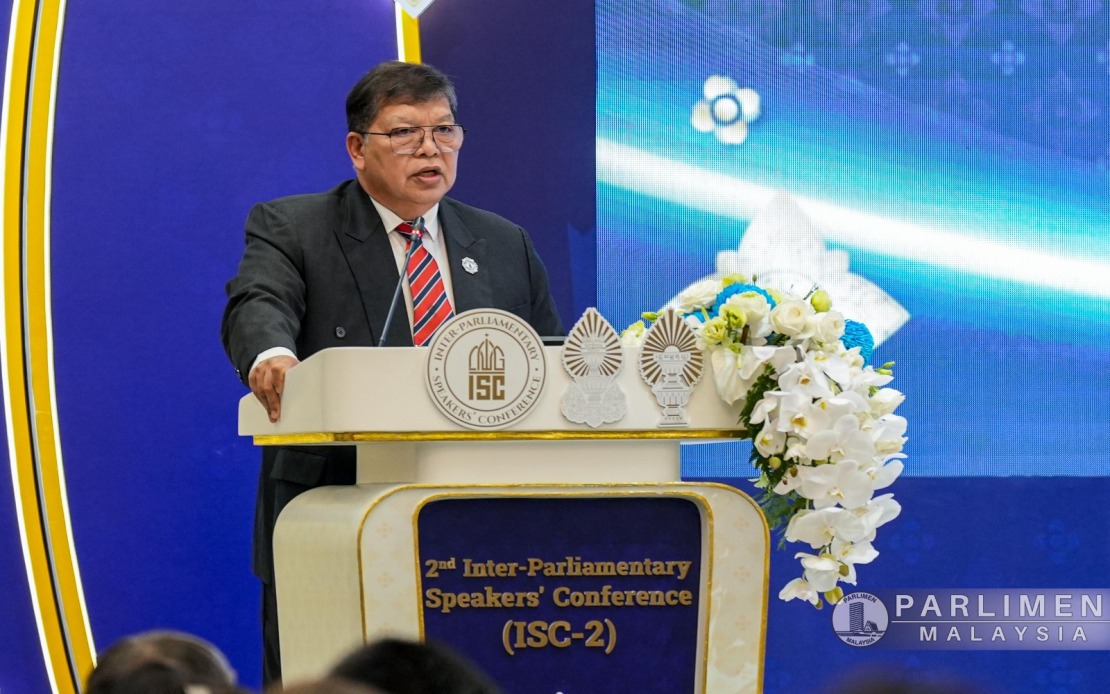
Tan Sri Dr Johari Abdul, Speaker of the Dewan Rakyat, has sounded an alarm about the escalating climate crisis during the Second Inter-Parliamentary Speakers' Conference in Phnom Penh, emphasising that the problem extends far beyond environmental concerns to threaten economic stability, public health, and food security across the region. Speaking on the sidelines of the three-day conference that concluded on Friday, Johari stressed that world leaders and policymakers must treat climate change with the urgency it demands, warning that continued inaction will impose catastrophic costs on the most vulnerable populations.
The Speaker's intervention comes at a critical moment for Southeast Asia and South Asia, regions where climate-related disasters have become increasingly frequent and severe. The timing of his remarks is particularly pointed, following the devastating floods that swept through Nepal days earlier. Preliminary reports indicate that a glacial collapse in the Himalayas triggered the disaster, with flooding affecting river systems along the Nepal-China border and leaving 469 confirmed dead and 2,381 missing as of Friday. Among the missing are 644 foreign nationals, and several Malaysians remain unaccounted for, underscoring how climate disasters transcend national boundaries and directly affect Malaysians living or working abroad.
Johari highlighted a troubling gap in political awareness and commitment on climate issues. He expressed concern that many lawmakers and leaders lack sufficient understanding of climate science and the interconnected nature of environmental degradation, energy policy, and economic development. His critique extended to the continued reliance on fossil fuels despite decades of scientific evidence pointing toward renewable alternatives. The Speaker questioned why deforestation continues unchecked and why governments have not prioritised investment in solar, wind, and ocean wave energy technologies—alternatives that could substantially reduce carbon emissions and build long-term energy security.
The broader context for the Speaker's intervention reveals the precarious position of millions across Asia. From the mountainous terrain of Nepal to the landlocked landscape of Laos and throughout Southeast Asia, communities face recurring threats from flash floods, landslides, tropical typhoons, and other extreme weather events that destroy agricultural land and critical infrastructure. The Philippines experiences approximately 20 typhoons annually, while Cambodia's Cambodian Prime Minister Hun Manet recently warned of rising water levels in the Mekong River, urging riverine communities to heighten their vigilance. These recurring disasters disproportionately affect rural populations with limited resources to recover or adapt.
Johari advocated for a comprehensive policy reorientation centred on education and technological innovation. He called on policymakers to substantially increase funding for early education programmes that incorporate climate science and environmental literacy into school curricula, reasoning that young people must understand the systemic nature of climate risks to develop solutions. Equally important, he stressed the need for dramatically expanded research and development budgets dedicated to green technologies and climate adaptation strategies. Without this foundation of knowledge and innovation capacity, he argued, governments would remain unable to formulate effective responses to the unfolding climate emergency.
The Speaker pointed to international examples of climate leadership to illustrate what is possible when governments commit resources and political will to green transformation. China's long-term strategy to promote environmental protection through investment in eco-friendly technologies, electric vehicles, and expansion of green spaces demonstrates how large-scale policy interventions can align economic development with climate objectives. This model offers lessons for Malaysia and other Southeast Asian nations seeking to balance growth with environmental stewardship, though the geopolitical and economic contexts differ significantly across countries.
Central to Johari's argument is the recognition that climate change represents a collective challenge requiring coordinated global action rather than isolated national responses. He emphasised that discussing climate change, while necessary, is insufficient without concrete action to reduce emissions and build adaptive capacity. The political dimensions of climate action weigh heavily on his analysis—solving the crisis demands not only technical innovation but genuine political will and courageous leadership willing to confront powerful interests benefiting from the status quo. This political economy dimension remains often underemphasised in technical discussions of climate policy.
A particularly sharp observation Johari made concerns the widening gap between wealthy and poor nations in climate capacity and vulnerability. Developed countries possess superior technology, capital, and institutional capacity to adapt to climate impacts, while developing nations in Asia and Africa bear disproportionate risks despite contributing least to historical emissions. This equity dimension has complicated international climate negotiations and threatens to undermine global cooperation unless addressed through mechanisms for technology transfer and climate finance.
For Malaysia specifically, the Speaker's intervention carries particular resonance given the country's geographical exposure to climate risks. As a tropical nation with extensive coastlines, Malaysia faces rising sea levels, increased typhoon intensity, and disrupted monsoon patterns that threaten coastal cities, agricultural productivity, and fishing communities. Investment in renewable energy and green technology not only addresses global climate imperatives but also serves Malaysia's own strategic interests in energy independence and economic resilience. The transition away from fossil fuels represents both a moral imperative and an economic opportunity if pursued strategically.
The Speaker's call for education and technology investment reflects a sophisticated understanding that climate action requires not merely regulatory frameworks or market mechanisms, but a fundamental shift in how societies organise their knowledge systems and economic activities. Educational institutions must equip citizens and policymakers with climate literacy, while research institutions must develop locally appropriate technologies suited to Southeast Asia's specific environmental and economic contexts. This bottom-up approach complements international agreements and pledges, creating the conditions for sustained, meaningful climate action.
Johari's remarks also underscore the interconnectedness of climate challenges with other development priorities. Food security, water availability, public health, energy security, and economic growth all depend on successfully addressing climate change. Governments cannot pursue these objectives in isolation; they must integrate climate considerations into all policy domains. This systems-thinking approach represents a departure from siloed policymaking and demands institutional reforms that few governments have yet fully implemented.
Looking forward, the Speaker's intervention at the inter-parliamentary conference provides an opportunity for legislative bodies across Asia to prioritise climate action in their agendas. Parliaments possess the power to enact legislation mandating renewable energy adoption, establishing green technology funds, and embedding climate literacy into education systems. The Second Inter-Parliamentary Speakers' Conference provided an ideal forum for building consensus and sharing best practices on how legislative institutions can drive climate action within their respective nations. Whether parliamentary speakers translate Johari's eloquent warnings into concrete legislative agendas will significantly determine whether Asia can adequately respond to the climate crisis threatening its communities.

