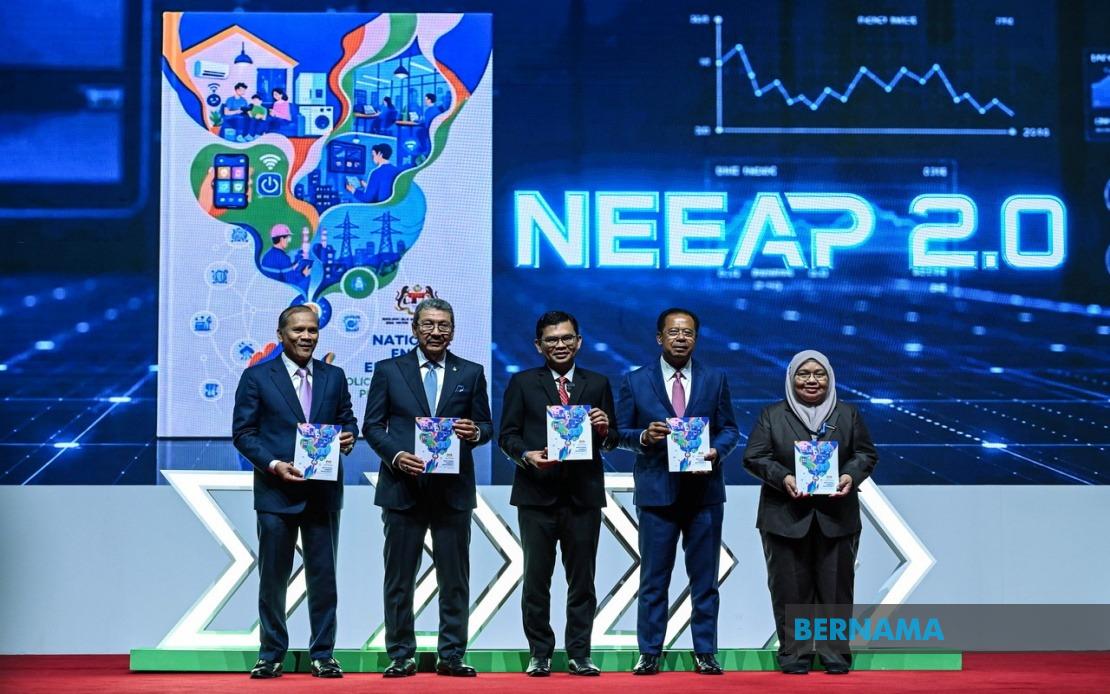
Malaysia has unveiled an ambitious new energy efficiency framework designed to reshape the country's consumption patterns while simultaneously strengthening its economic fundamentals. The National Energy Efficiency Policy and Action Plan 2026-2035 (NEEAP 2.0), unveiled in Putrajaya by the Ministry of Energy Transition and Water Transformation (PETRA), represents a significant escalation in the government's commitment to bridging energy conservation with job creation and private sector participation. The policy's introduction came during the opening of the 7th International Sustainable Energy Summit, positioning Malaysia among regional frontrunners in structured energy management.
The financial dimensions of NEEAP 2.0 paint an compelling picture for both government planners and business stakeholders. Over its ten-year implementation horizon, the initiative is projected to unlock RM85 billion in cumulative net energy savings—a figure that reflects the compounding efficiency gains expected across Malaysia's industrial heartland, commercial properties, and residential sectors. Beyond domestic reinvestment, PETRA anticipates that the policy framework will catalyse RM36 billion in fresh private capital flows, signalling investor confidence in Malaysia's green transition trajectory and creating opportunities for multinational corporations and local enterprises alike to develop expertise in energy management technologies and services.
The employment dimension underscores how energy efficiency has evolved beyond a purely environmental concern into a genuine economic development tool. The anticipated creation of 29,000 jobs represents a substantial contribution to Malaysia's labour market, particularly in roles that require technical skills—energy auditors, retrofit specialists, renewable technology installers, and building management systems operators. These positions cannot easily be offshored and will predominantly benefit local communities, aligning with the broader Malaysia MADANI aspiration of inclusive development. The jobs will span manufacturing, construction, services, and consulting sectors, creating diverse pathways for workers transitioning away from carbon-intensive industries.
From an environmental standpoint, NEEAP 2.0 articulates an ambitious decarbonisation target. The policy framework is expected to eliminate carbon dioxide emissions equivalent to 26 million tonnes of CO₂ equivalent by 2035 when measured against baseline projections. To contextualise this figure, Malaysia's total greenhouse gas emissions have hovered around 600-700 million tonnes annually in recent years, making a 26 million tonne reduction significant but not transformative on its own. However, the policy functions as a building block within Malaysia's broader net-zero 2050 commitment, with each successive action plan incrementally shifting the nation's energy trajectory.
The technical specifications of NEEAP 2.0 reveal the granular approach undergirding the policy. The framework targets an 11.6 percent improvement in both electricity and thermal energy efficiency relative to business-as-usual scenarios—a precisely calibrated objective reflecting engineering analysis rather than aspirational rhetoric. This efficiency gain translates into 815,000 terajoules of cumulative energy conservation, a unit of measurement that becomes tangible when PETRA notes it equals roughly two years' worth of electrical supply for Peninsular Malaysia. Such reductions emerge through systematic interventions: LED lighting retrofits in commercial premises, industrial process optimisation, building insulation upgrades, and demand-side management programmes.
The sectoral focus of NEEAP 2.0 demonstrates strategic prioritisation. Rather than pursuing uniform efficiency mandates, the policy concentrates resources on high-impact domains most critical to economic growth stimulation. Malaysia's manufacturing sector, particularly electronics, semiconductors, and petrochemicals, consumes disproportionate shares of national electricity supplies; efficiency improvements in these domains yield outsized returns on investment. Commercial buildings, from shopping centres to office parks, represent another leverage point given their concentrated energy demand and retrofit feasibility. The residential sector, encompassing millions of households, offers volume-based savings potential, though unit-level improvements typically carry higher implementation costs relative to benefits.
NEEAP 2.0 represents continuity with previous efforts rather than a wholesale policy reset. Malaysia implemented its first National Energy Efficiency Action Plan (NEEAP 1.0) during an earlier period, establishing foundational metrics, institutional structures, and industry relationships. The successor framework builds upon accumulated experience, identified bottlenecks, and technological advances that have reduced renewable and efficiency technology costs. This iterative approach—common in sophisticated policy environments—allows governments to refine targeting, remove implementation barriers, and scale what worked previously. It reflects Malaysia's maturation as an energy policy actor beyond ad-hoc initiatives toward systematic, measurable planning.
The policy's alignment with Malaysia MADANI represents both philosophical positioning and practical integration within the broader government agenda. Malaysia MADANI, the overarching national aspiration framework, emphasises prosperity, inclusivity, sustainability, and resilience. NEEAP 2.0 operationalises these abstract principles through concrete energy targets and sectoral reforms. By framing efficiency not as environmental sacrifice but as economic opportunity and affordability improvement, the government addresses a critical concern among Malaysian households and businesses: rising energy costs. Lower consumption translates into reduced utility bills, preserving household purchasing power and improving corporate competitiveness internationally.
Sectoral participation and stakeholder engagement emerge as critical implementation dimensions. NEEAP 2.0 explicitly commits to engaging industrial users, commercial property developers, residential consumers, technology vendors, financing institutions, and civil society organisations. This comprehensive ecosystem approach contrasts sharply with top-down regulatory models, instead creating incentive structures and information platforms that align private interest with public objectives. Industries recognising that energy efficiency reduces operational costs become policy implementers; financial institutions identifying profitable lending opportunities in green retrofits become capital providers; local governments implementing building standards become enforcement agents.
The regional implications of Malaysia's NEEAP 2.0 extend beyond national borders. Southeast Asian energy demand is expected to accelerate as middle-income countries pursue development, potentially intensifying regional electricity stress and carbon intensity. Malaysia's systematic approach to demand-side management through efficiency provides a template for regional peers facing similar pressures. The 29,000 job creation figure also signals that energy transition, far from destroying employment, can generate new livelihood streams—a narrative gain for policymakers in Indonesia, Thailand, Vietnam, and Philippines wrestling with energy security and climate commitments.
Implementation risks warrant acknowledgment despite the policy's structural soundness. Achieving 11.6 percent efficiency improvements requires sustained coordination across fragmented actors, consistent government funding beyond electoral cycles, technology adoption at scales unproven in Malaysian contexts, and consumer behaviour changes that historically develop slowly. Industrial sectors may resist stricter efficiency standards if they impose capital costs; households may lack financing access for residential retrofits; smaller enterprises might lack technical capacity for complex audits and optimisations. Success hinges on whether supporting mechanisms—financing schemes, technical assistance, enforcement mechanisms, and performance monitoring—function effectively across Malaysia's geographically dispersed economy.
Looking forward, NEEAP 2.0 positions Malaysia within accelerating global energy transition dynamics. As carbon pricing mechanisms advance internationally and supply chain partners increasingly demand decarbonised inputs, Malaysian manufacturers face mounting pressure to reduce energy intensity. The policy framework provides institutional and financial infrastructure supporting this competitive necessity. The RM36 billion private investment target hinges partly on whether government creates credible, transparent mechanisms for measuring, verifying, and rewarding efficiency improvements—essentially building the data infrastructure and governance institutions that capital markets require before deploying patient capital into energy services businesses.
The policy's 10-year timeline aligns with Malaysia's broader net-zero 2050 pathway, though the intermediate decade (2035-2050) will demand further dramatic efficiency gains and renewable scaling beyond current planning horizons. NEEAP 2.0 establishes momentum and institutional learning that should facilitate future more ambitious targets. Whether Malaysia achieves the projected RM85 billion savings, creates genuinely 29,000 net new jobs, and reduces emissions by 26 million tonnes depends substantially on implementation quality—a dimension typically receiving less policy attention than target-setting but ultimately determining real-world outcomes.

