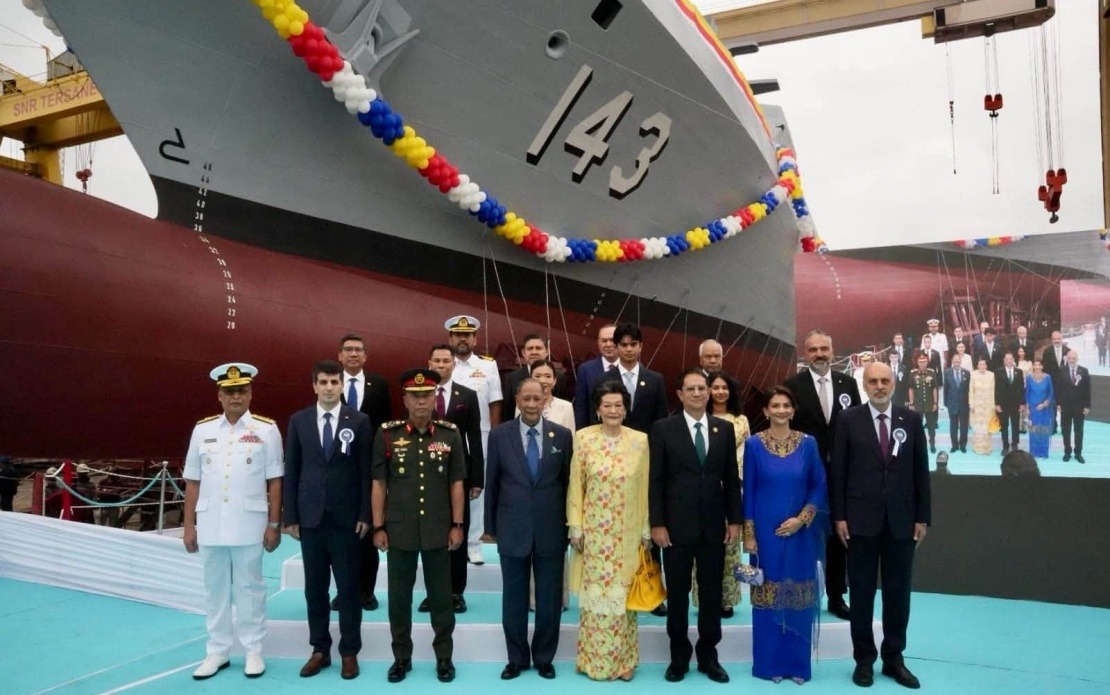
Malaysia's Defence Minister Datuk Seri Mohamed Khaled Nordin has underscored the pressing need for the Royal Malaysian Navy to maintain a fleet of contemporary, combat-capable vessels as maritime security challenges grow increasingly sophisticated across the region. Speaking during the formal commissioning of the third Littoral Mission Ship Batch 2 vessel, Mohamed Khaled reiterated the government's commitment to equipping the RMN with the technological prowess and operational capacity required to safeguard the nation's territorial waters and economic interests. His remarks reflect deeper strategic concerns about protecting Malaysian maritime sovereignty in an era marked by evolving geopolitical tensions, shifting regional power dynamics, and emerging transnational security threats that extend far beyond traditional naval operations.
The newly commissioned vessel, named Tunku Osman Jewa in honour of the late General Tan Sri Tunku Osman Tunku Mohammad Jewa—a former Armed Forces Chief and member of the Kedah royal family—represents a significant milestone in Malaysia's broader naval modernization agenda. The ship's naming ceremony carried symbolic weight, with the Sultan of Kedah, Al Aminul Karim Sultan Sallehuddin Sultan Badlishah, and Sultanah Maliha Tengku Ariff gracing the occasion with their presence. This ceremonial dimension underscores how Malaysia's military modernization efforts remain interwoven with institutional heritage and royal patronage, reflecting the nation's respect for those who have served in its highest defence echelons.
The completion of the three-ship Littoral Mission Ship Batch 2 construction programme marks a watershed moment in Malaysian naval procurement, particularly because it represents the first Government-to-Government collaboration between Malaysia and Turkiye in acquiring warships for the RMN. This partnership carries broader geopolitical implications, signalling Malaysia's diversification of defence procurement beyond traditional Western suppliers and its willingness to engage with emerging naval innovators in the Muslim world. By partnering with Turkiye—a NATO member with growing naval expertise and an expanding shipbuilding industry—Malaysia gains access to modern vessel designs while simultaneously strengthening bilateral ties with an increasingly influential regional and international actor.
The acquisition programme itself forms a critical component of the RMN's comprehensive 15-to-5 Transformation Plan, an ambitious modernization initiative designed to reshape the navy's operational capabilities and technological readiness over the coming years. This strategic framework reflects recognition that Malaysia's naval forces must evolve to address multifaceted contemporary threats: maritime piracy and armed robbery at sea, illegal fishing and resource theft in exclusive economic zones, human trafficking networks, narcotics smuggling, and potential inter-state maritime disputes. The Littoral Mission Ships, with their shallow-draft design and flexibility, represent exactly the type of platform required for Malaysia's complex operational environment, combining blue-water capabilities with the shallow-water manoeuvrability essential for operations within the Straits of Malacca and surrounding territorial waters.
The full delivery schedule, with all three Batch 2 vessels expected to reach operational status by end of 2027, provides the RMN with concrete timelines for capability enhancement. However, this extended timeline also highlights the lengthy procurement cycles inherent in modern naval development, where design, construction, sea trials, and integration with existing fleet systems demand sustained investment and patience. For Malaysia, maintaining institutional momentum across successive administrations remains crucial, as defence procurement programmes frequently span multiple political cycles and require continuity of vision and financial commitment. The successful Turkish collaboration on these vessels could also pave the way for future partnerships, potentially encompassing maintenance, training, and technology transfer arrangements that would deepen the strategic partnership beyond the initial purchase.
Mohamed Khaled's emphasis on maritime security reflects regional realities that extend well beyond Malaysia's shores. The South China Sea remains one of the world's most contested maritime domains, with overlapping territorial claims, strategic shipping lanes carrying trillions of dollars in annual trade, and competing military modernization efforts by major powers. For Malaysia, positioned strategically along critical sea lanes connecting Europe to Asia, maintaining credible naval deterrence and law enforcement capability is essential to protecting national interests, sustaining economic prosperity, and preserving maritime sovereignty. The acquisition of modern warships communicates resolve to regional actors and signals that Malaysia takes its maritime responsibilities seriously.
The Littoral Mission Ships represent a deliberate choice of vessel type that acknowledges Malaysia's specific geographic and operational requirements. Unlike larger capital ships designed for extended blue-water operations, these ships prioritize accessibility to shallow-draft environments, rapid response capability, and versatility across multiple mission profiles. They can undertake conventional naval operations, support maritime law enforcement activities, conduct humanitarian assistance and disaster relief missions, and maintain presence in Malaysia's vast maritime exclusive economic zone. This multi-purpose design reflects realistic assessment of how navies must operate in contemporary security environments, where traditional warfighting capacity represents only one component of a broader spectrum of maritime responsibilities.
The modernization effort also carries implications for Malaysia's workforce and domestic defence industrial capacity. While the Batch 2 ships are constructed in Turkey, such partnerships typically include opportunities for Malaysian personnel to acquire specialized skills in naval vessel maintenance, operation, and technical support. Over the long term, successful foreign partnerships can catalyze development of domestic capabilities, potentially enabling Malaysia to expand its defence industrial base and reduce dependency on external suppliers for future upgrades and maintenance. Investment in human capital and institutional expertise remains as important as acquisition of physical assets.
From a regional perspective, Malaysia's naval modernization contributes to the broader balance of power dynamics within Southeast Asia. As larger regional actors—particularly China and increasingly India—expand their naval presence and capability, smaller Southeast Asian nations must undertake proportionate enhancements to maintain strategic autonomy and credible deterrence. Malaysia's partnership with Turkey also reflects the region's increasing multipolar character, where traditional Western dominance in defence procurement faces competition from diverse suppliers offering alternative approaches, competitive pricing, and alignment with varying strategic preferences.
Looking forward, the completion of the Batch 2 programme should not eclipse the broader modernization imperative. The RMN faces aging frigate fleets, limited submarine capabilities, and gaps in modern combat information systems that demand continued attention. The 15-to-5 Transformation Plan provides framework for addressing these challenges systematically, but sustained political will and budgetary commitment remain essential prerequisites. As Malaysia confronts an increasingly complex maritime security environment characterized by technological change, proliferation of asymmetric threats, and shifting geopolitical alignments, the investment in modern naval assets represents not discretionary spending but essential protection of national interests and the maritime commons upon which regional prosperity depends.

