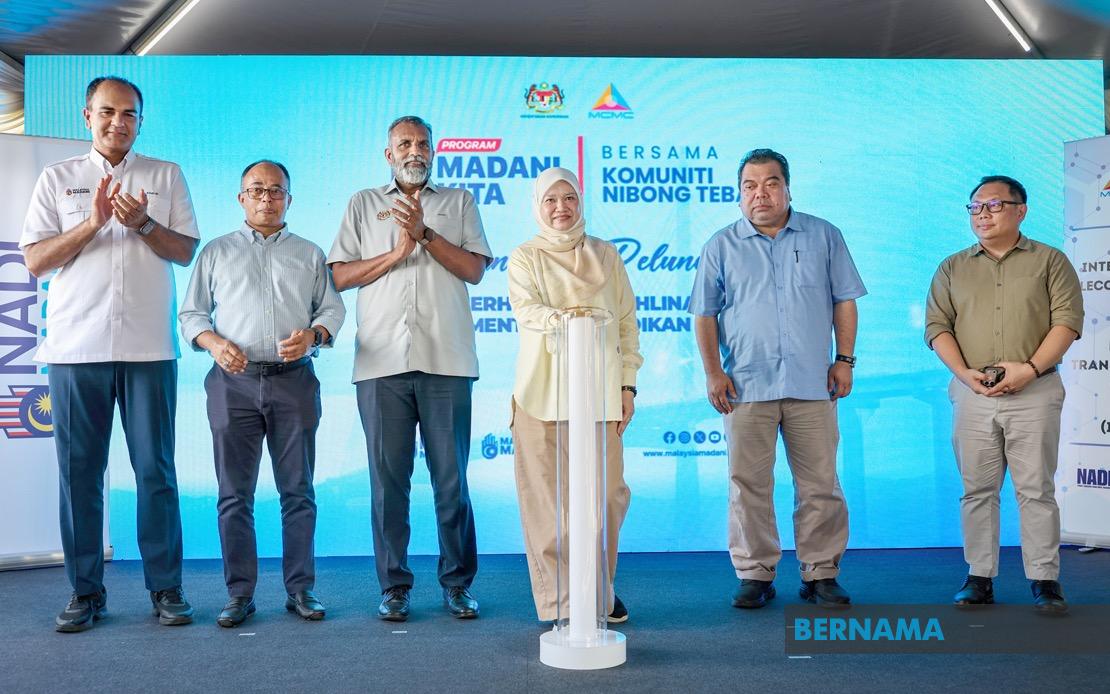
The Malaysian government is intensifying its grassroots outreach efforts through an expanding network of community engagement programmes designed to bring federal services directly to citizens. The Communications Ministry has now orchestrated 41 MADANI Kita initiatives across the country, establishing a model that systematically deploys multiple government agencies and departments into neighborhoods to enhance public accessibility and responsiveness. This decentralized approach represents a significant shift in how Putrajaya engages with ordinary Malaysians, moving beyond traditional top-down information dissemination to create forums for genuine dialogue and on-the-spot service delivery.
The framework coordinating these initiatives draws together three key government bodies: the Community Communications Department (J-KOM), the Malaysian Information Department (JaPen), and the Malaysian Communications and Multimedia Commission (MCMC), all operating under the umbrella of the National Information Dissemination Centre (NADI). Speaking during the launch of the Nibong Tebal edition in Penang's Permatang Pauh constituency, Communications Ministry deputy secretary-general Mano Verabathran emphasized that the programmes transcend mere information sharing. Instead, they function as interactive platforms where citizens can engage substantively with policymakers, request clarifications on government initiatives, and articulate community concerns directly to decision-makers present on-site.
The rationale underpinning this expanded outreach reflects a recognition within the Communications Ministry that contemporary citizens increasingly demand experiential engagement with government. Simply publishing policy documents or broadcasting announcements through traditional media channels proves insufficient for populations seeking tangible evidence that policies translate into concrete benefits. By hosting MADANI Kita programmes in specific neighborhoods, the government creates settings where residents witness firsthand how different ministries and agencies can address their particular needs, whether through skills training, technology access, educational support, or community services.
Beyond conventional administrative functions, these programmes incorporate diverse activities deliberately calibrated to appeal to different demographic segments within participating communities. Technology-focused workshops, educational seminars, and skills development training form the backbone of most events, ensuring that attendees acquire practical knowledge they can immediately apply. The inclusion of youth-oriented activities—particularly e-sports tournaments and digital competitions—demonstrates deliberate efforts to engage younger Malaysians who might otherwise perceive government services as irrelevant to their interests. These recreational components serve a dual purpose: they attract broader community participation while simultaneously fostering team-building, healthy competition, and disciplined engagement among youth participants.
The scale of public participation demonstrates substantial appetite for this style of government engagement. The Permatang Pauh MADANI Kita programme, held in conjunction with the Penang International Halal Expo 2026 from July 24 to 26, attracted more than 17,000 attendees. This impressive turnout suggests that when government services are presented accessibly and embedded within community events that already attract significant foot traffic, public participation rates exceed what traditional agency office visits might generate. Such attendance figures provide tangible evidence that citizens value opportunities to interact with multiple government representatives simultaneously rather than navigating fragmented departmental structures.
For Malaysian readers, particularly those in smaller towns and suburban areas, the MADANI Kita expansion carries particular significance. Residents in constituencies outside Kuala Lumpur and major urban centers often struggle to access government services that concentrate in federal territories or state capitals. These mobile outreach programmes effectively democratize service access by eliminating geographical barriers. A resident in Nibong Tebal no longer requires travel to distant government offices; instead, representatives from relevant agencies convene locally, conducting registrations, providing consultations, and fielding queries within familiar community spaces.
The programme also reflects broader Southeast Asian trends toward what governance scholars term "citizen-centric service delivery." Across the region, governments increasingly recognize that maintaining public confidence requires demonstrating responsiveness and accessibility. Singapore's successful implementation of integrated service centers and Indonesia's village-level government initiatives provide regional precedents that Malaysia appears to be adapting and expanding. By positioning the MADANI Kita framework as a systematic platform rather than ad-hoc visits, Malaysian authorities signal commitment to sustained engagement rather than episodic public relations exercises.
The strategic incorporation of technology and digital skills development within MADANI Kita programmes addresses Malaysia's broader digital transformation objectives. As the country progresses toward a digitally-driven economy, communities across various socioeconomic strata require accessible platforms to acquire technology literacy. These programmes function as de facto digital inclusion initiatives, ensuring that rural and suburban populations don't fall behind urban counterparts in technological proficiency. This preventive approach to digital divides proves more efficient than attempting remedial interventions later.
From a communications perspective, the MADANI Kita model inverts traditional government-to-citizen messaging. Rather than asking "How do we better communicate our policies to the public?" this framework fundamentally asks "How do we create settings where the public can directly engage with policy implementation?" This distinction proves crucial for Malaysian governance, as it acknowledges that public trust derives not from polished communications campaigns but from perceivable government competence and accessibility in daily interactions.
Looking forward, the continued expansion of MADANI Kita programmes across Malaysia's 222 parliamentary constituencies represents an ambitious undertaking. Sustaining momentum requires coordinated effort across dozens of agencies and consistent quality in programme delivery. Success depends on ensuring that local government representatives possess adequate authority and resources to address citizen concerns raised during events, rather than simply collecting feedback for future consideration. The most effective community engagement programmes translate immediate citizen input into observable action, reinforcing the perception that government truly listens and acts upon public input.
For policymakers evaluating similar initiatives elsewhere in Southeast Asia, Malaysia's MADANI Kita experience offers instructive lessons about scaling participatory governance. The programme demonstrates that systematic, well-resourced investment in community engagement infrastructure can generate measurable public participation and measurable satisfaction. However, success ultimately hinges on implementation quality—whether individual programmes genuinely empower local officials to address citizen concerns or whether they devolve into superficial contact-gathering exercises. As MADANI Kita expands further, maintaining this distinction between genuine engagement and performative outreach will determine whether the initiative fulfills its potential to transform government-citizen relations across Malaysia.

