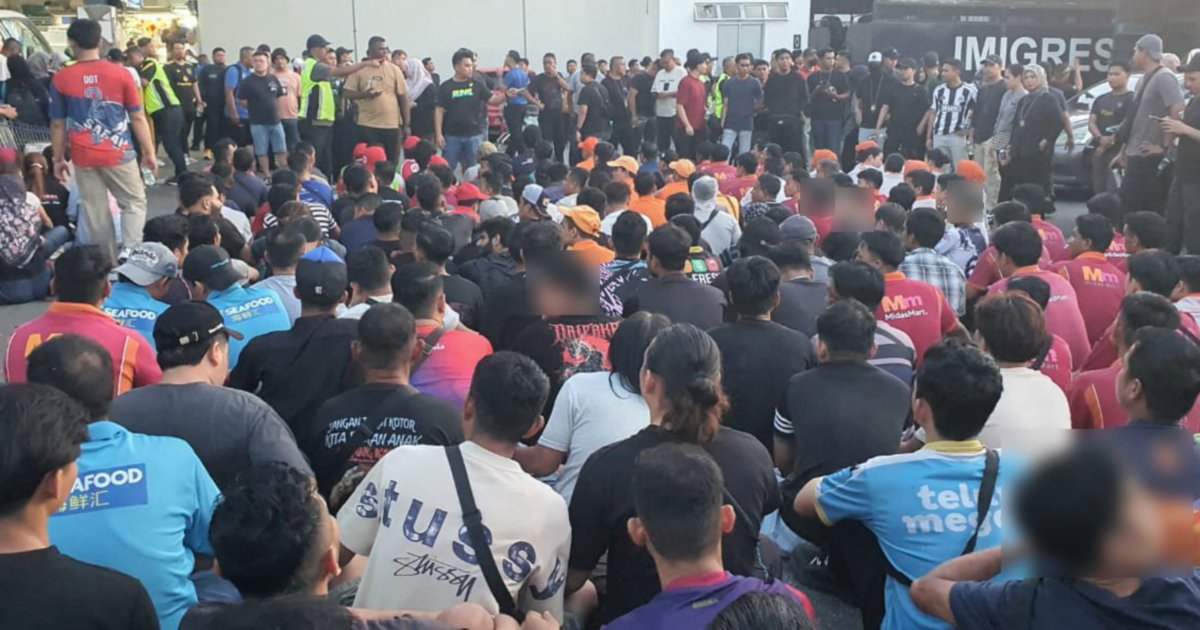
A coordinated immigration enforcement operation in Johor Baru has resulted in the detention of 226 migrants and revealed an alarming system of border manipulation that has enabled illegal employment across the state. The operation has exposed how vulnerable migrant workers have been exploited through a scheme involving repeated passport stamping—a tactic that allowed individuals to maintain a façade of legal status whilst working without proper authorisation.
At the heart of this operation is a cautionary tale that reflects the broader vulnerabilities in Malaysia's immigration system. An Indonesian fishmonger, whose case typifies the broader pattern, had perfected a monthly routine: crossing the border into neighbouring jurisdictions to have his passport officially stamped, then returning immediately to his work in Malaysia's informal fishing and trading sectors. Over four years, this cycle repeated countless times, allowing him to evade detection whilst contributing to the shadow economy that flourishes in border regions. His situation was far from unique, as investigators discovered similar patterns among dozens of other detainees.
The discovery of this organised approach to circumventing immigration controls points to the sophisticated nature of migrant trafficking and labour exploitation networks operating across Southeast Asia. Rather than representing individual cases of poor fortune or desperation, the scheme suggests systematic facilitation by intermediaries who have profited from both the migrant workers and the businesses employing them. The monthly border crossing itself became a ritualistic laundering mechanism—each stamp creating a false impression of transience and legality that masked sustained illegal employment.
Johor's position as Malaysia's primary land border crossing to Indonesia makes it particularly vulnerable to such schemes. The state's substantial fishing industry, agriculture sector, and manufacturing zones have historically attracted migrant labour, and the economic incentives for both employers and undocumented workers remain powerful. Businesses benefit from keeping wage costs suppressed, whilst desperate workers accept exploitative conditions in exchange for income. The passport stamping scheme enabled both parties to maintain this arrangement with minimal legal exposure.
The scale of the detention—226 individuals—underscores just how widespread the practice had become. Rather than occasional breaches of immigration protocol, the numbers suggest an entrenched system that had operated with insufficient oversight. Each individual detained represents not merely a violation of immigration statutes but often years of undocumented employment, unpaid contributions to social security schemes, and exposure to workplace exploitation without legal recourse. Many would have been earning wages significantly below minimum thresholds, working excessive hours, and without access to medical or insurance protections.
From an operational perspective, the raid reflects improved intelligence gathering and inter-agency coordination within Malaysia's immigration enforcement. The specificity with which authorities targeted this particular scheme suggests that tip-offs, data analysis of entry-exit patterns, or intelligence from previous operations enabled them to pinpoint where and how the smuggling network functioned. Such success stories are crucial for signalling that immigration authorities are capable of disrupting organised systems, not merely apprehending individuals.
However, the efficiency of the raid also raises uncomfortable questions about why such a scheme could persist unchecked for several years. The monthly border crossings ought to have triggered pattern recognition systems—repeated entries and exits by the same individuals within compressed timeframes would appear anomalous under normal scrutiny. Either surveillance capacity was limited, or the volume of border traffic overwhelmed monitoring systems, suggesting resource constraints within immigration enforcement that remain unresolved.
For Malaysia's economy and labour market, illegal migrant workers represent a profound structural problem. Whilst they fill genuine labour shortages in construction, agriculture, and services sectors, their undocumented status depresses wages across entire industries and prevents legitimate workers from obtaining positions. The reliance on undocumented labour also enables employers to evade statutory obligations—no workers' compensation insurance, no tax withholding, no compliance with occupational safety regulations. The productivity gains realised through cheaper labour come at substantial social cost.
The detention of these 226 individuals will now trigger a processing cascade: document verification, interviews, deportation proceedings, and potential blacklisting from future legal entry. Many will have outstanding debts to smugglers or labour agents who facilitated their initial entry, creating vulnerability to re-trafficking. The scheme's revelation also places scrutiny on the businesses that employed these workers, though accountability for employers historically lags significantly behind penalties imposed on migrants themselves.
Regionally, this Johor case exemplifies challenges that plague all Southeast Asian nations grappling with migration control. The ASEAN region remains defined by stark wage differentials, porous borders, and demand for labour that domestic populations cannot fully meet. Indonesia, Myanmar, Cambodia, and the Philippines continue supplying workers to Malaysia's lower-wage sectors despite improved enforcement. Until underlying economic disparities narrow or Malaysia develops truly regularised migrant labour pathways, enforcement raids—however dramatic—remain temporary interventions rather than systematic solutions.
The exposure of the passport stamping scheme also suggests that migrant workers themselves represent potential intelligence sources for authorities. Those seeking to avoid exploitation or deportation might provide information on smuggling networks in exchange for leniency or protected status. Building trust between enforcement agencies and migrant communities could transform detection capabilities significantly.
Moving forward, preventing recurrence of such schemes will require sustained attention to border processing efficiency, business compliance frameworks, and worker reporting mechanisms. Technology enabling real-time tracking of entry-exit patterns, combined with data sharing between Malaysian and Indonesian immigration authorities, could make monthly stamping routines far more detectable. However, without addressing the fundamental economic incentives that make illegal employment attractive, fresh variants of the scheme will almost certainly emerge.

