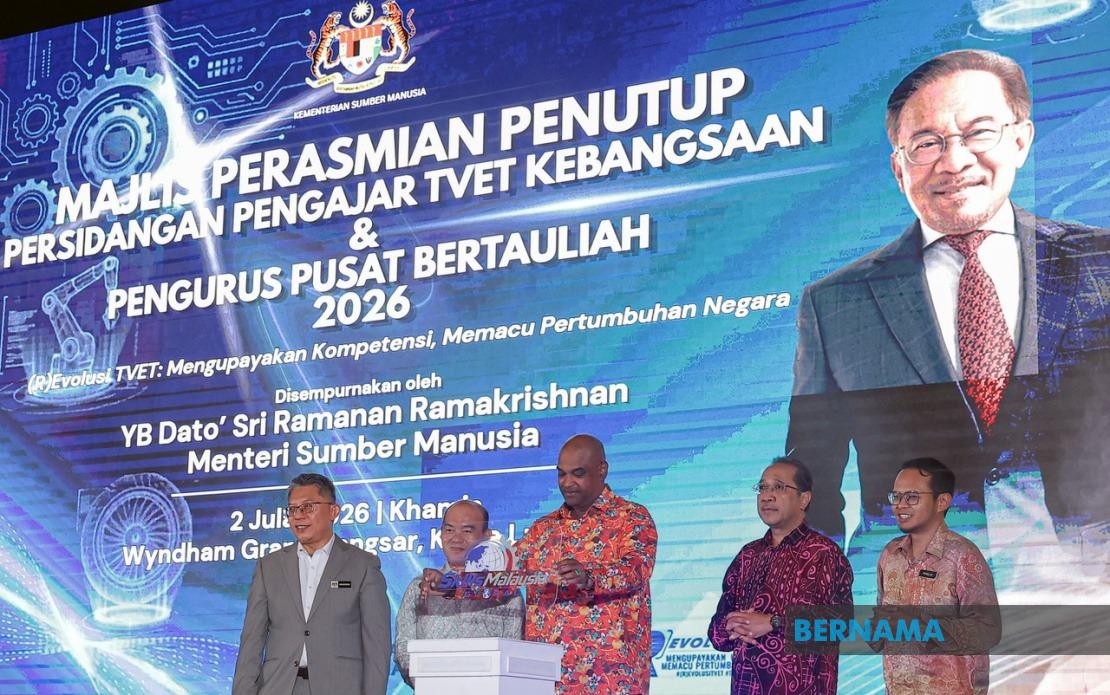
Malaysia's Human Resources Ministry is pursuing a significant policy shift that could ease the financial pressure on thousands of vocational and technical education trainees. The Ministry of Human Resources, known locally as KESUMA, intends to transform PTPK's existing loan-based financing model into an outright grant scheme, a move that reflects growing recognition of the peculiar challenges facing students in the Technical and Vocational Education and Training sector.
Minister Datuk Seri R. Ramanan announced the initiative after addressing the National TVET Instructors and 2026 Accredited Centre Managers Conference in Kuala Lumpur on July 2. The proposal targets the conversion of RM100 million in current PTPK financing, with Ramanan confirming that the Cabinet will be asked to consider the plan at an upcoming session with Prime Minister's participation. The restructuring reflects a fundamental rethinking of how the government supports skills development, particularly for disadvantaged learners who cannot afford to study while maintaining employment.
The rationale behind the conversion is compelling and addresses a structural problem within Malaysia's vocational education ecosystem. Many PTPK borrowers pursuing TVET programmes are forced to leave the workforce during their studies, creating an immediate income gap that extends beyond merely covering tuition fees. When trainees simultaneously lose wages and face loan repayment obligations, the cumulative financial pressure becomes prohibitive, potentially deterring talented individuals from pursuing skills development. Ramanan's observation that this dual burden discourages participation underscores why converting loans to grants could meaningfully expand access to technical training across income levels.
The push for this policy change sits within a broader strategic framework where the government is positioning TVET as a central pillar of its Malaysia MADANI development agenda. Ramanan emphasised that technical and vocational education is no longer peripheral to national economic planning but rather a game-changer in addressing skills mismatches that have long hampered industrial productivity and competitiveness. By removing financial barriers to TVET participation, the government aims to unlock human capital that would otherwise remain underdeveloped, particularly among lower-income Malaysians who might otherwise view technical training as economically unviable.
The ministry's strategic ambitions extend well beyond domestic reform. During the conference, Ramanan launched an Internationalisation Action Plan covering 2026 to 2030, signalling that Malaysia intends to position its vocational qualifications on the global stage. This plan rests on six strategic pillars, including the elevation of the Centre for Instructor and Advanced Skill Training to world-class standards and the alignment of Malaysia's National Occupational Skills Standards with international benchmarks. For Malaysian TVET graduates seeking employment abroad or international recognition of their credentials, this internationalisation drive could significantly enhance their competitive position in regional and global labour markets.
A critical component of the internationalisation strategy involves securing international recognition for Malaysia's Skills Certificate, or SKM. Currently, the SKM may lack the global standing necessary for Malaysian vocational graduates to command premium salaries or access opportunities in developed economies. By mapping SKM qualifications to international professional standards and pursuing Global Excellence status, the government aims to ensure that Malaysian graduates can compete on equal footing with counterparts from other nations. For a country seeking to attract high-value foreign direct investment, having a workforce with internationally recognised vocational credentials becomes a powerful differentiator.
The financial target underpinning these ambitions is explicit: achieving a Gross National Income per capita of approximately RM77,200 annually. This figure translates the Ministry's strategic priorities into concrete economic outcomes, recognising that skills development directly correlates with productivity, wage growth, and national income. Converting PTPK loans to grants should theoretically increase participation in TVET programmes, gradually expanding the skilled workforce base necessary to achieve this GNI target and supporting Malaysia's transition toward becoming a Regional Innovation Hub.
For Malaysian readers and policymakers, the proposal carries implications across multiple dimensions. At the individual level, removing loan obligations for TVET students could democratise access to skills training, particularly benefiting rural and lower-income communities where affordability barriers are most acute. Regionally, as Malaysia competes with Thailand, Vietnam, and Indonesia for foreign investment in manufacturing and technology sectors, a larger pool of internationally recognised vocational talent becomes a decisive competitive advantage. The proposal also signals the government's willingness to recalibrate social spending toward human capital development rather than viewing TVET subsidies as consumption expenditure.
The governance framework accompanying the internationalisation plan reflects contemporary global standards. By anchoring TVET development to Sustainable Development Goals, Environmental, Social and Governance principles, and Diversity, Equity and Inclusion commitments, Malaysia is positioning vocational education within broader sustainability and social responsibility frameworks. This approach appeals to multinational employers increasingly focused on supply chain ethics and workforce diversity, potentially enhancing Malaysia's attractiveness as an investment destination beyond mere skills availability.
Implementation challenges remain substantial. Converting RM100 million in existing loans to grants requires not only Cabinet approval but also careful consideration of how the government will fund this transition without compromising other budgetary priorities. Additionally, scaling the grant scheme beyond the initial RM100 million will require sustained fiscal commitment, particularly as TVET enrolment expands in response to reduced financial barriers. The ministry must also ensure that quality control mechanisms prevent oversupply in vocational fields where labour demand may not justify increased graduate numbers.
The proposal also invites scrutiny regarding whether grants alone address deeper barriers to TVET participation. Beyond financial constraints, perceptions that vocational training is inferior to academic pathways persist across Malaysian society, particularly among middle-class families with tertiary education aspirations. Simply removing loan burdens, while necessary, may require complementary initiatives addressing social attitudes and ensuring robust pathways from TVET qualifications into well-paid employment. Ramanan's emphasis on international recognition suggests the Ministry recognises that prestige and career prospects matter as much as affordability in attracting participants.
Looking ahead, the Cabinet's decision on this proposal will signal the government's commitment level to vocational education as a strategic priority. Approval would represent a meaningful shift in how Malaysia invests in human development, particularly for disadvantaged demographics. Rejection or deferral, conversely, would suggest that competing budgetary priorities or fiscal constraints limit the government's willingness to fund expanded vocational access. Given Malaysia's demographic dividend window and competitive pressures from neighbouring economies rapidly upskilling their workforces, the timing of this proposal coincides with a critical juncture in the country's human capital development trajectory. The decision reverberates beyond TVET circles into broader questions about inclusive growth, regional competitiveness, and the government's vision for shared prosperity.

