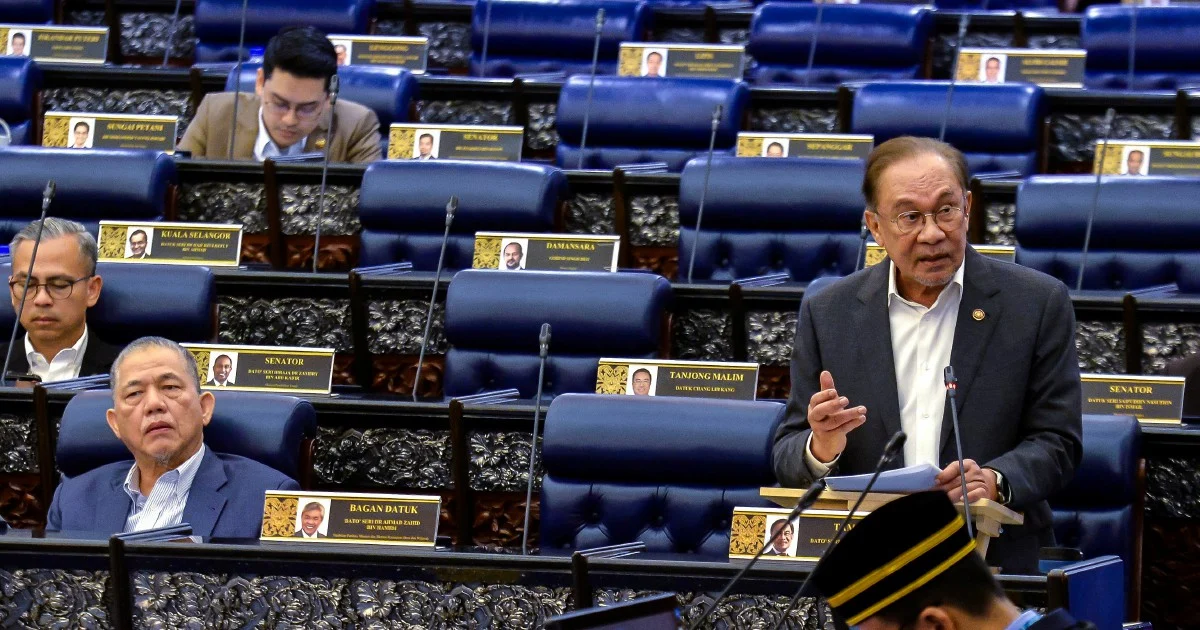
Malaysia's household debt burden has swelled to RM1.73 trillion as of the first quarter of 2026, according to Prime Minister Datuk Seri Anwar Ibrahim, underscoring mounting financial pressures on ordinary Malaysians as the economy grapples with persistent inflationary headwinds and rising living costs. The figure, which translates to 84.4 per cent of the country's gross domestic product, reflects the deepening reliance of households on borrowed funds to sustain consumption and meet essential expenses.
This debt ratio places Malaysia in a precarious position within the region. While Singapore and South Korea have historically maintained household debt ratios exceeding 100 per cent of GDP without triggering systemic crises, the Malaysian economy operates with less structural resilience. The broader economic context matters significantly: Malaysia's household debt continues climbing even as wage growth has stagnated in real terms for large segments of the workforce, particularly among lower and middle-income groups who comprise the bulk of vulnerable borrowers.
The composition of household debt remains heavily skewed towards mortgages, which typically account for between 50 and 60 per cent of total borrowing. However, what distinguishes the current cycle is the accelerating growth in personal loans, credit card debt, and buy-now-pay-later arrangements. These unsecured credit forms carry substantially higher interest rates and pose greater default risks than property-backed lending. The proliferation of fintech lending platforms and digital credit facilities has democratised access to borrowing but simultaneously normalised debt accumulation among younger, less financially literate cohorts.
For Malaysian households, the implications are profound and multifaceted. Many families are caught in a bind where debt servicing obligations consume an increasing share of disposable income, leaving minimal buffer for emergencies or unexpected shocks. Research from Bank Negara Malaysia has consistently shown that approximately 40 per cent of household debt is concentrated among the bottom income quintile, where the capacity to absorb financial stress is lowest. This distribution pattern suggests that aggregate figures mask severe distress among vulnerable populations.
Regional observers view Malaysia's household debt trajectory with growing concern, particularly as interest rates have stabilised at elevated levels following the monetary tightening cycle that began in 2022. Unlike countries with more flexible labour markets or higher wage growth, Malaysia faces structural constraints on household income adjustment. The outsized role of public sector employment, which provides relative stability but limited wage progression, means millions of middle-class households lack the earning capacity to delever organically.
The government's policy response framework has centred on targeted relief measures rather than comprehensive restructuring of the credit ecosystem. Temporary measures such as loan deferrals and targeted assistance for low-income groups provide short-term respite but do not address underlying debt dynamics. Policymakers face an awkward tradeoff: tightening lending standards could slow credit growth but risks triggering economic slowdown, while maintaining loose credit conditions perpetuates unsustainable accumulation patterns.
Bank Negara Malaysia's regulatory approach has attempted to navigate this dilemma through tiered frameworks distinguishing between productive credit for business expansion and consumption-driven borrowing. Enhanced monitoring of property sector leverage and stricter loan-to-value ratios for real estate purchases represent targeted interventions. However, the regulatory perimeter remains porous, with non-bank lenders and informal credit arrangements operating with minimal oversight. The rapid expansion of unregulated lending channels threatens to circumvent prudential controls entirely.
Consumer behaviour patterns reflect both rational economic responses and concerning psychological shifts. Many households view debt as a permanent feature of financial life rather than a temporary instrument. Credit card usage has normalised revolving debt cultures where minimum payments sustain perpetual interest obligations. The emergence of salary-based lending, where employers facilitate direct salary advances, signals how desperation drives Malaysians toward increasingly expensive borrowing arrangements.
Looking forward, the sustainability of current debt levels hinges on three critical variables: employment stability, wage growth, and interest rate trajectories. Any significant deterioration in labour market conditions could trigger cascading defaults, particularly among households with leveraged property positions. Conversely, sustained economic growth coupled with real wage increases among lower-income groups could allow gradual deleveraging. The base case scenario suggests household debt will continue climbing modestly as a share of GDP unless aggressive structural reforms reshape credit markets and income distribution patterns.
The RM1.73 trillion figure represents more than a mere statistical milestone; it symbolises the structural vulnerabilities embedded within Malaysian household finances. Policymakers, regulators, and financial institutions must confront the uncomfortable reality that current consumption patterns remain unsustainable without sustained income growth or significant debt forgiveness mechanisms. The coming years will reveal whether Malaysia's economy possesses sufficient dynamism to generate the growth necessary to stabilise this ratio or whether household finances face a reckoning.

