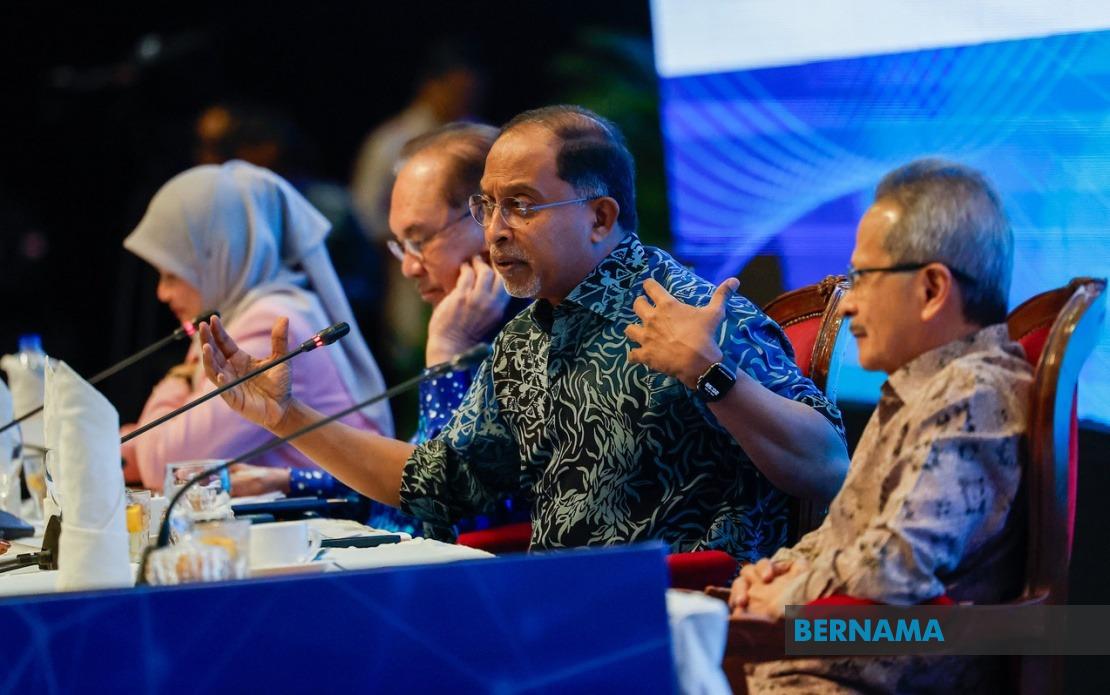
The Malaysian government is signalling a fundamental rethink of how it governs universities and college institutions, with Higher Education Minister Datuk Seri Dr Zambry Abd Kadir flagging the Universities and University Colleges Act 1971 (AUKU) as a priority for reform. Speaking at the MADANI Malaysian Scholars Forum Series 13 at the University of Malaya, where Prime Minister Datuk Seri Anwar Ibrahim moderated discussions on the future of education, Zambry stressed that outdated legislation continues to constrain the sector's ability to evolve alongside global expectations and domestic realities.
The AUKU, a half-century-old statute, has long drawn criticism from academics and civil society advocates who argue its provisions limit institutional autonomy and restrict fundamental freedoms within campus environments. Zambry acknowledged that the current legal architecture contains structural limitations that predate the digital age, transforming economies, and shifting employment landscapes. He emphasized that any modernization effort must specifically address concerns around academic freedom, expression rights, and mechanisms for student participation in governance—areas where Malaysian universities have historically lagged behind international peers and neighbouring jurisdictions.
To operationalize this reform agenda, the Ministry of Higher Education has established an Independent Committee tasked with synthesizing submissions from the academic community, student bodies, and other stakeholders. This consultative approach suggests the government recognizes that simply amending the AUKU piecemeal may prove insufficient; instead, officials are exploring a more ambitious restructuring. Zambry indicated that the ministry is contemplating the drafting of a unified One Higher Education Act that would consolidate various regulatory instruments affecting tertiary institutions under a cohesive, modernized framework. Such consolidation could eliminate conflicting provisions across different statutes and create clearer pathways for institutional policy-making.
The timing of this reform push reflects broader regional and global trends. Across Southeast Asia and internationally, universities are grappling with demands for greater autonomy, expanded digital capabilities, and inclusive governance structures. Malaysia's higher education sector faces particular pressure as it competes for regional talent and funding, particularly in research and postgraduate training. Universities in Singapore, Vietnam, and Thailand have undertaken significant governance reforms in recent years, and Malaysian institutions risk falling further behind if regulatory impediments persist. The AUKU review thus carries implications beyond domestic higher education policy—it touches on Malaysia's competitiveness in the knowledge economy and its ability to retain and attract scholarly talent.
Education Minister Datuk Seri Fadhlina Sidek contributed a complementary perspective to the forum discussion, emphasizing her ministry's commitment to democratizing educational access through what she termed a "humane education" approach. Rather than viewing education primarily as a pipeline for workforce development or a mechanism for stratifying students by examination performance, Fadhlina advocated for holistic pedagogical frameworks that recognize each learner's distinct circumstances, emotional needs, and potential. This ideological orientation aligns with emerging international consensus that education systems should foster resilience, ethical reasoning, and adaptive capability alongside technical competencies.
Fadhlina highlighted initiatives aimed at reaching marginalized populations: the Schools in Hospital programme, educational facilities within rehabilitation centres, and specialized schooling models (K9 and K11) designed for Orang Asli communities. These interventions signal recognition that access gaps often correlate with geographical remoteness, socioeconomic disadvantage, and systemic discrimination. By integrating education provision into healthcare and community settings, Malaysia is experimenting with delivery models that reduce barriers to school attendance. The ministry has also substantially expanded free pre-school access, grounded in evidence that early childhood education produces compounding developmental and social returns.
Fadhlina's framing of children as multi-dimensional subjects—possessing intellect, emotion, ambition, and sometimes anxiety or learning difficulties—contrasts sharply with reductive metrics-driven approaches to education governance. Her observation that youngsters arrive at school carrying invisible burdens suggests an implicit critique of examination-centric systems that may inadvertently reinforce achievement gaps and mental health challenges. This philosophical orientation, if translated into coherent policy and adequately resourced, could reshape how Malaysian schools function, though implementation gaps between ministerial rhetoric and classroom practice remain a perennial challenge.
The convergence of these two ministerial positions—Zambry's focus on institutional governance reform and Fadhlina's emphasis on humanized pedagogy—suggests the government is attempting to construct a more coherent education policy narrative. Historically, Malaysian education governance has been fragmented, with higher and secondary education operating under distinct regulatory and ideological frameworks. A unified approach linking AUKU modernization to broader principles of inclusive, empowering education could provide a more coherent strategic direction. However, success will depend on whether these reform commitments translate into sustained funding, stakeholder engagement, and resistance to political pressures that frequently derail longer-term educational initiatives.
The AUKU review also carries implications for academic freedom—a contentious issue in Malaysian universities. Current provisions have been invoked to restrict campus activism and constrain faculty contributions to public discourse on politically sensitive subjects. International higher education bodies and human rights organizations have periodically flagged concerns about these restrictions, noting that they run counter to globally recognized principles of academic autonomy. If the reform process genuinely incorporates protections for scholarly expression and intellectual inquiry, it could meaningfully expand the space for Malaysian universities to function as genuine intellectual commons rather than extensions of state authority.
Stakeholder consultation will prove crucial to the success of any AUKU revision or replacement legislation. Academic unions, student organizations, civil society advocates, and institutional administrators often hold divergent views on what effective regulation should emphasize. Some may prioritize institutional autonomy and market-driven competition; others may stress equity, social responsibility, and state coordination. The Independent Committee must navigate these tensions while maintaining legitimacy across constituencies. Early signs suggest the government is committed to broad consultation, though critics will watch closely to ensure that consultation translates into genuine influence over reform content rather than serving as symbolic validation of predetermined outcomes.
Looking ahead, the AUKU review represents an opportunity for Malaysia to recalibrate its higher education strategy in ways that acknowledge both global best practices and local contexts. Whether the resulting legislative framework successfully addresses the sector's longstanding constraints—including brain drain, limited research impact, and restricted institutional autonomy—remains uncertain. What appears clear, however, is that government recognizes the status quo is unsustainable, and that modernization requires both structural legal reform and deeper philosophical shifts in how education is conceived and delivered. The coming months will test whether this recognition translates into substantive, enduring change.

