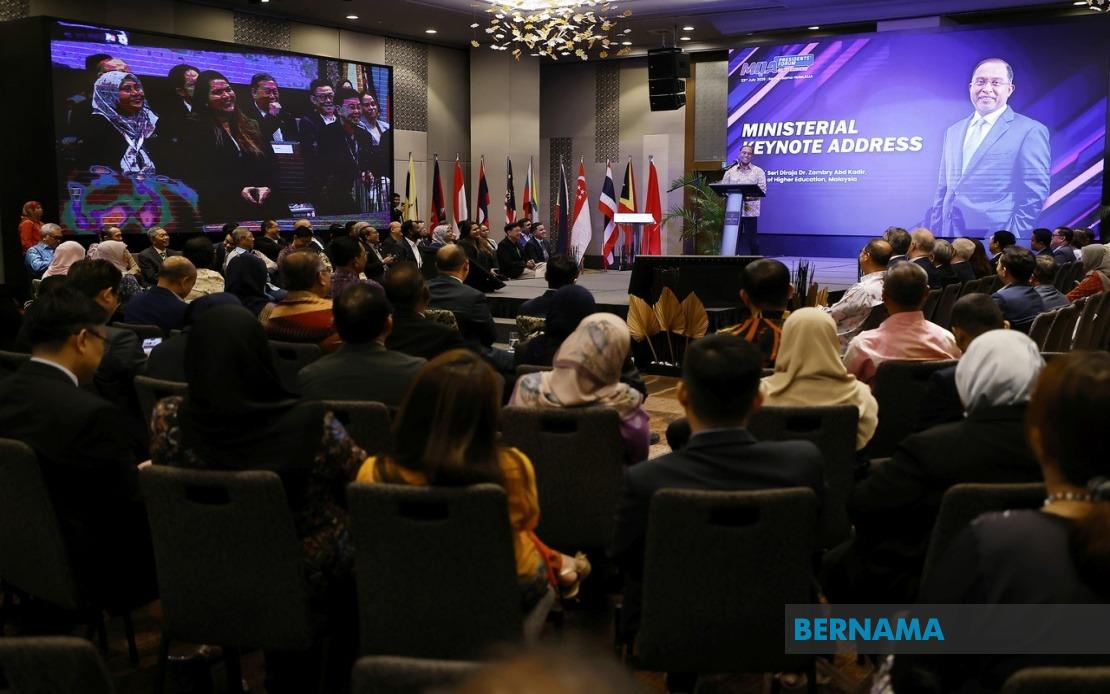
The Malaysian Higher Education Ministry is launching a comprehensive effort to resolve mounting accommodation challenges at polytechnics across the country, acknowledging that rapid institutional growth has outpaced physical infrastructure. Higher Education Minister Datuk Seri Dr Zambry Abd Kadir disclosed the government's plans during remarks at the 2026 Malaysian Qualifications Agency Presidents' Forum in Sepang, signalling that relief measures including hostel repairs and facility upgrades are imminent.
The accommodation crisis stems directly from an unprecedented success in the government's broader push to elevate technical and vocational education as a viable pathway for secondary school leavers. Applications to polytechnics and skills institutions have reached extraordinary levels, driven by sustained promotional campaigns encouraging Sijil Pelajaran Malaysia (SPM) holders to pursue TVET qualifications rather than the traditional university route. This strategic reorientation reflects Malaysia's recognition that skilled trades remain critical to economic competitiveness, particularly as manufacturing and services sectors face persistent labour shortages in specialized areas.
Statistics released by the ministry underline the scale of this educational shift. The 2026/2027 intake saw 30,488 new students register at polytechnics nationwide during the June 22 registration period, representing an achievement rate exceeding 125 per cent of projected targets. For a country accustomed to managing education policy within tighter enrollment parameters, this overshooting reflects genuine enthusiasm among families seeking alternatives to congested university admissions and the promise of faster entry into the workforce. Yet this success has created an immediate tension: the physical plant of Malaysia's polytechnic system, much of which remains aging and under-maintained, cannot accommodate such swelling numbers without strain.
Zambry framed the accommodation problem not as a failure but as a welcome byproduct of policy success. He emphasized that the government remains committed to the TVET expansion agenda and will not sacrifice the momentum gained by turning away qualified applicants. Instead, the Higher Education Ministry has begun mapping hostel conditions across the polytechnic network, prioritizing those facilities deemed to require immediate attention. The minister indicated that repair and maintenance schedules are being escalated, with formal requests submitted to the government for funding allocation to address the most deteriorated buildings.
Older hostel complexes at several institutions have emerged as particular flashpoints. Many polytechnic accommodation blocks, constructed during earlier phases of institutional development, have not undergone comprehensive refurbishment in years. Issues ranging from plumbing failures to structural concerns have accumulated, creating conditions that fall below acceptable standards for student living. The government's acknowledgment of this backlog suggests that deferred maintenance across the polytechnic estate has finally demanded remedial action, a reckoning that might have been avoided had enrollment remained more modest.
The ministry's response includes directing the Polytechnic and Community College Education Department to undertake immediate operational measures beyond infrastructure repair. Director-general Dr Shamsuri Abdullah has received instructions to manage placement logistics and related administrative challenges arising from the enrollment surge. This suggests the ministry is adopting a multi-track approach: securing funding for physical repairs while simultaneously optimizing how students are distributed across available spaces and how facilities are utilized more efficiently.
For Malaysian policymakers, this situation illustrates a broader tension in education planning. The appetite to expand TVET enrollment and redirect students away from saturated university pathways is sound policy, supported by employer demand and demographic need. Yet the execution requires coordination between enrollment targets, capital budgeting, and infrastructure development timelines that do not always synchronize smoothly. The accommodation shortfall, while framed as a temporary challenge by ministry officials, points to systemic underinvestment in polytechnic facilities relative to institutional ambition.
Regionally, Malaysia's polytechnic expansion reflects patterns visible across Southeast Asia, where several nations are similarly prioritizing technical education. However, Malaysia's specific advantage lies in its established polytechnic network and employer relationships built over decades. The challenge now is ensuring that rapid growth does not erode educational quality or student experience, which could undermine confidence in TVET pathways that remain, in some communities, perceived as less prestigious than university education.
The resolution of the accommodation issue also carries implications for equity and access. If hostel shortages force some students to seek off-campus housing in expensive urban areas surrounding polytechnic campuses, this could inadvertently disadvantage rural and lower-income applicants who depend on subsidized on-campus facilities. The government's commitment to repairing existing hostels suggests awareness of this concern, though the timeline for completion remains uncertain.
Zambry's assurance that the ministry is addressing the problem carries less weight without concrete timelines or funding commitments. Malaysian bureaucratic processes often involve lengthy approval cycles and budget scrutiny, suggesting that hostel repairs requested now may not materialize for months or even years. Students enrolled in the current intake could graduate before physical conditions improve significantly, creating a cohort who endure substandard living conditions while institutional problems are addressed for their successors.
Looking ahead, the Higher Education Ministry faces a decision about whether the current accommodation crisis represents a permanent constraint on polytechnic growth or a temporary friction point. If applications continue exceeding targets by 25 per cent or more, the government must either expand on-campus housing capacity substantially or establish clear enrollment caps that accept fewer applications. The stakes are significant: a shrinking of TVET intake would signal retreat from a strategic education policy priority, potentially reinforcing perceptions that technical fields remain secondary options.
The episode also underscores the importance of integrated planning in education expansion. Building enrollment capacity, securing physical infrastructure, training faculty, and ensuring service quality must advance in parallel rather than sequentially. Malaysia's polytechnic system appears to have optimized admissions outreach without equivalent preparation of facilities, a mismatch now demanding urgent attention and considerable public expenditure to correct.

