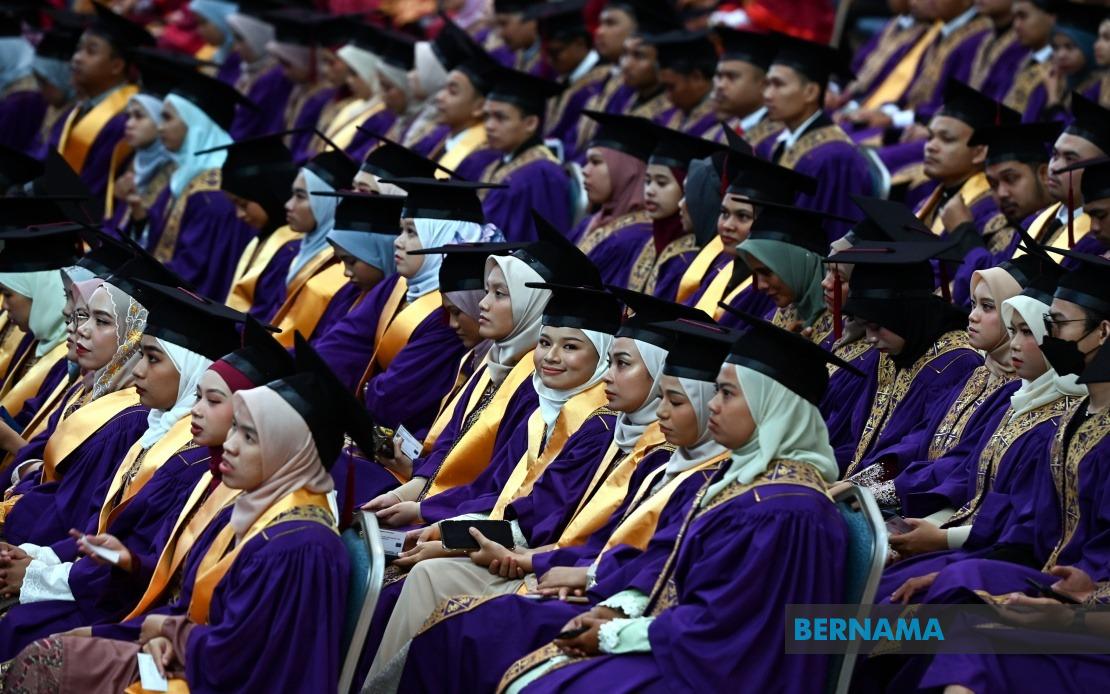
Malaysia's Ministry of Higher Education announced on Wednesday that public universities must cease all disciplinary actions against students exercised solely on grounds of freedom of speech, expression, criticism, and peaceful assembly, effective immediately. The directive represents a significant shift in campus governance and signals the government's commitment to expanding student liberties within the tertiary education system, long constrained by restrictive legislation dating back decades.
The move draws directly from Prime Minister Datuk Seri Anwar Ibrahim's recent remarks at the Malaysia MADANI Intellectuals Forum Series 13, where he emphasised the need to repeal the Universities and University Colleges Act 1971, commonly known as Act 30 or AUKU. This 1971 legislation has historically granted university authorities broad powers to restrict campus activism, student organising, and political expression, making Malaysia's universities notably restrictive compared to regional peers. Anwar's intervention signals recognition that student freedoms constitute a fundamental democratic principle worthy of immediate action rather than gradual legislative processes.
The ministry identified several specific provisions in AUKU and accompanying Student Disciplinary Rules as candidates for immediate exemption. These include the right of students to establish, manage, and operate student associations and clubs without excessive administrative interference; the freedom to organise campus activities ranging from cultural events to educational forums; and protection for expression through various media channels, from publications to digital platforms. Additionally, the exemptions extend to peaceful assembly and the distribution or publication of documents, areas previously subject to stringent approval mechanisms.
However, the ministry's statement carefully balanced expansive speech protections with maintained responsibility for serious misconduct. Acts involving violence, vandalism, property destruction, criminal offences, academic dishonesty, or violations of legitimate disciplinary standards remain prosecutable under existing law. This distinction reflects a nuanced approach: defending political expression and peaceful organising while preserving institutional capacity to address genuinely harmful behaviour. The framework essentially shifts the burden—universities must now justify restrictions on expression through reference to concrete harm or legal violations rather than broad preventive authority.
The reform extends beyond public universities governed by AUKU. The ministry announced parallel reviews for Universiti Teknologi MARA and the International Islamic University Malaysia, which operate under separate governing frameworks but similarly constrain student freedoms. Aligning these institutions with the liberalisation trajectory demonstrates commitment to systemic change rather than selective exception. Such alignment carries particular significance given MARA's status as a primary pathway for Bumiputera students and IIUM's role in Malaysia's Islamic higher education landscape.
Anwar specifically directed that implementation proceed without awaiting completion of comprehensive legislative reforms. This pragmatic instruction acknowledges that developing new legislation encompasses lengthy drafting, cabinet review, and parliamentary processes—timelines that would delay relief for students entering the system now. By decoupling immediate administrative relief from legislative overhaul, the government has created space for meaningful change within existing authority, a approach that respects urgency while maintaining legal continuity.
The development carries substantial implications for Malaysian academia and student life. Universities historically functioned as politically controlled zones where students faced dismissal for union organising, publication of critical commentary, or attendance at assemblies deemed unsuitable by administrators. This new framework theoretically restores campuses as spaces for intellectual contestation and political development—functions essential to democratic societies but compromised in Malaysia's system. Student unions can potentially reconstitute themselves after years of marginalisation; political clubs can operate; newspapers can publish without pre-censorship; and peaceful demonstrations become protected activities rather than grounds for expulsion.
The regional context makes this development noteworthy. Southeast Asia contains several countries with restrictive campus environments, and Malaysia's transition potentially influences peer institutions. Thailand's universities remain heavily controlled by military-influenced governance; Singapore maintains tight restrictions on student activism; and Indonesia has gradually expanded but still constrained campus freedoms. Malaysia's decision to systematically reduce restrictions positions the country as somewhat more liberal within the regional framework, potentially affecting how neighbouring governments approach their own campus governance debates.
Implementation challenges will inevitably emerge. University administrators accustomed to expansive disciplinary authority may resist the framework or interpret it narrowly. Questions about what constitutes protected expression versus actionable misconduct will generate disputes. Student expectations may exceed what the exemptions actually protect, particularly regarding political organising that intersects with institutional operations. The ministry's commitment to developing a structured and inclusive governance framework through stakeholder engagement suggests awareness of these implementation complexities, though success will depend on genuine consultation with students, faculty, and administrators rather than largely symbolic engagement.
The timing of these reforms within Anwar's broader governance agenda carries political significance. The Prime Minister has consistently positioned himself as a defender of democratic liberalisation and civil society development. University reforms substantiate these claims with concrete policy changes affecting hundreds of thousands of students annually. For a government seeking legitimacy through democratic credentials, such moves carry value beyond immediate campus impacts—they signal direction of travel regarding freedom more broadly.
Longer-term success depends on translating these immediate exemptions into durable legal protection through AUKU reform. Administrative directives, while valuable, remain subject to reversal by subsequent governments or reinterpretation by cautious administrators. Proper legislative reform would embed these protections in statute, ensuring durability and providing basis for legal challenges if violations occur. The ministry's parallel review process for statutory amendments therefore constitutes the substantive reform component, with current measures functioning as holding action pending completion.
For Malaysian students and academics, the announcement represents a watershed moment after years of constrained campus expression. Whether the promise translates into genuine freedoms or remains performative will emerge through actual disciplinary outcomes, administrator responses, and student willingness to test boundaries. The framework's success ultimately depends not on ministry statements but on whether universities actually cease prosecuting students for speech and association, whether student unions can genuinely organise, and whether political discourse flourishes alongside institutional order. These practical questions will determine whether Malaysia's campuses transform into genuine intellectual communities or merely adopt more permissive theatrical performance while maintaining underlying control mechanisms.

