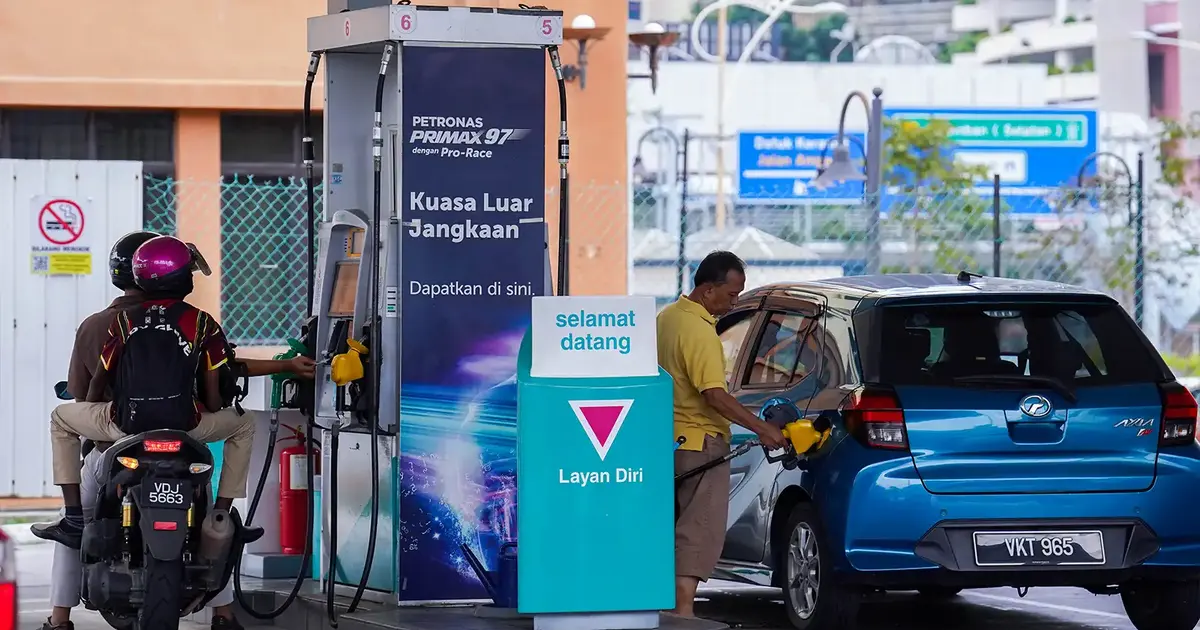
Malaysia faces an escalating fiscal challenge as its fuel subsidy bill is projected to swell to RM40 billion by 2026, underscoring the persistent strain on the federal budget despite efforts to manage energy costs. Prime Minister Anwar Ibrahim has sought to reassure Malaysians that domestic petroleum supplies remain adequate and secure, attempting to address concerns about the nation's capacity to sustain current subsidy regimes while meeting energy demand across the economy.
The anticipated RM40 billion expenditure represents a significant portion of the government's budgetary commitments and reflects the delicate balancing act officials must perform. Supporting affordable fuel prices serves multiple policy objectives—protecting household purchasing power, maintaining industrial competitiveness, and preventing inflationary pressures that could ripple through sectors dependent on cheap energy. Yet the mounting cost of these subsidies diverts resources from other pressing needs, including infrastructure development, healthcare improvements, and education spending that economists argue would deliver stronger long-term economic returns.
Understanding the dynamics behind this projection requires examining both global and domestic factors. International crude oil prices remain volatile, influenced by geopolitical tensions, production decisions by major exporters, and shifts in global energy demand. Malaysia's status as a net energy exporter historically provided fiscal breathing room, but demographic changes and industrial expansion have gradually eroded the nation's surplus production capacity. This structural shift means that subsidising domestic fuel increasingly competes directly with export revenues, limiting the government's financial flexibility.
Petroleum subsidies function as a hidden transfer to consumers that masks the true cost of energy consumption. By maintaining prices below international benchmarks, authorities insulate drivers and industries from genuine market signals about resource scarcity and efficiency. This approach has long-term consequences: it encourages wasteful consumption patterns, defers necessary investments in renewable energy alternatives, and creates political obstacles to eventual subsidy reforms, as citizens grow accustomed to artificially low prices and resist adjustment. Regional peers like Indonesia have attempted gradual subsidy rationalisation with mixed results, facing public backlash despite clear fiscal imperatives.
Prime Minister Anwar's emphasis on petroleum supply stability addresses a legitimate concern underlying subsidy discussions. Malaysia's proven oil reserves currently support decades of production at existing rates, and the country continues exploration activities aimed at discovering additional resources. Natural gas reserves are more abundant still, positioning Malaysia advantageously within Southeast Asia. However, assurances about supply adequacy must be contextualised within consumption growth trajectories and the structural challenge of maintaining export-competitive refining and petrochemical industries while meeting surging domestic demand from an expanding middle class and rapid industrialisation in manufacturing and services sectors.
The fiscal trajectory outlined by the RM40 billion forecast demands serious policy reconsideration. Subsidies operate as regressive transfers—wealthier households with multiple vehicles or energy-intensive businesses benefit disproportionately compared to lower-income groups relying on public transport. Targeted cash assistance or direct subsidies for genuinely vulnerable populations would deliver more equitable outcomes while liberating substantial public resources. Singapore's experience with market-based energy pricing, despite limited domestic resources, demonstrates that developed pricing mechanisms combined with well-designed social safety nets can achieve both efficiency and equity objectives.
Regional context matters significantly for Malaysian policymakers. Thailand, Vietnam, and Indonesia have each experimented with subsidy adjustments, reforms, and reversals in recent years, generating varied political and economic consequences. The regional trend toward energy transition and renewable capacity expansion creates both competitive pressures and opportunities. Countries that maintain expensive subsidy regimes risk falling behind in attracting investment toward clean energy infrastructure and technology sectors that increasingly dominate economic growth patterns. Malaysia's renewable energy ambitions, reflected in commitments to expand solar and wind capacity, remain constrained by the distorted price signals created when fossil fuels are artificially cheap.
Implementing subsidy reform requires careful sequencing and communication. Government officials must frame changes not as austerity measures but as investments in long-term fiscal sustainability and economic competitiveness. Building public acceptance involves transparent communication about the true costs of current arrangements, demonstration of benefits from redirected spending, and phased implementation allowing households and businesses adjustment periods. Complementary policies—enhanced public transport, fuel efficiency standards, renewable energy support—can ease transitions and maintain social consensus around necessary adjustments.
The RM40 billion projection should catalyse broader debate about Malaysia's fiscal priorities and economic model. As the country positions itself within evolving global energy markets and commits to sustainability objectives, perpetually expanding subsidy commitments increasingly represent strategic misalignment. Policymakers face mounting pressure to demonstrate that current arrangements serve genuine national interests rather than reflecting political expediency. While petroleum supply security remains essential, equally important is ensuring that energy policy frameworks support long-term competitiveness, environmental stewardship, and equitable development outcomes that benefit all Malaysians rather than concentrating advantages among the largest consumers.

