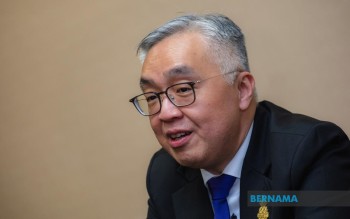
The Food and Drinks Malaysia exhibition is set to deliver stronger commercial performance than the previous year's RM1.081 billion in sales, even as the nation's food and beverage sector grapples with mounting logistical obstacles and inflationary pressures stemming from global tensions. Henri Tan, managing director of SIAL Network ASEAN & India, has expressed confidence that this year's event will eclipse the benchmark established in 2025, citing accelerating buyer appetite for food commodities and ingredients alongside an expanding roster of business-to-business transactions across the three-day programme held at the Malaysia International Trade and Exhibition Centre.
The expo's trajectory reflects underlying optimism within Malaysia's F&B industry despite visible headwinds in the form of elevated food prices linked to costlier logistics. Geopolitical instability in West Asia, particularly the conflict threatening maritime passage through the Strait of Hormuz, has created genuine supply vulnerabilities that are now flowing through to manufacturers and retailers. These transportation bottlenecks have translated directly into higher procurement costs for producers importing ingredients and finished products via traditional maritime routes.
Visitor attendance is projected to climb twenty percent to 18,000 participants compared with the 15,184 recorded twelve months prior, a trajectory that Tan attributes predominantly to heightened international engagement. The exhibition roster encompasses more than 450 participating companies, with approximately sixty percent representing overseas enterprises spanning South Korea, Brazil, Turkey and other established food-producing nations. This geographic diversity signals that Malaysia's marketplace continues attracting multinational players seeking entry into ASEAN's distribution networks and consumer bases.
The SIAL network, formally Salon International de l'Alimentation and recognised globally as the preeminent food innovation platform, partners with domestic organisers to position Malaysia within broader supply and distribution frameworks connecting regional operators with international counterparts. This positioning carries particular strategic value for Malaysian producers and exporters seeking visibility among procurement specialists and distributors across emerging markets where demand for quality food products remains robust.
Tan has articulated several policy recommendations directed at government consideration within the forthcoming 2027 Budget allocation cycle. He advocates targeted support for technological adoption across the F&B sector, specifically funding mechanisms enabling workforce development programmes centred on digitalisation competency. Small and medium-sized enterprises constitute the backbone of Malaysia's food manufacturing ecosystem, yet many lack capital access necessary for transitioning toward automated production systems and data-driven operational methodologies.
The potential application of artificial intelligence technologies represents a substantive opportunity for improving manufacturing efficiency and supply chain visibility, though widespread adoption remains constrained by training gaps and upfront investment requirements. Tax incentives and subsidy structures targeted at SMEs could meaningfully accelerate this transition, permitting entrepreneurs to maintain competitive positioning as production technologies advance across regional competitors. Tan emphasises that enterprises mastering AI-augmented operations will realise productivity improvements capable of offsetting input cost escalations otherwise eroding profitability margins.
Regional food security architecture remains fragmented across ASEAN member states, with individual nations increasingly implementing protectionist measures prioritising domestic supply availability over trade liberalisation. Malaysia, alongside Thailand and Indonesia, maintains capacity for deepening intraregional sourcing arrangements that could substantially reduce import dependence on European and Middle Eastern suppliers experiencing their own logistics disruptions. Currently, local agricultural output proves insufficient to satisfy domestic processing requirements, creating structural reliance on external procurement pathways now compromised by geopolitical friction.
Export quota restrictions imposed by neighbouring countries have forced Malaysian manufacturers toward Indian suppliers as alternative sourcing channels, fragmenting supply chains and introducing fresh cost layers through extended procurement pipelines. Enhanced regulatory harmonisation among ASEAN governments could facilitate smoother cross-border ingredient flows, permitting manufacturers to consolidate supply arrangements within the region and recover cost efficiency lost to current fragmentation. Such coordination remains politically challenging given competing domestic priorities, yet mutual food security benefits offer powerful incentive structures for bilateral and multilateral engagement.
Food innovation emerges as the primary adaptive mechanism through which Malaysian operators can navigate simultaneous challenges of geopolitical instability, input cost inflation and supply reliability concerns. Localised production initiatives including oyster farming expansion in Johor, value-added durian products targeting premium market segments and pepper-based product development utilising indigenous agricultural resources demonstrate viable pathways toward reducing import exposure. These initiatives simultaneously establish higher-margin product categories capable of commanding premium positioning within regional and international distribution channels.
Historical resilience patterns within the food sector offer encouraging precedent for navigating contemporary challenges. The industry successfully navigated the 2002 SARS outbreak and COVID-19 pandemic through adaptive operational methodologies, modified consumer engagement strategies and continuous technological integration. Tan observes that fundamental human survival instincts drive continuous industry evolution, with businesses systematically improving efficiency metrics and developing novel product formulations responding to shifting consumer preferences and emerging market opportunities.
The cumulative trajectory evident across the 2026 exposition reflects Malaysian F&B sector participants demonstrating pragmatic engagement with structural constraints rather than defensive retreat. While geopolitical uncertainties persist and cost pressures remain sustained, industry participants are actively pursuing innovation-driven differentiation and regional supply chain optimisation. Government policy support aligned with industry requirements for technological investment and regulatory streamlining could substantially amplify adaptation capacity across the sector, positioning Malaysia as a regional innovation nexus within ASEAN's increasingly strategically significant food production ecosystem.
The exposition's commercial performance will serve as meaningful barometer regarding underlying industry confidence and investment intention across both domestic and international participants. Projections exceeding the RM1.081 billion benchmark would signal continued market appetite despite acknowledged headwinds, providing policymakers quantifiable evidence supporting targeted intervention mechanisms. Conversely, sustained commercial momentum would validate industry claims that innovation and regional cooperation constitute viable strategic responses to external pressures, potentially informing policy frameworks beyond the food sector across Malaysia's broader manufacturing and export-dependent economic base.

