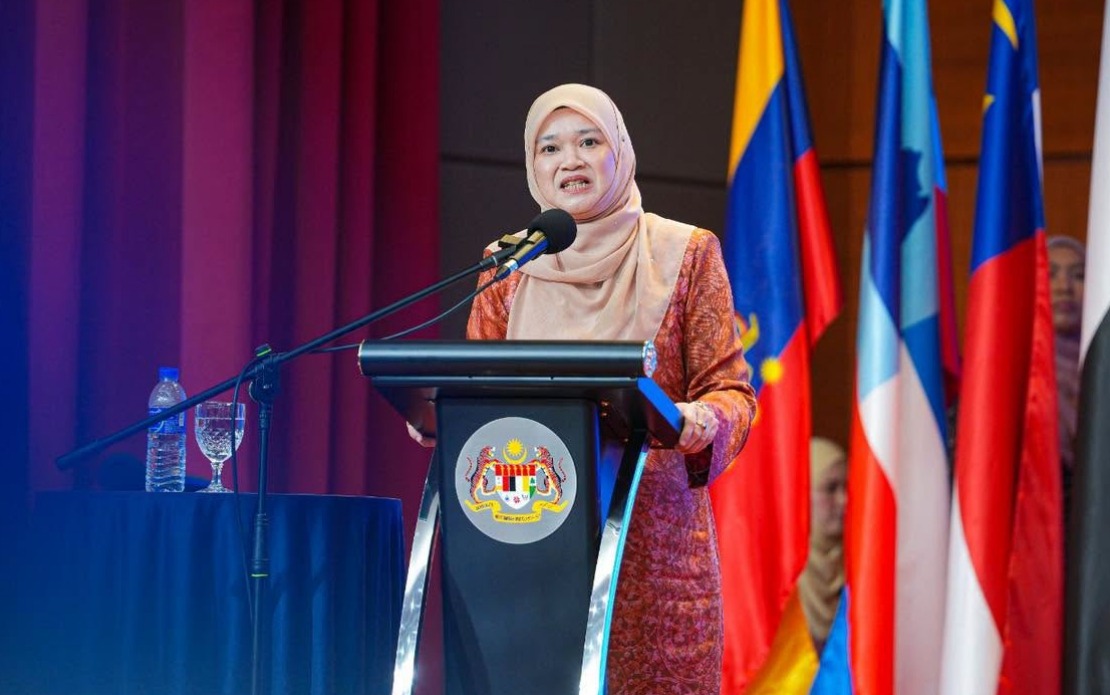
The Malaysian Education Ministry is pursuing significant reforms to expand educational opportunities for students incarcerated in prison institutions, recognising that their circumstances should not limit their aspirations for higher learning. Education Minister Fadhlina Sidek announced at the 17th Hijrah Kasih Programme in Kajang that the ministry intends to award merit for participation in co-curricular activities and sports, which would factor into university admission considerations for students who complete their Sijil Pelajaran Malaysia (SPM) before release. This initiative represents a watershed moment in how Malaysia's education system approaches rehabilitation and reintegration of young people within the correctional system.
The underlying philosophy driving this policy shift centres on ensuring that educational trajectories do not terminate once students leave prison institutions. Rather than treating incarceration as an educational endpoint, the ministry envisions creating pathways that allow these students to transition seamlessly into tertiary education. Fadhlina emphasised that the merit earned through co-curricular participation would be considered seriously during the university application process, signalling that prison institutions are legitimate educational environments capable of producing achievements worthy of recognition by Malaysia's higher education sector.
Beyond co-curricular recognition, the ministry is simultaneously examining mechanisms to certify vocational skills that students acquire during their incarceration. In consultation with the Technical and Vocational Education and Training division, officials are developing frameworks to award formal skills certificates for competencies gained through prison training programmes. Students currently undertake instruction in practical domains including sewing and food preparation—skills with tangible labour market value that could facilitate employment and economic independence upon reintegration into society. This dual approach addresses both academic and practical dimensions of rehabilitation, reflecting international best practice in correctional education.
The academic performance data emerging from prison schools provides compelling evidence for policy expansion. Students have achieved a perfect 100 percent pass rate in the SPM for two consecutive years, a statistic that fundamentally challenges perceptions that incarceration inherently compromises educational outcomes. Fadhlina stressed that this achievement demonstrates that success depends not on institutional location or facility quality but on individual determination and commitment. This framing deliberately repositions prison students as capable learners whose circumstances differ but whose intellectual capacity remains unchanged, countering stigma that might otherwise impede their post-release prospects.
A particularly consequential development concerns the proposed recognition of PAJSK scores—Physical, Sports and Co-curricular Assessment results—for prison school students. Datuk Zainal Abas, the deputy director-general overseeing school operations, outlined plans to implement formal recognition this year, which would enable SPM candidates from 2027 onwards to receive a 10 percent merit boost when submitting university applications. This quantum of additional merit could prove decisive for borderline candidates, potentially opening tertiary education access to students who might otherwise fall below intake thresholds. The timeline suggests the ministry is moving deliberately but with genuine urgency to implement these changes.
Digitalisation forms another pillar of the ministry's modernisation agenda for prison education. Officials are exploring provision of the DELIMa platform—Digital Educational Learning Initiative Malaysia—to both educators and students within integrity schools and Henry Gurney schools throughout the country. This initiative would connect incarcerated learners to online educational resources and digital learning opportunities comparable to those accessed by students in conventional settings. By bridging the digital divide that typically disadvantages prison populations, the ministry aims to ensure that curricular content and pedagogical methods remain contemporaneous with mainstream educational practice, preventing the marginalisation of prison school curricula.
The rollout of controlled DELIMa access to students represents a carefully calibrated response to security requirements and educational equity. Officials acknowledge that unrestricted internet access within correctional facilities remains incompatible with institutional security protocols, yet they are committed to providing sufficient digital connectivity to enable meaningful online learning engagement. This nuanced approach demonstrates recognition that rehabilitation and security represent complementary rather than contradictory institutional objectives, and that educational advancement can occur within security frameworks when properly designed.
Parental involvement emerges as a critical success factor in the ministry's analysis. Fadhlina explicitly highlighted the importance of sustained family support, particularly during the phases when incarcerated young people experience their greatest psychological and social challenges. The minister's emphasis on parental presence and encouragement suggests that the education system cannot function in isolation; rather, family engagement amplifies the protective effects of educational participation. This insight reflects growing evidence that familial bonds facilitate reintegration outcomes and reduce recidivism rates following release.
The broader policy context positions these initiatives within Malaysia's commitment to rehabilitation-focused corrections. Rather than treating young people in prison institutions purely as security risks, the government is investing substantially in educational infrastructure and opportunity creation. This philosophical reorientation aligns with international penal reform discourse while acknowledging Malaysia's particular demographic challenges, given that many incarcerated youth represent vulnerable populations who previously experienced educational marginalisation or disruption.
For Malaysian society, these reforms carry significant implications. By enabling incarcerated students to access higher education pathways, the country increases human capital development even among populations historically excluded from tertiary education. University-educated ex-offenders typically experience lower recidivism rates and achieve greater economic stability, generating positive externalities for communities and reducing long-term criminal justice expenditures. The policy thus represents both a humanitarian commitment to second chances and a fiscally prudent investment in public safety.
The implementation timeline suggests these changes could become operational within months rather than years, indicating political commitment to rapid execution. However, universities will require clear guidance on how to weight PAJSK merit within admission frameworks already constrained by limited places. The ministry must articulate standardised approaches that prevent inconsistent treatment across institutions while enabling selective universities to maintain academic standards. This coordination challenge will prove crucial to policy success.
International observers of Malaysia's education system may view these prison school reforms as indicative of a maturing approach to inclusive education and rehabilitation. The initiatives demonstrate that Ministry of Education leadership recognises education's transformative potential even within correctional settings, and is willing to implement structural reforms—including curriculum recognition and digital access—to realise that potential. As implementation unfolds, outcomes data will prove instructive for other Southeast Asian nations grappling with comparable challenges in correctional education systems.

