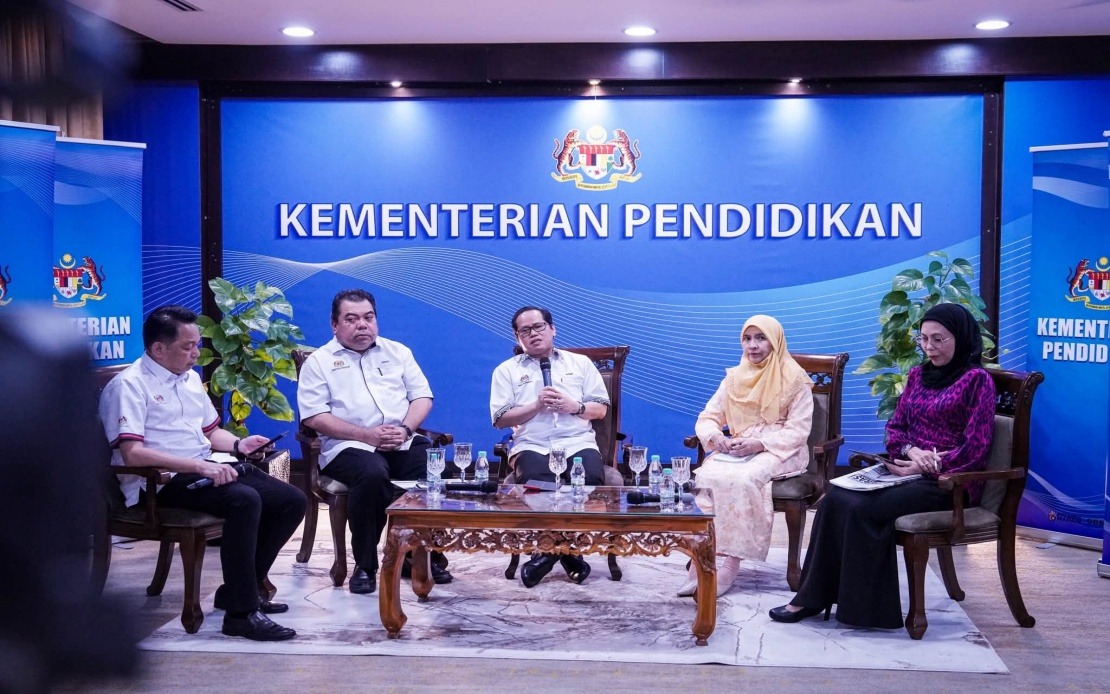
The Malaysian education system is grappling with mounting safety and welfare challenges that demand institutional-level responses, prompting the Ministry of Education to implement a sweeping new Student Protection Policy designed to standardise safeguarding practices across the nation's entire school network. The scale of the initiative reflects growing concerns about student safety incidents occurring with alarming frequency, prompting policymakers to establish clearer protocols and preventive frameworks rather than continuing with fragmented, school-by-school approaches.
Education director-general Datuk Mohd Azam Ahmad disclosed during a recent policy dialogue that the ministry processes student incident reports on a daily basis, with troubling frequency in some cases. He revealed that severe incidents—including those resulting in fatalities—sometimes number more than ten cases within a single day, a statistic that underscores the urgency driving the new policy framework. These figures, though shocking, remained largely invisible to the public eye, masked by what appears to casual observers as orderly school environments. The disconnect between the calm facade of educational institutions and the administrative reality of constant crisis management prompted the ministry to develop comprehensive guidelines rather than relying on ad-hoc responses.
The new policy framework, formally introduced through a circular dated July 1, represents a fundamental shift in how schools approach student welfare and protection. Rather than treating student safety as a peripheral concern, the initiative positions it as central to institutional operations. All school personnel and external individuals engaging with school communities must now sign a Letter of Compliance affirming their commitment to the Student Protection Policy, creating an accountability mechanism that extends beyond traditional teaching staff to include visitors, contractors, and other stakeholders entering school premises.
Datuk Mohd Azam emphasised that contemporary educational challenges differ markedly from those encountered by previous generations of educators. Today's students navigate a digitally saturated environment exposing them to external influences at younger ages and with greater intensity than ever before. This acceleration of exposure to complex social phenomena—from peer pressure dynamics amplified through social media to early encounters with substance-related issues—requires educators to develop competencies beyond subject-matter expertise. Schools must now function as comprehensive support systems addressing not merely academic development but also psychological resilience, emotional regulation, and character formation.
Teachers themselves face transformed role expectations that extend into domains traditionally reserved for families and social services. Beyond delivering curriculum content, educators now shoulder responsibility for identifying and responding to mental health concerns, recognising signs of abuse or exploitation, and providing initial support during crises. This expanded mandate requires professional development, clear protocols, and institutional backing to prevent burnout and ensure educators can function effectively. The policy framework explicitly addresses teacher welfare alongside student protection, acknowledging that unsupported educators cannot reliably safeguard young people.
The initiative encompasses multiple interconnected reform areas that together constitute a holistic approach to school safety and student wellbeing. Mental health support mechanisms take priority, recognising that psychological distress frequently underlies behavioural problems and safety incidents. Reproductive and social health education components acknowledge that providing accurate, age-appropriate information helps students make safer decisions. Violence prevention strategies address both direct physical threats and emerging forms of harm, particularly child sexual violence, which often occurs within institutional settings where power imbalances favour perpetrators. Substance abuse prevention programming recognises that early intervention during formative years significantly impacts long-term outcomes.
The policy framework also incorporates student voice mechanisms, representing a departure from traditional top-down school governance models. Empowering students to report concerns, suggest improvements, and participate in safety discussions creates feedback loops that help identify problems adults might otherwise miss. Students often possess detailed knowledge of peer-group dynamics, emerging social pressures, and institutional vulnerabilities that adults cannot access. Formalising channels for student input transforms young people from passive recipients of protection into active participants in creating safer school environments.
The dialogue session featuring Children's Commissioner of the Human Rights Commission of Malaysia (SUHAKAM) Dr Farah Nini Dusuki alongside key ministry officials signalled the policy's alignment with international human rights standards and child protection principles. Malaysia increasingly acknowledges its obligations under international conventions and regional frameworks addressing child welfare. Incorporating perspectives from human rights bodies ensures the policy framework reflects established best practices while remaining responsive to Malaysian contexts and constraints.
For Malaysian parents and educators, the policy implementation represents both promise and practical challenge. Schools must develop institutional capacity to implement complex new protocols while managing limited resources and competing demands. Effective rollout requires substantial professional development investment, clear communication to all stakeholders, and sufficient time for genuine behaviour and practice change rather than merely symbolic compliance. The nationwide scope—encompassing over 10,000 institutions—means implementation quality will vary considerably across urban and rural settings, well-resourced and underfunded schools, and regions with different baseline capacities.
The timing of this policy coincides with broader Southeast Asian discussions about educational quality and student wellbeing. Regional peers including Singapore, Thailand, and Indonesia have similarly advanced student protection frameworks, creating opportunities for knowledge exchange and collaborative problem-solving. Malaysia's comprehensive approach positioning protection as inseparable from educational excellence, rather than as an afterthought or burden, signals evolving understanding that schools cannot focus solely on academic metrics while ignoring the safety and psychological health of students they serve.
Successful implementation will require sustained political commitment, adequate resourcing, and genuine cultural change within educational institutions. Schools accustomed to operating with minimal external oversight must now accept greater transparency and accountability regarding student safety outcomes. This transition, while necessary, may encounter resistance from some quarters. The ministry's approach of establishing clear compliance mechanisms—through the Letter of Compliance requirement—attempts to create uniform minimum standards while allowing flexibility in implementation approaches suited to individual school contexts and circumstances.

