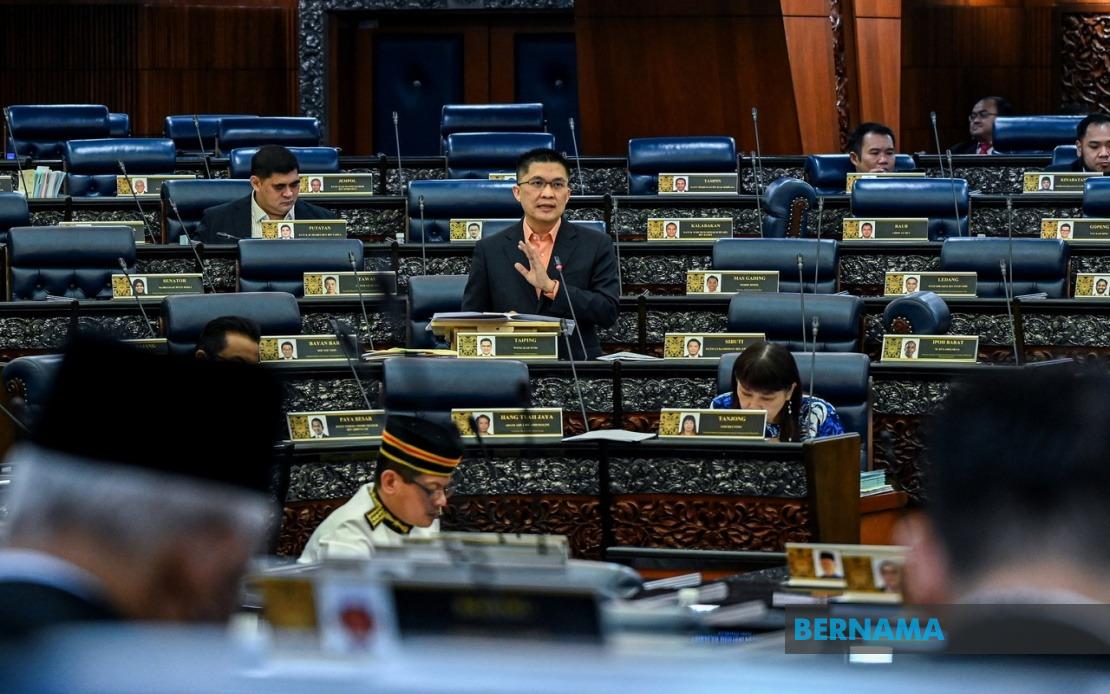
The Ministry of Education has positioned bridging the digital divide as a centrepiece of its Malaysia Education Blueprint (RPM) 2026-2035, recognising that connectivity disparities between urban and rural regions remain a fundamental obstacle to equitable learning outcomes. Deputy Education Minister Wong Kah Woh articulated this commitment during parliamentary questioning on July 15, emphasising that infrastructure modernisation will form the backbone of the ministry's approach to ensuring no student or educator is left behind in an increasingly digital education ecosystem.
The breadth of the ministry's vision extends beyond merely providing internet connections. Wong outlined a dual-pronged strategy that couples physical infrastructure development with a robust digital learning ecosystem. The Digital Educational Learning Initiative Malaysia (DELIMa) platform serves as the technological foundation, housing comprehensive digital materials accessible to both educators and learners. This platform represents an institutional acknowledgment that connectivity alone is insufficient; students require access to curated, quality digital content aligned with curriculum standards. The ministry's commitment to uploading all relevant digital materials to DELIMa signals a systematic effort to democratise access to educational resources that might previously have been concentrated in well-resourced urban institutions.
A critical dimension of the strategy involves establishing uniform digital competency standards. The ministry has committed to ensuring all students attain at least an intermediate level of digital competency, measured through a Digital Competency Score. This standardisation represents a departure from the historical reality where digital skills acquisition depended heavily on geographical location and socioeconomic circumstance. By establishing baseline competency expectations applicable nationwide, the ministry is effectively redefining what constitutes an adequate education for Malaysian students entering the digital economy.
Hardware and connectivity expansion remains the immediate priority. Wong confirmed that all schools, regardless of location, will be targeted for high-speed internet installation. The deliberate emphasis on selecting appropriate technologies and methodologies suggests the ministry recognises that one-size-fits-all solutions prove ineffective in Malaysia's diverse geography. Rural schools may require different technological approaches than their urban counterparts, perhaps including satellite connectivity or fixed wireless access rather than traditional fibre networks. This pragmatic flexibility indicates serious consideration of implementation challenges across varied terrain and existing infrastructure landscapes.
The ministry's track record provides grounds for cautious optimism. Under the previous Malaysian Education Development Plan (PPPM) 2013-2025, measurable progress in narrowing achievement gaps had been documented. The average grade score disparity between urban and rural students in the 2024 Sijil Pelajaran Malaysia (SPM) examination contracted by 26.23 per cent, representing tangible closure of opportunity gaps. More dramatically, gender parity in SPM certification eligibility improved by 52.78 per cent, while socioeconomic status-based gaps diminished by 57.75 per cent. These figures demonstrate that targeted interventions can shift deeply entrenched educational inequalities, providing empirical validation for the more expansive digital initiative.
Yet these achievements also reveal the magnitude of remaining work. A 26 per cent reduction in the urban-rural achievement gap, while substantial, indicates that meaningful disparities persist. The ministry's fresh commitment under RPM 2026-2035 can be understood as building momentum from previous successes while addressing dimensions of inequality that conventional approaches have proven insufficient to resolve. Digital access and competency emerge as the ministry's evolved response to persistent structural inequalities.
Equitable distribution of physical resources forms another pillar of the strategy. Wong committed to ensuring digital devices and educational materials are allocated fairly across institutions, explicitly targeting reduction of access disparities between developed and underdeveloped regions. This dimension addresses the reality that infrastructure alone—even high-speed internet—proves inadequate without complementary hardware. Students in remote areas face compounded disadvantages if schools lack sufficient computers, tablets, or other learning devices. The ministry's pledge to manage distribution with equity considerations recognises this systemic challenge.
The Digital Education Policy framework provides the governing structure within which these initiatives operate. Rather than ad-hoc interventions, the ministry has developed a comprehensive policy architecture to guide implementation across the sprawling education system. This institutional embedding suggests these commitments extend beyond ministerial rhetoric, representing concrete policy commitments that subsequent administrations will inherit and, potentially, advance or modify.
Teacher capacity and wellbeing constitute an often-overlooked dimension of digital transformation. Wong highlighted seven measures implemented since 2023 to reduce educator workload, including elimination of redundant administrative record-keeping. This attention reflects an understanding that digital education initiatives impose burdens on teachers who must master new platforms and pedagogies whilst maintaining existing classroom responsibilities. Workload reduction measures recognise that sustainable digital transition requires supporting the professionals implementing these changes, not merely mandating their adoption from above.
The implications for Southeast Asia extend beyond Malaysia's borders. Regional neighbours grappling with similar urban-rural educational divides—Thailand, Indonesia, Philippines—will likely scrutinise Malaysia's implementation strategy as a potential model. Success in bridging Malaysia's digital divide could demonstrate feasible approaches to regional inequality; conversely, implementation shortfalls would highlight the complexity of achieving equitable digital access across geographically challenging terrain and diverse economic circumstances.
For Malaysian students and families in underserved areas, these commitments represent the possibility of genuine parity in educational opportunity. Digital competency increasingly functions as a prerequisite for employment and higher education access; inequality in digital skill development translates directly into diminished economic prospects. The ministry's explicit targeting of intermediate digital competency standards for all students signals recognition that digital divides perpetuate economic stratification.
Implementation timelines and resource allocation will ultimately determine whether RPM 2026-2035 represents transformative change or incremental adjustment. The blueprint's ten-year horizon provides space for phased deployment, yet also creates windows during which priorities might shift or resources deprioritised. Sustained political commitment across electoral cycles and budget cycles will prove essential to realising the vision Wong articulated. The preceding decade's progress provides encouraging precedent; whether that momentum continues under the fresh blueprint will shape educational inequality patterns for the next generation of Malaysian students.

