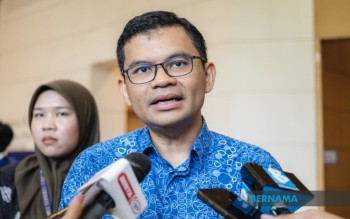
Malaysia's economy minister is confident that the country will maintain robust growth momentum through the remainder of 2026, underpinned by solid economic fundamentals and strategic government initiatives. Minister of Economy Akmal Nasrullah Mohd Nasir outlined the optimistic outlook during remarks at the Association of Malaysian Economics Undergraduates (AMEU) Economics Summit 2026 in Kuala Lumpur, emphasising that policymakers have implemented targeted interventions to stabilise the domestic energy supply chain through year-end, which he believes will continue supporting broader economic expansion.
The first half of 2026 has delivered encouraging signals for Malaysia's economic trajectory. The Department of Statistics Malaysia reported headline growth of 5.6 per cent for 1H 2026, a marked acceleration from 4.5 per cent in the corresponding period a year earlier. The second quarter showed particular dynamism, with the economy expanding by 5.8 per cent compared to 5.4 per cent in the opening quarter. This sequential strengthening reflects recovery across multiple sectors, particularly mining and quarrying operations that have rebounded from earlier weakness, while construction activity has sustained its expansion and the all-important services and manufacturing segments have demonstrated renewed vigour.
Looking ahead to the second half of the year, Bank Negara Malaysia's official projection maintains a growth range of 4.0 to 5.0 per cent for the full calendar year. While Akmal Nasrullah expressed optimism about achieving stronger performance in the coming months, he also struck a cautionary note, acknowledging that economic policymakers must prepare contingency measures should adverse developments materialise. This balanced assessment reflects the inherent uncertainties facing the Malaysian economy in an increasingly volatile global environment.
A significant source of concern for Malaysian economic planners remains the volatile geopolitical situation in West Asia, where ongoing tensions in the Strait of Hormuz continue to exert upward pressure on international crude oil prices and inject volatility into global energy markets. Malaysia, as a net energy importer despite its own hydrocarbon resources, remains exposed to these external shocks. The government's oil supply stabilisation measures are designed to insulate domestic consumers and businesses from extreme price spikes that could undermine purchasing power and corporate investment decisions. For a country where energy costs ripple throughout the economy affecting manufacturing competitiveness and household budgets alike, such precautionary actions carry genuine strategic importance.
Beyond commodity price management, the Malaysian government is pursuing growth through high-impact events and major infrastructure projects. The recent announcement that Malaysia will host the Formula One Gulf Air Bahrain Grand Prix represents a significant coup for the nation's tourism and events sector. The three-day race, scheduled for October 2-4 at the Sepang International Circuit, follows agreements signed between Formula One, the International Automobile Federation, and both the Malaysian and Bahraini governments. This hosting arrangement emerged after Bahrain secured the naming rights, yet the race will be held on Malaysian soil, creating a unique partnership between the two nations that maximises the economic benefits for Malaysia while serving Bahrain's commercial interests.
The Formula One event carries substantial economic multiplier effects that extend well beyond gate receipts and hospitality revenues. International motorsport championships attract high-spending global audiences, with visitors typically remaining for extended stays in hotels, dining establishments, and entertainment venues throughout the host country. Akmal Nasrullah specifically highlighted that the anticipated influx of international visitors will stimulate consumer spending across the tourism economy, generating tax revenues and employment opportunities throughout the sector. The minister's remarks suggest that government strategy prioritises inclusive growth mechanisms that allow benefits to filter down to smaller traders and vendors, rather than concentrating wealth among large hospitality corporations alone, reflecting Prime Minister Datuk Seri Anwar Ibrahim's broader emphasis on inclusive economic development.
The timing of the Formula One announcement arrives at a strategically important juncture for Malaysia's economic narrative. As the country navigates global trade uncertainties and regional competitive pressures, major international events serve dual purposes: they provide immediate economic stimulus through visitor spending and employment generation, while simultaneously enhancing Malaysia's global profile as a stable, world-class destination for investment and tourism. This soft power dimension carries long-term value extending well beyond the October race weekend itself. Southeast Asian nations increasingly compete for international event hosting rights, recognising that such showcases position destinations favourably in global consciousness and investment deliberation cycles.
The performance of Malaysia's key economic sectors provides additional grounds for confidence in the second-half outlook. Manufacturing output has stabilised following earlier concerns about regional supply chain disruptions, while the services sector—encompassing finance, telecommunications, and hospitality—continues its expansion trajectory. The mining and quarrying rebound is particularly significant, as commodity-linked revenues support government finances and external trade balances. Construction momentum suggests ongoing infrastructure spending, whether from public projects or private development, which typically generates multiplier effects throughout the broader economy via employment and material purchases.
However, the careful qualified language deployed by Minister Akmal Nasrullah warrants close attention. His acknowledgement that policymakers must remain "prepared for any possibility" signals awareness of external vulnerabilities that Malaysia cannot entirely control. Geopolitical risks in West Asia, potential escalation of trade tensions affecting regional manufacturing hubs, or shifts in global monetary conditions could rapidly alter Malaysia's near-term trajectory. The government's pre-emptive oil stabilisation measures reflect exactly this risk-management mindset, attempting to cushion the domestic economy against external energy price shocks before they materialise.
For Malaysian businesses and investors, the government's confidence in second-half growth provides a baseline planning premise, though prudent enterprises should maintain contingency positions acknowledging that economic momentum, while currently positive, remains subject to external disruptions. The Formula One event injection and government interventions should provide sufficient support to sustain growth in the government's projected 4.0 to 5.0 per cent band, though exceeding the upper end of that range would require sustained momentum across multiple sectors simultaneously alongside benign external conditions—a scenario requiring both execution excellence and favourable fortune in an uncertain global climate.

