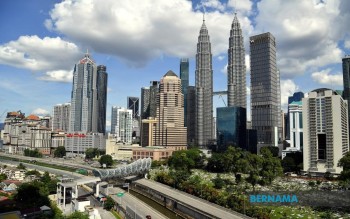
Malaysia's economy has continued its impressive performance in the face of mounting global headwinds, with second-quarter 2026 growth reaching 6.0 per cent—a pace that has defied expectations and reinforced confidence in the nation's economic fundamentals. Prime Minister Datuk Seri Anwar Ibrahim attributed this sustained momentum to the government's swift and deliberate response to international disruptions stemming from the West Asia crisis, coupled with structural reforms embedded in the MADANI Economy framework. The achievement is particularly striking given that forecasters, including Bloomberg's consensus estimate, had predicted a more modest expansion of 5.8 per cent, while Malaysia's own Department of Statistics had advanced an estimate below the final figure.
The government's interventions have taken multiple forms, reflecting a comprehensive approach to cushioning both household finances and business operations. Targeted financing assistance directed at small and medium enterprises proved especially critical, enabling these businesses to weather supply-chain complications and sustain production despite elevated input costs. Simultaneously, calibrated fuel subsidy mechanisms maintained affordability for consumers and reduced operational burdens on transport-dependent sectors, preserving the purchasing power of households even as prices climbed globally. These dual-pronged efforts created conditions favourable for continued spending and investment, the twin engines of Malaysia's economic expansion during the period.
The inflation picture underscores the effectiveness of these containment strategies. While global supply chain disruptions have unleashed inflationary pressures across developed and developing economies alike, Malaysia's consumer price index rose only 1.9 per cent in the second quarter—a remarkably controlled outcome that reflects both prudent policy calibration and the structural stability of domestic markets. This modest inflation rate stood in sharp contrast to the double-digit and high single-digit increases experienced in many peer economies, affording Malaysian households significantly greater resilience in their purchasing decisions and reducing the erosion of real wages.
Beyond headline measures, the government has deployed targeted cash transfers and subsidy schemes specifically designed to protect vulnerable populations from bearing the brunt of rising living costs. The Sumbangan Tunai Rahmah and Sumbangan Asas Rahmah programmes channelled direct financial support to lower-income households, while the BUDI MADANI subsidy framework extended relief through price controls and reduced costs on essential commodities. These mechanisms, Anwar emphasised, operated in parallel with broader economic growth to ensure that the benefits of expansion reached across society rather than concentrating among privileged segments.
The composition of Malaysia's growth during the quarter revealed the strength of domestic foundations. Resilient consumption spending by households drove activity, supported by stable employment and improved consumer confidence, whilst exports remained robust despite international logistics challenges. This balance between internal and external demand sources provided a buffer against any single external shock, distributing growth across multiple pillars and reducing vulnerability to sector-specific disruptions. The fact that growth reached 6.0 per cent marked Malaysia's strongest second-quarter performance outside the pandemic-affected years since 2014, indicating that current momentum exceeded even pre-Covid normal performance levels in comparable quarters.
Yet Anwar's statement acknowledged that aggregate economic indicators, while encouraging, masked uneven distributional outcomes. Many Malaysians continue to contend with rising costs of living that outpace wage growth in their sectors, whilst workers in certain industries and smaller businesses face genuinely difficult operating conditions despite overall economic expansion. This candid recognition signals that policymakers understand the gap between macroeconomic statistics and lived experience, a distinction increasingly important for maintaining social cohesion as growth continues. The prime minister framed this awareness not as a failure of policy but as a constraint on the government's aspirations—Malaysia's economy cannot be wholly insulated from international shocks, and some segments will inevitably feel pressures more acutely than others.
The first-half 2026 aggregate growth of 5.7 per cent positions Malaysia comfortably within its full-year target of 4.0 to 5.0 per cent expansion, provided that the second half maintains reasonable momentum. This accomplishment gains significance when viewed against the backdrop of genuine international uncertainties. Ongoing geopolitical tensions in West Asia threaten further supply chain disruptions; global food and energy prices remain volatile; and employment uncertainties in specific sectors, particularly those dependent on international demand or vulnerable to automation, continue to weigh on worker security and household confidence. Against these headwinds, Malaysia's performance reflects not luck but deliberate policy choices that have prioritised stability and broad-based support.
For regional observers, Malaysia's experience offers instructive lessons in policy design during crises. Rather than relying solely on monetary instruments or allowing market adjustments to distribute pain, the MADANI framework combined targeted fiscal support, subsidy mechanisms, and structural reforms to preserve purchasing power whilst maintaining price stability. This approach contrasts with some regional peers that either imposed austerity or permitted inflationary spirals to erode household savings. The Malaysian experience suggests that proactive government intervention, when carefully designed and efficiently deployed, can sustain growth and protect vulnerable populations simultaneously—a combination that pure market mechanisms alone often fail to achieve.
Looking forward, the government has signalled that support measures will persist and potentially evolve in response to changing circumstances. The priority framework articulated by Anwar—protecting household purchasing power, assisting affected workers and businesses, and ensuring growth translates into tangible income and employment gains—indicates that policy will remain attentive to distribution even as policymakers continue pursuing headline growth targets. This dual commitment reflects recognition that legitimacy for continued economic policymaking rests not solely on GDP expansion but on whether citizens experience material improvement in their daily lives.
The sustainability of Malaysia's growth trajectory will ultimately depend on managing several interconnected risks. Further escalation in geopolitical tensions could disrupt supplies beyond current mitigation capacities; prolonged employment pressures in certain sectors could undermine consumer confidence; and complacency about inflation, should price pressures re-emerge, could force painful policy reversals. However, the track record of the first half of 2026 demonstrates that Malaysia possesses both the policy tools and the institutional capacity to navigate these challenges. The coming quarters will test whether this resilience can be sustained, but current evidence suggests the foundation remains firm.

