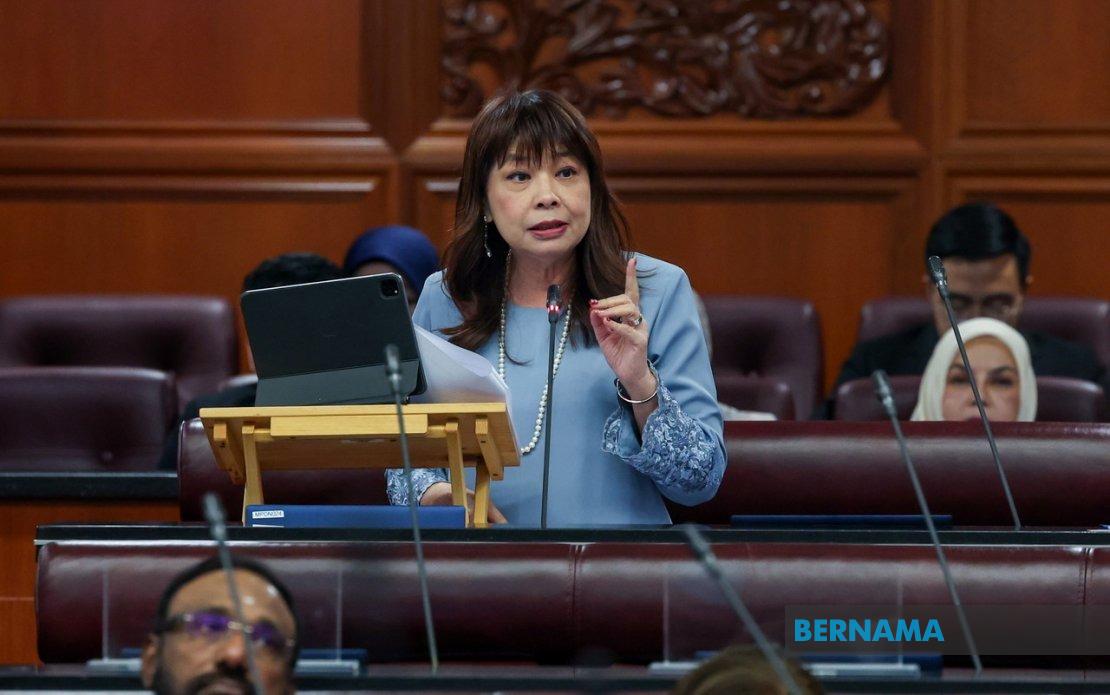
The Talian Kasih 15999 hotline has become an increasingly critical resource for Malaysians facing domestic abuse, handling 9,327 calls related to family violence over a three-year period spanning 2022 through May 2025, Deputy Minister of Women, Family and Community Development Lim Hui Ying revealed during parliamentary proceedings in Kuala Lumpur on June 30. The figure underscores the persistent scale of domestic violence as a social concern, particularly as it continues to affect households across the nation despite growing awareness and legal protections. The helpline, which forms part of the ministry's broader social welfare infrastructure, received these complaints alongside 127,000 other calls involving various social and family-related matters during the same interval, illustrating the wide remit of support services the government seeks to provide.
The ministry has taken a comprehensive approach to resolving reported cases, with Lim confirming that every complaint registered from 2022 through 2025 has progressed to some form of closure or actionable intervention. This completion rate reflects a deliberate policy framework aimed at preventing the accumulation of unresolved cases and ensuring victims do not fall through administrative cracks. However, the data reveals a notable variance in resolution speed when examining the most recent five-month period. Between January and May 2025, the hotline recorded 470 domestic violence calls, of which 406 have been fully resolved, leaving 64 cases still in active investigation or intervention stages. This suggests that while the ministry maintains a strong overall resolution record, the sheer volume of incoming complaints continues to strain response capacities, a challenge likely to persist as awareness campaigns encourage more victims to seek help through the service.
When cases are resolved through Talian Kasih, the interventions extend significantly beyond providing emotional support or legal advice. The ministry employs a multi-layered protective framework designed to safeguard vulnerable parties and reduce the likelihood of recurrence. Among the primary mechanisms deployed are Emergency Protection Orders and Interim Protection Orders, legal instruments that establish binding restraint on alleged perpetrators and provide immediate court-sanctioned protection. For victims facing ongoing threats or homelessness as a consequence of abuse, the ministry can facilitate placement in government-approved safe shelters, offering temporary refuge while victims arrange longer-term accommodation or finalize separation arrangements. These interventions represent substantial state resources and reflect a recognition that domestic violence cases require coordinated legal, social, and logistical responses rather than isolated crisis counselling.
Responding to parliamentary scrutiny from Datuk Muslimin Yahaya of PN-Sungai Besar, who questioned both the effectiveness of Talian Kasih and the follow-up intervention rate, Lim's disclosures suggest the ministry views the service as performing adequately in terms of case resolution. The deputy minister's emphasis on the availability of protective orders and shelter placement indicates that the government believes its intervention infrastructure extends beyond initial complaint handling. Yet the question itself hints at broader skepticism within Parliament regarding whether reporting mechanisms actually translate into meaningful protection or whether the system merely documents abuse without preventing its recurrence. The high resolution rate may satisfy administrative metrics, but the underlying effectiveness of interventions in preventing future incidents remains a separate and arguably more important measure of success.
A particularly significant revelation in the parliamentary exchange involves an emerging shift in victim demographics that has largely escaped mainstream attention in Malaysia's domestic violence discourse. While conventional narratives surrounding family violence predominantly focus on women and children as victims, Lim acknowledged that the hotline has detected an increasing trend in calls from men experiencing domestic abuse at the hands of female partners or family members. Although male victims currently represent a numerically smaller proportion of overall caseload, the upward trajectory of reports suggests a growing willingness among men to seek help and a corresponding recognition within society that domestic violence operates across gender lines. This development carries significant implications for how the ministry frames its protective mandate and whether dedicated resources or awareness campaigns should address male victim support more explicitly.
The acknowledgment of male victim cases reflects a more nuanced understanding of family violence dynamics than older policy frameworks typically accommodated. For decades, domestic violence prevention efforts across Southeast Asia operated largely within a women's rights paradigm, with advocacy organizations and government programs emphasizing the gendered nature of abuse and the disproportionate impact on female victims. While this gendered analysis remains substantively accurate in quantitative terms, the emergence of male victim reporting suggests that rigid categorization of domestic violence as exclusively a women's issue may have inadvertently discouraged men from seeking intervention when experiencing abuse. By framing protection as gender-neutral in principle, the ministry signals a broader commitment to victim safeguarding that transcends traditional victim archetypes, though translating this principle into proportional resource allocation presents an ongoing policy challenge.
The composition of Talian Kasih's overall caseload—with domestic violence representing roughly 7.3 percent of 127,000 total calls—indicates that family violence, while serious, competes with numerous other social welfare concerns for ministry attention and resources. The remaining calls presumably encompass child welfare concerns, elderly care issues, poverty assistance, disability support, and other dimensions of social need that the ministry administers. This distribution raises questions about whether the allocation of resources to domestic violence services matches the severity and prevalence of the problem. In Malaysia and across Southeast Asia, family violence frequently remains underreported, with many victims never contacting authorities due to stigma, economic dependence, or cultural norms that treat family disputes as private matters. The 9,327 reported cases thus likely represent only a fraction of actual domestic violence incidents occurring nationally, suggesting that the true scale of the problem substantially exceeds the official statistics.
Geographic and demographic variations in Talian Kasih usage across Malaysia remain unclear from available reporting, though such variations would likely prove instructive for understanding service accessibility and cultural factors influencing help-seeking behavior. Rural communities may face barriers in accessing the hotline due to limited telecommunications infrastructure or cultural insularity that discourages external intervention in family matters. Urban areas with stronger social networks and greater anonymity may produce disproportionately higher reporting rates. Urban-rural disparities in domestic violence intervention have proven significant in other countries' experience and warrant specific analysis in the Malaysian context, particularly as rural domestic violence prevention remains underdeveloped relative to urban initiatives. Understanding these geographic patterns would allow for more targeted resource deployment and culturally informed intervention strategies.
The ministry's assertion that all resolved cases receive some form of protective action represents a substantive commitment on paper, yet the lived experience of many domestic violence survivors suggests that protective orders and shelter placement, while essential, do not constitute comprehensive solutions. The transition from sheltered safety back into independent living often presents a critical juncture where survivors risk renewed contact with abusers, particularly when economic constraints force return to family homes or shared properties. Longer-term support addressing economic rehabilitation, vocational training, housing assistance, and psychological counselling would strengthen the protective framework beyond its current legal and emergency-focused scope. The ministry's capacity to provide such extended services remains largely unaddressed in parliamentary disclosures, though such support arguably distinguishes merely reactive crisis management from proactive victim recovery and empowerment.
Looking forward, the Talian Kasih data provides a baseline for assessing whether the government's domestic violence prevention ambitions translate into systematic reduction in family violence incidence. If the hotline receives steadily increasing call volumes year-on-year, this could reflect either greater public awareness and reporting rates or genuine expansion of the problem. Distinguishing between these scenarios requires longitudinal analysis of population-adjusted call rates rather than raw volume comparisons. The minister's focus on resolution metrics and case closure rates, while administratively important, may obscure a more troubling underlying trend of unabated or expanding domestic violence. For Malaysian policymakers and civil society organizations engaged in family violence prevention, the challenge lies in moving beyond celebrating administrative efficiency in complaint handling toward systematic efforts to prevent violence before it reaches crisis stages where emergency hotlines become necessary.

