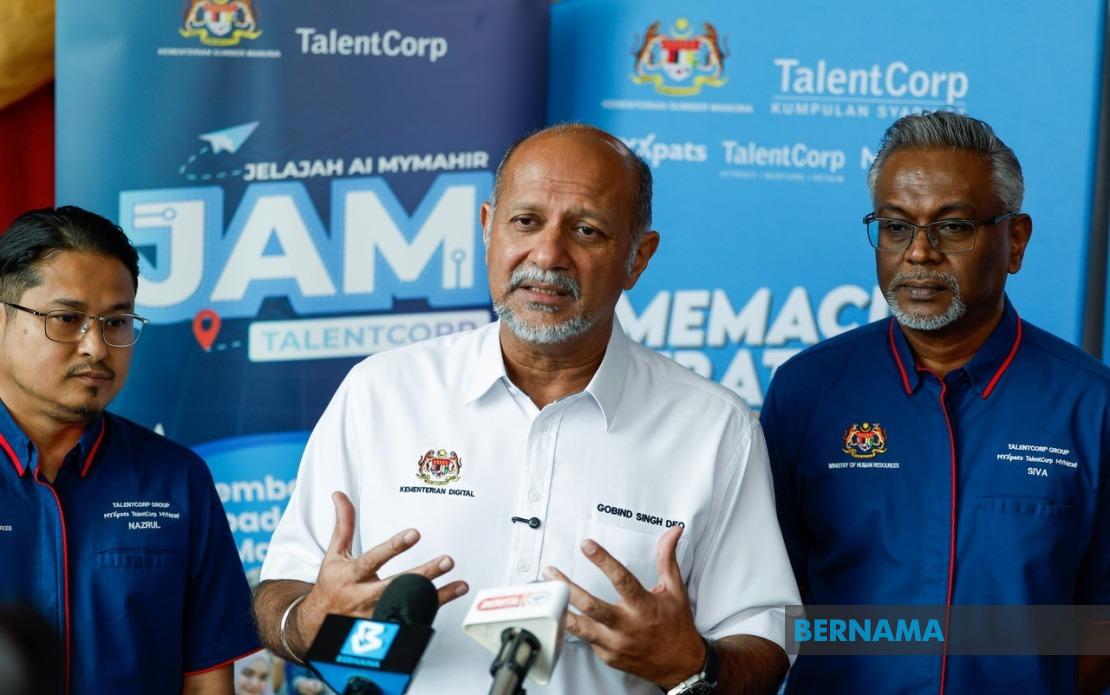
Malaysia's digital creative sector has reached a significant economic milestone, generating more than RM92.5 billion in revenue while establishing itself as a substantial contributor to the nation's economic growth. Digital Minister Gobind Singh Deo revealed these figures during the opening of Borneo Animation and Games Festival 2026 in Kuching, highlighting an industry that has expanded well beyond its initial creative foundations to become a major employment generator and investment magnet.
The sector's financial performance reflects a broader shift in how creative industries are perceived within Malaysia's development framework. Beyond the RM92.5 billion revenue figure, the industry has attracted RM85.7 billion in cumulative investments, signalling strong confidence from both domestic and international investors. Equally impressive are the export earnings of RM12.1 billion, demonstrating that Malaysian creative products and services have established meaningful presence in international markets. These metrics collectively suggest that the industry is no longer a niche segment but rather a substantial economic pillar worthy of policy attention and strategic development.
The creation of over 11,000 high-value jobs represents perhaps the most tangible benefit for Malaysia's workforce. Digital Minister Gobind emphasised that these positions transcend traditional creative roles, encompassing technology specialists, project managers, marketing professionals and business strategists. The quality of employment matters significantly in a competitive global economy, and the designation of these as high-value jobs indicates they typically offer better compensation and career progression than average positions. For a region like Sarawak, which has historically depended on conventional resource sectors, this diversification into knowledge-based employment presents fresh opportunities for talent development.
Indigenous intellectual properties have become major commercial engines within this ecosystem. The minister specifically highlighted success stories including "Upin & Ipin", "Ejen Ali" and "Mechamato"—franchises that originated from Malaysian creative studios and have achieved recognition across Southeast Asia and beyond. These properties generate revenue through multiple channels including licensing, merchandise, broadcasting rights and digital distribution, creating sustainable income streams that employ not only animators and designers but also supporting professionals in production management, quality assurance and international distribution.
The government's strategic vision extends well beyond current achievements. Malaysia is targeting digital economy contributions of 30 percent to Gross Domestic Product by 2030, an ambitious goal that reflects policymakers' confidence in the sector's trajectory. Coupled with projections to create 500,000 high-value digital jobs within the next four years, these targets indicate expectations for accelerated growth across the entire digital ecosystem, encompassing creative industries, software development, digital commerce and technology services. The timeframe suggests incremental but sustained expansion rather than speculative growth.
Sarawak occupies a strategically important position within Malaysia's creative industry development plan. The state's position as host to BAGFest 2026—described as the first international animation and games festival of significant scale held in Borneo—underscores recognition of its emerging creative potential. Sarawak possesses distinctive cultural narratives, indigenous artistic traditions and a growing community of digital-savvy creators. The state's geographical location within Southeast Asia's fastest-growing region also provides natural proximity to expanding markets in Indonesia, the Philippines and Thailand.
Federal-state cooperation forms the cornerstone of Gobind's development strategy. Rather than centralising creative industry support in Kuala Lumpur or other peninsular centres, the minister outlined plans for deeper partnership with Sarawak's government and stakeholders. This collaborative approach acknowledges that sustainable growth requires building regional capacity through investment in local infrastructure, talent development, educational institutions and business support services. Such decentralisation may also reduce brain drain of creative professionals from peripheral states.
The ministry's commitment to connecting Sarawak's creative community with opportunities across Malaysia, Southeast Asia and internationally represents practical support beyond rhetorical backing. This could encompass facilitating market access for local creators, establishing co-production partnerships, funding infrastructure like digital facilities and studios, and creating networking opportunities with regional and global industry players. The competitive advantage lies in Sarawak's unique cultural identity and storytelling traditions, which can differentiate its creative output in crowded global markets.
BAGFest 2026's theme, "Forging Sarawak's Digital Future as the Regional Hub for Animation and Games," explicitly positions the state as a potential nexus for the entire Borneo region's creative industries. This ambition extends beyond Malaysia into Indonesian and Bruneian markets, suggesting visions of cross-border collaboration and shared development. For Malaysian creativity to compete globally, regional specialisation combined with international collaboration provides a sustainable model compared to isolated national competition.
The economic case for prioritising digital creative industries becomes increasingly apparent when viewed against other sectors. Unlike extractive industries dependent on finite resources or commodity prices, creative output generates value through imagination, cultural expression and intellectual property protection. These assets appreciate with market recognition and rarely deplete. Furthermore, creative industries typically attract younger, highly educated workforces and generate positive cultural soft power, enhancing Malaysia's international reputation beyond economic metrics.
Sustaining this momentum requires addressing several underlying challenges that the government has not explicitly outlined. Talent pipeline development through relevant educational programmes remains critical, as does investment in technological infrastructure, particularly for smaller states like Sarawak. International recognition and market access for Malaysian creators compete against established industries in South Korea, Japan and China. Additionally, intellectual property protection and fair compensation for creators within production chains demand ongoing regulatory attention.
The RM92.5 billion revenue figure represents not an endpoint but rather a foundation for more ambitious growth. As Malaysia competes within the regional and global creative economy, Sarawak's inclusion in the government's strategic planning indicates recognition that sustainable development requires geographic diversification of economic capacity. The state's hosting of BAGFest 2026 transforms it from economic periphery to innovation centre, a shift with implications extending beyond creative industries to broader perceptions of regional development and opportunity distribution within Malaysia.

