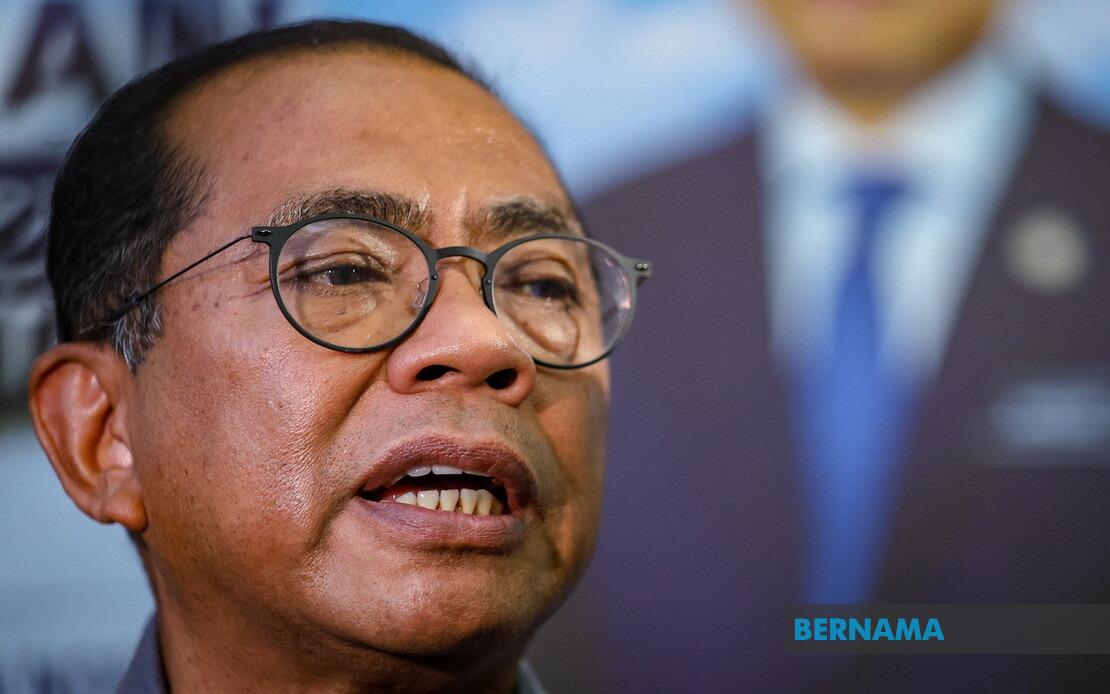
Malaysia's Defence Minister Datuk Seri Mohamed Khaled Nordin touched down in Hanoi today to embark on a strategic two-day official engagement with Vietnam, signalling renewed commitment to deepening military and defence cooperation between the two Southeast Asian neighbours. The visit represents Mohamed Khaled's inaugural trip to the country since assuming the defence portfolio, underscoring the significance both nations attach to this bilateral relationship at a time of evolving regional security dynamics.
Upon arrival at Noi Bai International Airport, the Malaysian delegation's itinerary reflects the high-level nature of the engagement. Mohamed Khaled is scheduled to hold substantive discussions with Vietnam's Prime Minister Le Minh Hung and Deputy Prime Minister and Minister of National Defence Gen Phan Van Giang. These meetings will provide an opportunity for both countries to chart a course for enhanced defence cooperation and explore new avenues of military-to-military engagement that align with their strategic interests.
The historical trajectory of Malaysia-Vietnam defence relations demonstrates a longstanding foundation upon which current initiatives are being built. Both nations have cultivated a relationship characterised by regular strategic dialogue and incremental institutional strengthening. This continuity reflects the geopolitical realities of the region, where stable bilateral relationships serve as anchors for broader regional cooperation frameworks and contribute to collective security arrangements that benefit all Southeast Asian states.
A tangible manifestation of this commitment materialised in December 2023 when Malaysia and Vietnam renewed their Memorandum of Understanding on defence cooperation. This agreement renewal signals that despite shifting global geopolitical circumstances, both countries remain invested in the bilateral relationship and view it as worthy of sustained institutional attention. Such formal mechanisms provide structured channels through which defence professionals, strategists, and policy-makers can coordinate on matters of mutual interest, from maritime security to counter-terrorism initiatives.
Mohamad Khaled's remarks ahead of the visit conveyed optimism about the trajectory of Malaysia-Vietnam defence ties, with explicit mention of ambitions to elevate cooperation to unprecedented levels. This language suggests that bilateral engagement is not merely about maintaining existing arrangements but actively seeking qualitative improvements and expanded cooperation. The minister's emphasis on creating fresh opportunities for collaboration points to recognition that the security landscape facing both nations encompasses multifaceted challenges requiring coordinated responses.
The timing of this visit carries particular significance within the broader Southeast Asian context. Malaysia and Vietnam, as founding members of the Association of Southeast Asian Nations, share vested interests in maintaining regional stability, ensuring freedom of navigation in key waterways, and addressing transnational security threats. Enhanced defence cooperation between these two nations can contribute meaningfully to these objectives while also serving as a model for constructive bilateral military engagement in an increasingly complex security environment.
From Malaysia's perspective, deepening ties with Vietnam serves multiple strategic objectives. Vietnam's geographical position along critical sea lanes and its military capabilities make it an important regional security partner. Regular high-level defence interactions ensure that both nations maintain aligned perspectives on regional security issues and can coordinate responses to emerging threats. Such engagement also helps prevent misunderstandings and builds mutual trust, elements essential for stability in a region where multiple powers maintain strategic interests.
The broader implications of this visit extend beyond bilateral considerations to encompass the larger framework of Southeast Asian security architecture. When major regional powers engage in sustained, structured defence cooperation, it reinforces norms of peaceful resolution of disputes and demonstrates commitment to multilateral principles enshrined in ASEAN frameworks. The Malaysia-Vietnam defence dialogue therefore represents a microcosm of the region's approach to building security through dialogue and institutional cooperation rather than confrontation.
For Malaysia specifically, the visit reflects continuity in defence policy despite recent political transitions. The decision to prioritise Vietnam as an early destination for a new defence minister signals that Malaysia remains committed to existing bilateral relationships and values the contribution Vietnam makes to regional stability. This consistency in foreign and defence policy provides reassurance to neighbouring countries that Malaysia's strategic orientation remains stable and predictable, qualities highly valued in international relations.
The security challenges confronting both nations—ranging from maritime piracy and smuggling operations to counter-terrorism and cyber threats—create natural convergence points for cooperation. Through mechanisms like the renewed MOU, both countries can pool expertise, share intelligence in appropriate channels, and coordinate responses to threats that transcend borders. Such practical cooperation often proves more consequential than grand strategic declarations, as it builds operational relationships between military and defence institutions.
Looking forward, the visit may also lay groundwork for additional forms of cooperation beyond traditional defence matters. Increasingly, Southeast Asian nations recognise that contemporary security challenges often have dimensions spanning defence, development, and diplomacy. Future Malaysia-Vietnam cooperation might encompass training exchanges, joint exercises, technology sharing, or coordination on regional security forums where both nations exercise influence.
For Malaysian readers and the broader public, this visit represents the practical manifestation of Malaysia's commitment to regional engagement and peaceful conflict resolution. Rather than pursuing confrontational approaches to security challenges, Malaysia opts for dialogue-based mechanisms and institutional cooperation. The defence sector visit to Vietnam demonstrates that regardless of political changes domestically, Malaysia maintains strategic partnerships that serve national interests and contribute to collective regional wellbeing.

