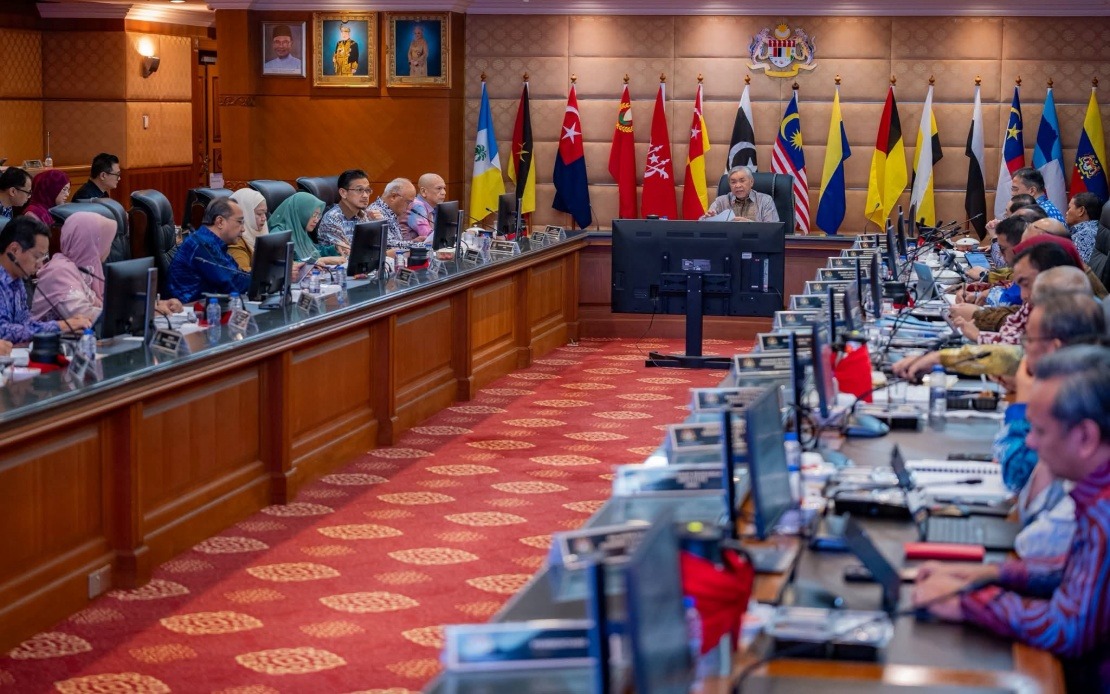
The Malaysian government is undertaking a comprehensive review of its local white rice sector, seeking to balance the competing interests of consumers, farmers, and producers without triggering inflationary shocks. At the 18th Executive Committee meeting of the National Cost of Living Action Council (NACCOL) held in Putrajaya on August 13, Deputy Prime Minister Datuk Seri Dr Ahmad Zahid Hamidi outlined a detailed roadmap that acknowledges the complexity of agricultural policy reform in an era of global economic volatility.
Understanding the true dimensions of cost-of-living pressures requires looking beyond what consumers see on supermarket shelves, according to Ahmad Zahid. The government's approach integrates multiple layers of economic burden: production costs borne by farmers, inefficiencies embedded in supply chains, household access to affordable nutritious food, healthcare expenditures, and educational expenses. This holistic framing suggests policymakers recognise that price controls on individual commodities, while politically appealing, may inadvertently create distortions elsewhere in the food system or discourage domestic production.
Central to the council's strategy is a "soft-landing" transition mechanism that prioritises protecting vulnerable households through targeted rice subsidies. Rather than implementing abrupt policy changes that could destabilise the agricultural sector, the government proposes a phased approach allowing time for market adjustment and producer adaptation. This measured strategy reflects lessons learned from subsidy rationalisation programmes elsewhere in Southeast Asia, where rapid shifts have occasionally triggered social unrest or unintended economic consequences.
The council has also endorsed expanding the Sumburation Asas Rahmah (SARA) programme to encompass fresh produce beyond its current scope. By incorporating fruits, vegetables, and fresh protein sources, the initiative aims to improve nutritional outcomes for lower-income households rather than simply subsidising staple calories. This expansion signals a shift toward food security policies that emphasise dietary diversity and health outcomes, aligning with public health objectives and reducing long-term healthcare burdens on government systems.
Geopolitical and global economic headwinds present significant challenges to domestic food policy. Ahmad Zahid explicitly acknowledged the impact of regional instability in West Asia, compliance costs for food imports, and international supply chain disruptions on Malaysian agricultural production expenses. Rising logistics costs, tariff complications, and regulatory requirements for imported inputs all translate into higher cultivation costs for local farmers. The council's recognition of these external pressures indicates that policymakers understand domestic rice policy cannot be insulated from international market dynamics.
The government is directing relevant agencies to strengthen support mechanisms specifically targeting farmers and fishermen, recognising these primary producers often absorb price volatility and policy uncertainty disproportionately. Agricultural subsidies and targeted assistance schemes represent investments in rural livelihoods and food self-sufficiency, though they require continuous refinement to ensure resources reach intended beneficiaries efficiently. Enhanced monitoring and evaluation of these programmes can identify bottlenecks in programme delivery and opportunities for improved targeting.
Beyond rice and food policy, the council examined broader cost-of-living pressures in healthcare. Eleven initiatives within the RESET strategy are designed to moderate private healthcare inflation while expanding public sector capacity and treatment options. Healthcare affordability directly impacts household finances and determines whether individuals delay or forego necessary medical care—a concern particularly acute for lower-income families. Coordinating private and public healthcare delivery can reduce duplication, improve efficiency, and expand patient choice without subsidising unlimited cost increases.
Education policy equally occupies central importance in the council's deliberations. The government distributed RM589.6 million across thirteen tertiary education assistance schemes to support 62,937 Form Six and university students in the previous year. While this represents substantial government commitment, the per-student average suggests many recipients receive partial rather than complete financial coverage. Ensuring equitable access to higher education is critical for long-term social mobility and economic competitiveness, particularly as Malaysia transitions toward knowledge-intensive industries requiring advanced qualifications.
The council's work reflects implementation of the Cost of Living Action Plan 2030, a multi-year framework addressing affordability pressures across interconnected sectors rather than pursuing isolated interventions. This integrated approach acknowledges that households experience cost pressures holistically—food expenses, transport costs, utility bills, healthcare fees, and education charges combine to determine living standards. Siloed policies addressing individual commodities or services risk creating unintended consequences and inefficient resource allocation when considered across the entire household budget.
For Malaysian businesses, particularly small and medium enterprises in agriculture, food processing, and retail, the council's deliberations carry significant implications. A gradual transition in rice policy provides time for business model adjustments, though some operators may face margin pressures during the transition period. Supply chain participants should monitor council recommendations closely, as policy decisions regarding subsidies, import regulations, and agricultural support will reshape competitive conditions across the food sector.
Regional observers in Southeast Asia may find Malaysia's cautious approach to rice policy instructive. Several neighbouring economies have grappled with agricultural subsidy reform, each experiencing different political and economic outcomes depending on implementation design and accompanying social support measures. Malaysia's emphasis on protecting vulnerable groups while maintaining production incentives for farmers represents one model among several approaches the region has attempted.
The council's continued evolution of these policies underscores that cost-of-living management requires sustained attention and adaptive policymaking. Economic conditions, global commodity prices, geopolitical circumstances, and domestic demographic needs change continuously, necessitating regular review and adjustment of government support mechanisms. The NACCOL structure, with its executive committee providing detailed analysis and coordination across government agencies, institutionalises this adaptive capacity within Malaysia's policy framework.

