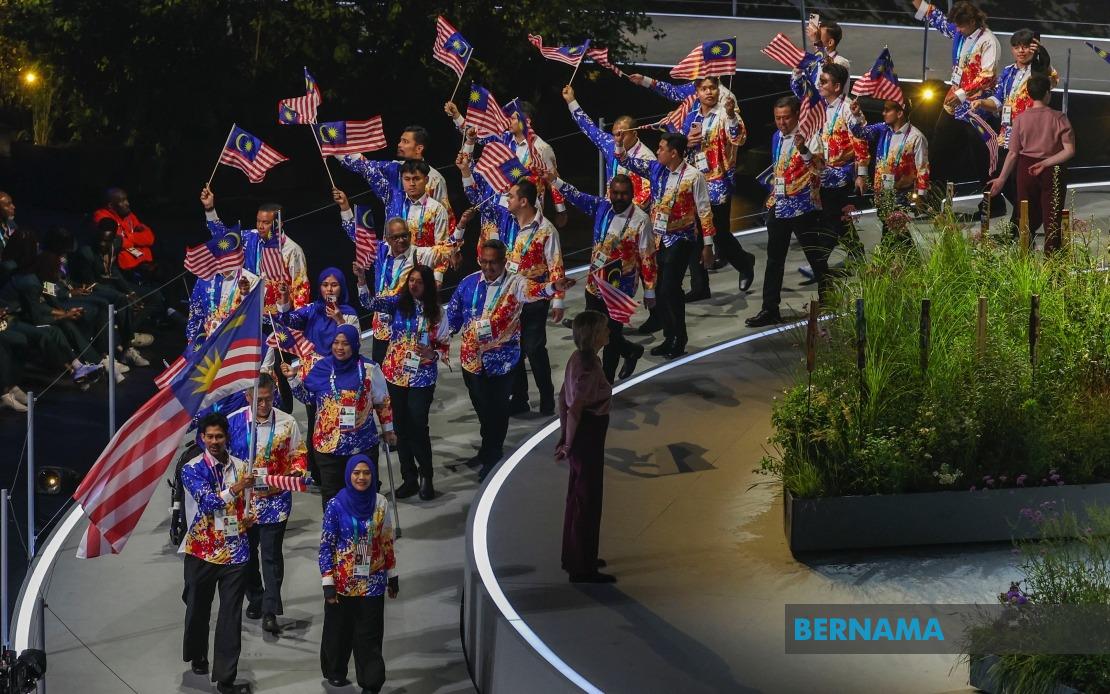
Malaysia's sports contingent in Glasgow has delivered results that extend beyond the initial expectations set for the 2026 Commonwealth Games, reinforcing arguments about the maturity of the country's athletic infrastructure. With seven gold medals, three silver and three bronze medals already secured as the Games near their conclusion on August 2, the nation has decisively outperformed its pre-Games target of five golds, two silvers and four bronzes. Youth and Sports Minister Dr Mohammed Taufiq Johari marked the achievement as vindication of years of systematic investment and institutional coordination in high-performance sport.
The minister's statement reflects a broader narrative about how Malaysia's sporting success stems not from isolated talent but from interconnected systems designed to nurture world-class competitors. The apparatus supporting Malaysian athletes spans multiple agencies—the National Sports Council, National Sports Institute, Olympic Council of Malaysia, Paralympic Council of Malaysia, and a network of national sports associations—each with defined roles in athlete development pipelines. This structural approach, which has gradually evolved over several quadrennial cycles, represents a departure from ad hoc funding models toward institutionalised excellence.
Dr Mohammed Taufiq's emphasis on "dedication, discipline, fighting spirit and extraordinary sacrifices" positions the Glasgow outcome as the culmination of athlete commitment paired with administrative support. The framing is politically significant because it acknowledges both individual merit and systemic enablement—a balance that Malaysian policymakers have increasingly emphasised when discussing sports development. The minister's explicit mention of the contingent's coach and support staff underscores recognition that medals reflect institutional capacity, not merely individual prowess.
For Malaysian readers assessing national priorities, the Glasgow result carries implications beyond medal counts. The Games occur during a period when Southeast Asian nations compete vigorously across sports funding and athlete recruitment. Thailand, Vietnam and Indonesia have simultaneously invested in centralised sports institutes and international partnerships. Malaysia's ability to match or exceed expectations at major Games demonstrates that previous policy investments—often made quietly by sports bureaucracies rather than headline-grabbing announcements—continue yielding measurable returns.
The minister's stated commitment to "strengthening the national sports ecosystem" signals continuity in investment philosophy heading toward consecutive major Games. The 2026 Asian Games and Aichi-Nagoya 2026 Asian Para Games in Japan will arrive within months of Glasgow's conclusion, providing rapid feedback on whether Glasgow represents a sustainable trajectory or a cyclical peak. Malaysia's hosting of the 2027 SEA Games and ASEAN Para Games, mentioned by Dr Mohammed Taufiq as an upcoming milestone, carries domestic pressure—the region watches how host nations perform on home soil.
The Glasgow performance also contextualises Malaysia's Paralympic ambitions, particularly given the government's recent emphasis on inclusive sports development. The inclusion of Paralympic Council Malaysia in the collaborative framework—mentioned alongside Olympic structures—indicates institutional recognition that medal success increasingly encompasses disability sports. This reflects broader international trends where developed sports systems integrate Paralympic excellence rather than treating it as a secondary category.
From a regional perspective, Malaysia's Glasgow success arrives as Southeast Asian nations navigate post-pandemic sports recovery and intensifying international competition. Vietnam and Thailand have attracted international sporting events and sponsorships aggressively in recent years. Malaysia's contingent performance, led by chef de mission Datuk Awalan Abdul Aziz, demonstrates sustained capacity even amid regional competitive pressures. The decision to publicise the achievement through the ministry underscores how elected officials now view sports as integral to national narrative rather than peripheral to governance.
The minister's invitation for Malaysians to continue supporting athletes still competing through the Games' conclusion reflects awareness that sporting achievement requires sustained public investment of attention and resources. This soft appeal for collective support functions simultaneously as political messaging—positioning the government as shepherd of national aspiration. The emphasis on "bringing honour to the nation" connects athletic performance to identity, a rhetorical strategy common across Southeast Asia where sports serve as vehicles for national pride amid rapid social change.
The pathway outlined from Glasgow through the Asian Games and ultimately to home-hosted SEA Games suggests strategic thinking about how to maintain momentum across consecutive competitions. Rather than treating each Games as isolated events, Malaysian sports administration increasingly frames them as part of iterative cycles. This systemic approach requires sustained funding, workforce development for coaches and sports scientists, and infrastructure maintenance—investments less visible than medal celebrations but essential for consistency.
Looking ahead, the Glasgow result provides baseline data for Malaysian sports planners assessing resource allocation toward 2027. The contingent's performance demonstrates which sports categories generate medals most reliably, information that shapes investment decisions for the next funding cycle. Sports like badminton, diving, and weightlifting have historically produced Malaysian medals; Glasgow performance data will likely influence whether these remain priority categories or whether emerging sports warrant investment.
Dr Mohammed Taufiq's statement also implicitly addresses scepticism about Malaysian sports administration efficiency. Previous Games have occasionally generated criticism about resource utilisation or apparent inconsistency in support across different sports. By framing Glasgow success as institutional achievement rather than isolated brilliance, the minister positions the sports ecosystem as fundamentally sound. This narrative matters politically because it suggests that current administrative structures, despite occasional public controversy, produce internationally competitive results.
The international calendar ahead presents both opportunity and challenge. The concentration of major Games—Asian Games in 2026, SEA Games in 2027—compresses the window for athlete preparation and potentially strains the institutional resources that delivered Glasgow's results. Whether Malaysia can sustain seven-gold performances across this sequence will test whether the current ecosystem possesses genuine depth or primarily concentrates talent in specific sports and individuals who peaked in Glasgow.

