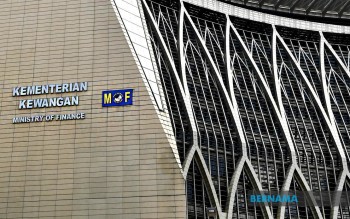
The Malaysian buy-now-pay-later market has surged to eight million active accounts by the opening quarter of 2026, according to official figures released by the Ministry of Finance. This milestone underscores the rapid penetration of BNPL services across Malaysian households, reflecting both consumer appetite for flexible payment options and the sector's maturation since emerging as a significant financial instrument in recent years. The growth trajectory points to BNPL's entrenchment as a mainstream lending channel complementing traditional consumer credit mechanisms.
The outstanding balance accumulated through these platforms reached RM5.3 billion during the same period, a substantial figure that nevertheless remains contained within the broader household debt landscape. Critically, the overdue amount stands at RM181.0 million, representing 3.4 per cent of total outstanding BNPL balances—a delinquency ratio that, while not negligible, suggests manageable credit risk at the sector level. The Ministry's characterisation of overall BNPL debt as remaining low reflects this perspective, with the sector accounting for merely 0.3 per cent of total household debt as of end-2025. This proportion indicates that despite rapid growth, BNPL remains a secondary lending channel rather than a dominant driver of household leverage.
The regulatory architecture governing BNPL operations has undergone substantial transformation through the Consumer Credit Commission's newly issued frameworks. These authorisation and conduct standards establish a comprehensive baseline for BNPL providers, encompassing regulatory compliance, governance structures, and consumer protection mechanisms. The standardisation of requirements across the sector represents a deliberate policy intervention aimed at preventing the kind of uncontrolled proliferation that characterised earlier stages of fintech lending development in other jurisdictions. By imposing uniform benchmarks, authorities seek to maintain operational integrity whilst facilitating legitimate market participation.
The licensing regime that commenced on June 1, 2026, imposes a transition deadline of November 30, 2026, for existing BNPL providers to formalise their authorisation status. This timeline creates an 18-month runway for market participants to align their operations with regulatory requirements—a period that balances the need for swift compliance with the practical demands of institutional restructuring. For established providers, the application process represents both an obligation and an opportunity to legitimise operations and potentially capture market share from competitors unable or unwilling to meet standards. For consumers, the licensing framework promises enhanced protections through standardised provider vetting.
The concurrent engagement initiatives undertaken by the Consumer Credit Commission reflect proactive regulatory stewardship rather than passive compliance monitoring. By actively interfacing with BNPL operators throughout the application period, authorities can identify operational gaps early and guide providers toward meeting requirements. This collaborative approach differs markedly from purely punitive enforcement models and suggests confidence in the sector's essential viability. However, it also carries implicit pressure on providers to demonstrate genuine commitment to regulatory alignment rather than cosmetic compliance.
The delineation between authorised and unauthorised BNPL providers will carry significant implications for consumer recourse and market dynamics. Licensed operators subjected to Consumer Credit Commission oversight gain legitimacy and consumer confidence, potentially attracting users away from unlicensed competitors. Conversely, providers unable or unwilling to secure licensing face operational constraints and reputational damage. This regulatory bifurcation could accelerate consolidation around larger, better-resourced firms capable of absorbing compliance costs whilst squeezing marginal operators out of the formal market.
For Malaysian consumers navigating the BNPL landscape, the regulatory transition offers mixed implications. Enhanced standards theoretically improve consumer protection through standardised disclosure requirements, dispute resolution mechanisms, and governance safeguards. Yet transition periods often create temporary gaps where regulatory arbitrage becomes possible—savvy operators may exploit ambiguities between legacy arrangements and new requirements. Consumer awareness of the November 30 deadline and its implications remains uncertain, leaving many users potentially transacting with providers whose status remains unresolved.
The 3.4 per cent delinquency rate merits contextual scrutiny when evaluating BNPL sector health. This figure sits within reasonable bounds for unsecured consumer lending but warrants monitoring as the sector matures and reaches saturation in certain market segments. Economic headwinds, employment volatility, or credit cycle deterioration could rapidly shift default dynamics. The concentration of BNPL users within specific demographic and income bands introduces idiosyncratic risk—if economic distress impacts core BNPL user populations disproportionately, delinquency could spike suddenly.
Regional comparisons illuminate Malaysia's regulatory positioning within Southeast Asian fintech lending markets. Other jurisdictions including Indonesia, Thailand, and the Philippines have grappled with similar policy questions regarding BNPL oversight. Malaysia's approach—combining licensing requirements with transitional timelines and active provider engagement—positions the market for sustainable growth whilst mitigating systemic risks. The framework's emphasis on conduct standards rather than mere balance sheet requirements reflects sophisticated regulatory understanding that consumer harm derives as readily from predatory practices as from insolvency.
Looking forward, the November 2026 licensing deadline will reveal the sector's true composition and resilience. Providers unable to meet standards will face operational discontinuance or acquisition by compliant competitors. Market consolidation around licensed operators should enhance systemic stability whilst potentially reducing consumer choice. The eight million active accounts represent a constituency whose shifting behaviour—spending patterns, default propensities, demographic composition—will shape the sector's evolution beyond the regulatory transition point. As BNPL matures from novelty toward routine financial infrastructure, its integration within broader household credit management becomes increasingly critical to macroeconomic stability assessments.

