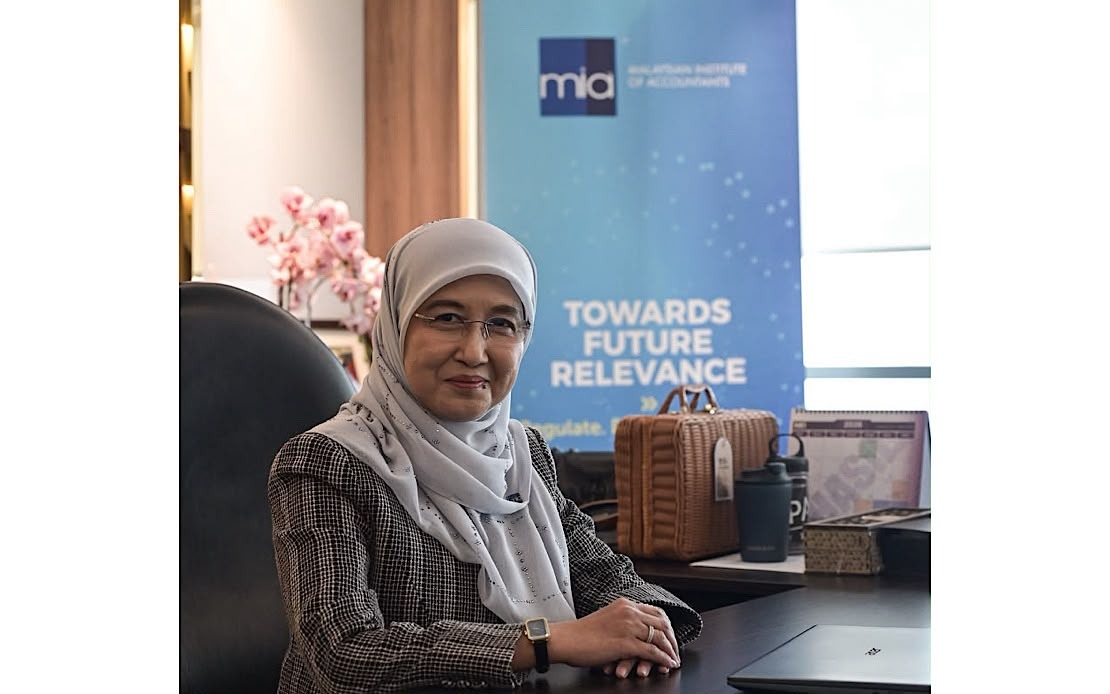
Malaysia's accountancy profession stands at a critical juncture, requiring fundamental transformation to sustain the country's competitive edge in an era of technological disruption and heightened sustainability expectations. The Malaysian Institute of Accountants (MIA) has positioned this evolution as essential to maintaining Malaysia's standing as a trusted financial destination and supporting robust economic growth. Rather than viewing emerging technologies as threats to traditional accounting roles, industry leaders are framing the shift as an opportunity to elevate the profession's strategic importance within organisations and the wider economy.
Datuk Saniza Said, the MIA's first woman president elected on December 8, 2025, emphasises that contemporary accountants have transcended their historical role as number-crunchers to become strategic business advisers whose counsel shapes critical corporate decisions. The expansion of professional responsibilities reflects broader changes in how organisations approach governance, risk management and stakeholder communication. As companies navigate complex regulatory environments and face mounting scrutiny from investors, regulators and civil society, the accountant's capacity to exercise independent professional judgement becomes increasingly valuable. This transformation places renewed emphasis on the profession's foundational principles: ethical conduct, transparency and unwavering commitment to the public interest.
The cornerstone of this reimagined profession rests on rebuilding and maintaining stakeholder confidence during an era of financial misconduct and sophisticated fraud schemes. Saniza stresses that accountancy professionals must actively champion ethical principles and demonstrate through their work that integrity remains non-negotiable. This commitment extends beyond compliance with technical standards; it requires a cultural shift within the profession toward proactive transparency and accountability. In Malaysia's context, where foreign investors evaluate the country's institutional credibility before committing capital, the reputation of the accountancy profession carries outsized importance. Financial professionals who uphold rigorous ethical standards effectively serve as stewards of Malaysia's broader investment climate.
Technological transformation, particularly the rise of artificial intelligence and advanced data analytics, presents both opportunities and challenges for the profession. Rather than displacing accountants, these tools are expected to liberate professionals from routine computational work, enabling them to concentrate on higher-value analytical and advisory functions. Saniza articulates a balanced perspective: while AI can efficiently handle bookkeeping and transaction processing, human professional judgment remains irreplaceable when interpreting financial data, assessing business risks and providing strategic counsel. This distinction positions accountants not as workers threatened by automation but as professionals whose expertise becomes more critical as organisations grapple with data complexity and strategic uncertainty.
MIA Chief Executive Officer G. Shanmugam elaborates on this transformation, describing the profession as approaching a decisive inflection point driven by converging technological capabilities. Automation increasingly handles repetitive transactional tasks, freeing accountants to develop competencies in data analytics, predictive modelling and business strategy. The shift reflects a broader trend in professional services where routine work migrates to systems while complex analysis and judgment-based services command premium value. For Malaysia's accountancy profession, this transition could enhance attractiveness to younger talent, who increasingly seek roles offering intellectual challenge and clear pathways to senior leadership over positions dominated by mechanical data processing.
Shanmugam emphasises that the accountant's expanded role encompasses a new expectation from management and stakeholders: to serve as a foresight adviser capable of anticipating future challenges and opportunities. This responsibility demands that accountants develop capabilities in predictive analytics, trend analysis and scenario planning. Rather than simply reporting historical financial performance, accountants increasingly must help organisations understand emerging risks, identify market opportunities and evaluate strategic options. This evolution aligns with growing recognition that financial expertise represents a critical asset in enterprise strategy development, particularly for navigating disruption and positioning organisations for long-term resilience.
Sustainability has emerged as a central element of this professional evolution, reflecting both regulatory pressures and investor expectations. The recent launch of the MIA Sustainability Blueprint for the Accountancy Profession and accompanying roadmap signals the institute's commitment to equipping members with competencies in sustainability reporting, measurement and assurance. As stakeholders increasingly demand transparency regarding environmental, social and governance performance, accountants possess unique credibility to provide independent assurance over sustainability disclosures. This expansion into sustainability accounting represents a natural extension of the profession's core function—verifying and interpreting information material to stakeholder decision-making—while positioning Malaysian accountants at the forefront of global efforts to standardise sustainability reporting.
Supporting this professional transformation requires substantial investment in continuing education and capability development. MIA conducts approximately 1,000 Continuing Professional Development programmes annually, complemented by conferences, online learning platforms and networking initiatives designed to equip members with emerging skills. This educational infrastructure acknowledges that technological and business landscape changes occur too rapidly for universities alone to prepare graduates adequately. The profession must take responsibility for cultivating ongoing competency development, ensuring that experienced practitioners maintain relevance despite accelerating change.
The membership profile underscores both the profession's growth trajectory and ongoing development needs. With approximately 42,000 members and annual growth between 1.5 and 2.0 per cent, MIA represents a substantial professional cohort with influence across Malaysia's economic institutions. This expanding base means that initiatives promoting technological literacy and ethical practice reach progressively larger segments of the nation's financial decision-makers. The growing membership also creates economies of scale for professional development investments, allowing MIA to offer sophisticated programmes spanning advanced data analytics, emerging technologies and sustainability practices.
From a Malaysian and Southeast Asian perspective, strengthening the accountancy profession's capacity to navigate technological change and sustainability demands carries strategic implications. As regional economies compete for foreign investment and seek to position themselves within global supply chains, investor confidence in financial reporting integrity and institutional credibility becomes a competitive asset. A Malaysian accountancy profession renowned for ethical standards, technological sophistication and strategic business insight enhances the country's attractiveness to international capital. Furthermore, as Southeast Asian economies increasingly focus on sustainable development and the circular economy, accountants equipped with sustainability expertise can help organisations identify competitive advantages within emerging resource constraints and regulatory frameworks.
The profession's evolution also reflects deeper shifts in how organisations value financial expertise. Rather than viewing accounting as a support function, leading companies increasingly recognise financial professionals as business partners capable of driving value creation and risk mitigation. For Malaysian accountants, this repositioning offers career advancement opportunities and enhanced professional status. Young professionals entering the field can anticipate roles combining financial analysis with strategic responsibility, provided they develop competencies extending beyond traditional accounting knowledge into data science, technology systems and business strategy.
Looking ahead, the accountancy profession's success in achieving the MIA's aspiration—to be trusted, future-ready and globally respected—hinges on coherent execution across multiple dimensions. This includes maintaining unwavering ethical standards while embracing technological innovation; developing sustainability expertise whilst preserving financial reporting rigour; and preparing emerging professionals for advisory roles whilst protecting the profession's technical foundation. The task demands continuous cultural reinforcement of ethical principles alongside pragmatic investment in technological and analytical skill development.
The transformation unfolding within Malaysia's accountancy profession mirrors broader professional evolution occurring globally, yet holds particular significance for a middle-income nation seeking to strengthen institutional credibility and attract sophisticated capital investment. By positioning accountants as trusted advisers, ethical stewards and forward-looking strategists rather than mere transaction processors, MIA is asserting that the profession's value extends far beyond compliance and into the strategic heart of how organisations create value, manage risk and respond to transformative change. This vision, if effectively executed through sustained professional development, ethical reinforcement and technological capability-building, promises to enhance both the profession's strategic influence and Malaysia's economic competitiveness.

