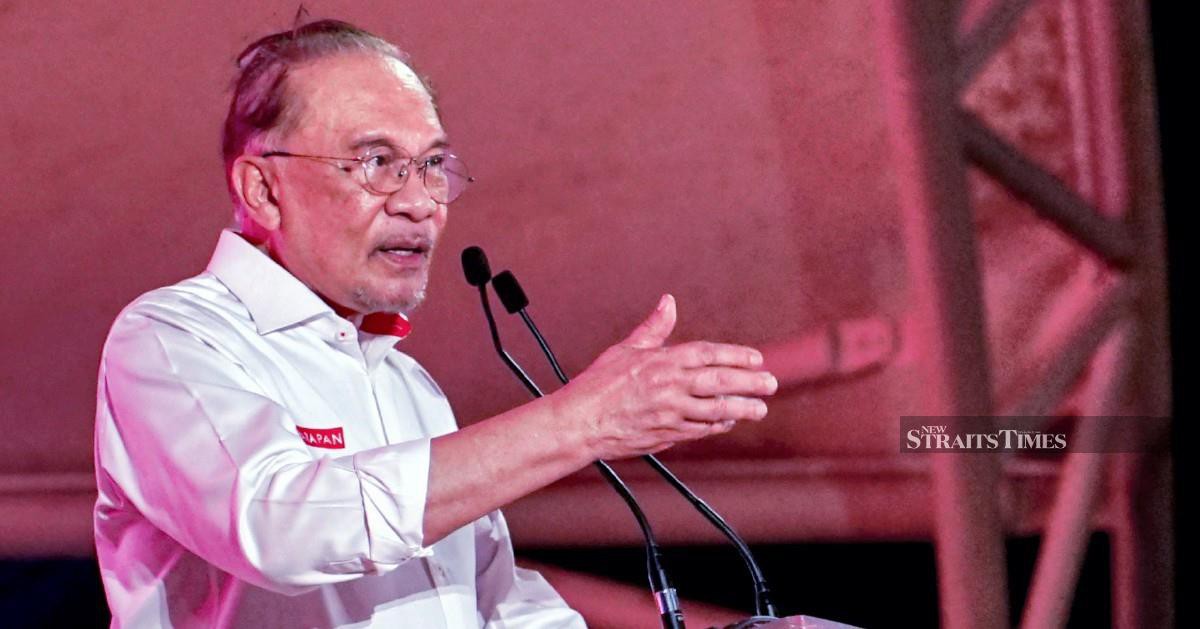
Prime Minister and Finance Minister Datuk Seri Anwar Ibrahim attributed Malaysia's stronger-than-expected 5.8 per cent economic expansion in the second quarter of 2026 to the government's Madani Economic Framework, underscoring the country's capacity to withstand external headwinds and internal challenges. The performance surpassed analyst expectations and marked another positive quarter for the nation's recovery trajectory following years of economic uncertainty.
The Madani Economic Framework, which forms the backbone of the government's economic strategy, has been instrumental in creating conditions for sustained growth across multiple sectors. This comprehensive policy initiative emphasises inclusive development, fiscal responsibility, and structural transformation—pillars that have gained traction among international investors and domestic businesses alike. The framework's emphasis on productivity-driven expansion rather than consumption-led growth represents a fundamental shift in how Malaysia approaches economic development, setting the stage for more resilient long-term performance.
However, Anwar's acknowledgement that reforms must continue reveals a critical understanding within government circles: a single quarter of robust growth, while encouraging, does not guarantee immunity from external vulnerabilities or resolve deep-rooted structural inefficiencies. The global economic landscape remains characterised by uncertainties ranging from geopolitical tensions to shifting trade dynamics, making the case for continuous institutional and policy improvements increasingly compelling. Malaysia's reliance on exports and foreign direct investment means that complacency could quickly erode the gains achieved thus far.
The 5.8 per cent growth figure holds particular significance for Malaysia's regional standing. Within Southeast Asia, this performance positions the country competitively against peers facing slower expansion or stagnation. For investors monitoring the region's economic prospects, Malaysia's consistent delivery validates the government's policy direction and provides confidence in the stability of the investment environment. This matters considerably for multinational corporations evaluating supply chain diversification away from China and traditional manufacturing hubs.
Sector-specific drivers of this growth warrant examination. Manufacturing exports, particularly in semiconductors and electrical components, have rebounded as global supply chains reorganise and production shifts geographically. Domestic consumption, despite inflationary pressures on household finances, has remained resilient in middle-income segments. The services sector, including finance and tourism, has shown signs of recovery as regional travel normalises post-pandemic. Each of these components reflects different aspects of Malaysia's economic structure and points toward areas where further optimisation remains possible.
Anwar's emphasis on continued reform signals that policymakers recognise several persistent vulnerabilities requiring attention. Productivity growth in traditional sectors remains below potential, suggesting that technology adoption and skills development need acceleration. Fiscal consolidation efforts, necessary for long-term debt sustainability, must be balanced against growth objectives—a delicate equilibrium that requires sophisticated policy calibration. Additionally, the transition toward higher-value manufacturing and services demands investment in education, research infrastructure, and digital capability that extends beyond current spending trajectories.
The Madani framework's governance dimensions are equally important as its economic components. The emphasis on anti-corruption measures, institutional strengthening, and transparent policymaking creates confidence among both domestic and international stakeholders. When combined with economic growth, these governance improvements strengthen Malaysia's appeal as a destination for quality investment, as opposed to footloose capital seeking only tax advantages. This distinction becomes increasingly relevant as global investors prioritise stability and rule of law over marginal cost savings.
For Malaysian businesses and workers, the 5.8 per cent growth translates into improved employment prospects and potential wage growth, though distribution across regions and sectors remains uneven. While urban manufacturing and services centres benefit substantially, rural areas and smaller towns experience slower trickle-down effects. This spatial inequality represents another reform frontier that Anwar has implicitly referenced—ensuring that growth benefits extend beyond traditional economic poles to underserved regions requiring infrastructure investment and skills development programmes.
International observers will likely interpret Anwar's dual message—celebrating current performance while pushing for deeper reforms—as evidence of sophisticated economic stewardship. Rather than declaring victory and easing reform efforts, the government is maintaining momentum on structural transformation. This approach contrasts with complacency that has historically preceded economic cycles in other countries, suggesting Malaysia may be learning from past episodes of boom-and-bust dynamics that characterised previous decades.
The sustainability question looms large. Can Malaysia maintain 5-6 per cent annual growth rates over the next five to ten years, the timeframe required to substantially narrow income gaps with advanced economies? This requires not just maintaining policy consistency but accelerating it—deepening talent development in high-skill sectors, expanding digital infrastructure, and fostering innovation ecosystems that generate productivity breakthroughs. The government's message implies understanding that second-quarter performance, while validating current direction, represents the beginning rather than the culmination of necessary economic transformation.
Regional implications deserve consideration. Malaysia's economic resilience provides ballast for ASEAN's aggregate growth prospects and signals that carefully implemented structural reforms can deliver results even amid global uncertainties. Neighbouring countries watching Malaysia's progress will assess whether the Madani framework offers replicable lessons. The emphasis on balancing growth with fiscal responsibility, anti-corruption measures, and institutional strengthening provides a template that extends beyond Malaysia's borders, potentially influencing regional economic policymaking.
Moving forward, the critical variable will be execution capacity. Announcing reform objectives and achieving measurable improvements remain distinct undertakings. The financial services sector, telecommunications infrastructure, and education system each requires targeted reforms that demand sustained political will and bureaucratic effectiveness. International observers will monitor whether Malaysia transitions from announcing ambitious frameworks to delivering tangible results that accumulate into transformative change.

