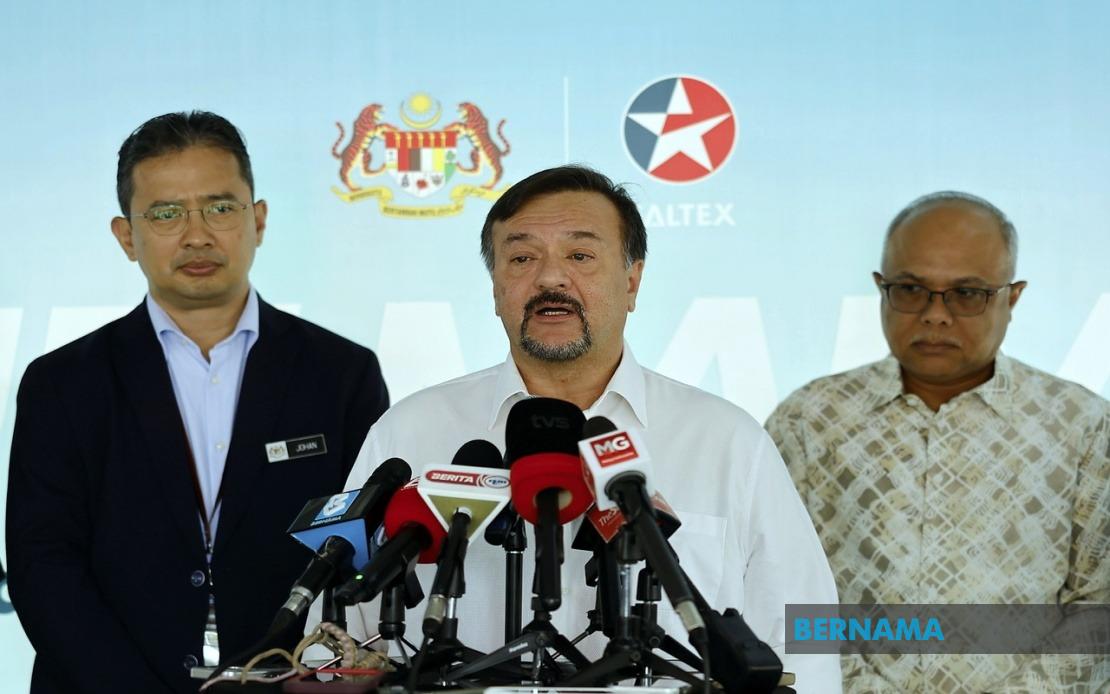
The government has formally launched a series of consultation sessions across the country to gather feedback and shape the 2027 Budget, according to Finance Minister II Datuk Seri Amir Hamzah Azizan. The engagement process, which involves collaboration between the Ministry of Finance and relevant government departments, is designed to incorporate diverse perspectives from various locations and sectors before the budget is presented to Parliament in October. This methodical approach reflects the administration's commitment to building a budget that reflects national priorities while maintaining consistency with established economic policy.
Central to the budgeting exercise is the MADANI Economy framework, which has become the defining strategic foundation for Malaysia's fiscal planning. Amir Hamzah emphasised that this framework operates on a dual mechanism: lifting the upper echelon of economic performance by enhancing competitiveness at the highest levels, whilst simultaneously strengthening the foundation by expanding opportunity and support at the grassroots. This two-pronged strategy aims to create inclusive growth that benefits both established enterprises and emerging economic participants, addressing persistent inequality while fostering productivity gains.
The budgetary planning process is not occurring in isolation but rather within a constellation of major policy initiatives unveiled in recent months. The 13th Malaysia Plan, the National Semiconductor Strategy, and the National Energy Transition Roadmap all serve as complementary guideposts shaping the government's broader economic direction. These interconnected policies suggest that the 2027 Budget will reflect a comprehensive, long-term vision extending beyond annual allocations, incorporating sectoral development, technological advancement, and environmental sustainability into a cohesive whole.
For Malaysian observers assessing the likely contours of Budget 2027, the preceding year's figures offer instructive reference points. Budget 2026 commanded total allocation of RM419.2 billion, divided between RM338.2 billion in operational expenditure for maintaining government functions and RM81 billion in development spending aimed at infrastructural and transformational projects. Beyond direct government outlays, the administration channelled RM50.8 billion through government-linked investment companies, Federal statutory bodies, and public-private partnership arrangements, demonstrating a diversified approach to capital deployment across the economy.
The Minister stressed that while the specific allocations and priorities for 2027 remain under wraps pending the formal October presentation, the overarching architecture and philosophical orientation remain steadfast. By grounding the budget in the MADANI Economy framework rather than pursuing ad-hoc adjustments to expenditure patterns, the government is signalling consistency in its development strategy. This continuity provides visibility for businesses and investors planning medium-term commitments, though it also suggests that radical departures from current policy emphases should not be anticipated.
Malaysia's pathway toward achieving developed-nation status by 2030 represents an ambitious timeline, requiring sustained investment, productivity improvements, and structural economic upgrades. The budgetary framework provides the fiscal mechanisms through which the government channels resources toward this objective. By anchoring Budget 2027 in established frameworks and recent strategic initiatives, the administration is attempting to ensure that each ringgit deployed serves the overarching developmental trajectory rather than serving disconnected objectives.
The engagement sessions underway demonstrate recognition that budget formulation benefits from consultative processes extending beyond technical analysis. By soliciting input from multiple ministries and stakeholders, the Finance Ministry aims to capture implementation realities and ground-level perspectives that purely quantitative modelling might overlook. This approach acknowledges that budget effectiveness depends not merely on allocation amounts but on how disbursed resources integrate with operational capacity and sectoral readiness across government.
For Malaysian enterprises and investors, the current consultation phase offers an opportunity to influence allocations within sectors or initiatives of particular concern. Businesses with interests in semiconductors, energy transition, or infrastructure development face a window to ensure their perspectives reach decision-makers shaping the budget. This consultative approach, if genuinely receptive, creates channels for private sector input into public resource allocation—a mechanism often overlooked in discussions of budget formulation but significant for policy coherence.
The phasing of Budget 2027 through engagement sessions, rather than emerging wholesale from Ministry of Finance deliberations, reflects broader trends in fiscal governance internationally. Transparent budget preparation processes, when coupled with clear explanatory frameworks such as the MADANI Economy model, tend to enhance public understanding of fiscal priorities and improve implementation effectiveness. By articulating the budget within an overarching narrative of inclusive economic upgrading, the government provides citizens and observers with interpretive frameworks for understanding why certain sectors receive prioritised funding.
The intersection of multiple policy frameworks—the MADANI Economy blueprint, the semiconductor strategy, the energy transition roadmap, and the 13th Malaysia Plan—suggests that Budget 2027 will reflect sophisticated orchestration across sectors rather than siloed allocations. The challenge facing budget architects lies in ensuring that resources flow toward initiatives producing synergistic effects rather than creating duplicative or contradictory obligations. The engagement sessions offer an opportunity to identify such interdependencies before allocations become fixed.
As Malaysia navigates increasingly complex global economic conditions marked by technological disruption and climate imperatives, budget formulation increasingly requires integration across traditional departmental boundaries. The consultation process underway reflects this reality, drawing multiple ministries into dialogue rather than allowing each department to formulate submissions independently. This integrated approach aligns with the developmental challenges Malaysia confronts—challenges that refuse compartmentalisation into neat sectoral boxes and instead demand coordinated policy responses.

