The Malaysian Communications Ministry has unveiled an ambitious slate of 16 companion programmes destined to animate the 2026 National Day and Malaysia Day festivities, with officials positioning the expanded calendar as evidence of government resolve to democratise celebration and participation across the nation's diverse communities.
Harun Ali, secretary of the Communications Ministry's Management Services Division, outlined the constellation of initiatives during a broadcast appearance on Bernama Radio's Fokus 30 programme in Kuala Lumpur. The curated selection encompasses Kembara Merdeka Jalur Gemilang, a national decoration competition, Ekspresi Merdeka, the Kita MADANI Carnival, alongside an assortment of grassroots cultural and community-oriented undertakings. According to Harun, this portfolio signifies the administration's deliberate intent to transform the annual observance into a genuinely inclusive national moment rather than an affair restricted to elite venues or privileged demographics.
Central to the reimagined 2026 calendar is a strategic pivot in geography. Rather than concentrating ceremonial weight upon Putrajaya's established institutional infrastructure, organisers have elected to resurrect Stadium Merdeka as the epicentre of Merdeka Eve proceedings. This choice carries symbolic resonance; the historic stadium embodies Malaysia's post-independence journey and carries profound significance within the national memory. The relocation signals an attempt to ground national observance within contested public spaces that generate emotional connection across generational cohorts.
Prime Minister Datuk Seri Anwar Ibrahim will deliver a special Merdeka Address as midnight approaches, an opportunity to articulate governmental vision and consolidate national sentiment during the psychologically charged moment of transition from August 30 into August 31. Officials positioned this address as instrumental for crystallising collective resolve and reinforcing shared commitment to the nation's trajectory during a period of heightened symbolic receptivity.
A newly commissioned spectacle titled "Melukis Senja" will introduce aerial acrobatics and pyrotechnics as supplementary elements of the celebratory arsenal. The display, orchestrated by aerial performance group Aero 3, will feature formation flying manoeuvres producing distinctive smoke trails interspersed with fireworks across Putrajaya's skyline. This represents an escalation in technological ambition and represents an attempt to produce visual grandeur capable of penetrating popular consciousness and generating shareable moments within social media ecosystems.
Harun repeatedly emphasised the underlying pedagogical mission animating these initiatives: cultivating patriotic sentiment and fostering tangible appreciation for independence among the citizenry. His rhetoric consistently stressed the notion that contemporary freedoms and prosperity represent hard-won acquisitions rather than inevitable entitlements, invoking the sacrifices of previous generations to establish moral obligation upon present cohorts. This framing carries particular weight within Malaysia's contemporary political climate, where competing narratives surrounding national identity, historical memory, and social cohesion remain contested.
The ministry's strategy encompasses grassroots mobilisation through the National Month Decoration Competition and the Kita MADANI Carnival, deliberately designed to distribute celebratory activity across municipal and village settings rather than concentrating them within administrative capitals. This decentralised approach acknowledges Malaysia's geographic dispersal and the necessity of ensuring that citizens inhabiting peripheral regions can participate in nationally significant occasions without requiring costly or logistically demanding travel.
Harun issued explicit appeals for Malaysian citizens to demonstrate patriotic commitment through ostentatious display of the Jalur Gemilang flag. His invocation of flag-flying as manifestation of national pride reflects broader governmental concern with visible markers of national sentiment, particularly within a multicultural society where communal identity occasionally intersects with tensions regarding appropriate modes of expressing patriotism. The symbolic weight attached to this quotidian practice suggests official anxiety regarding the depth and authenticity of national cohesion.
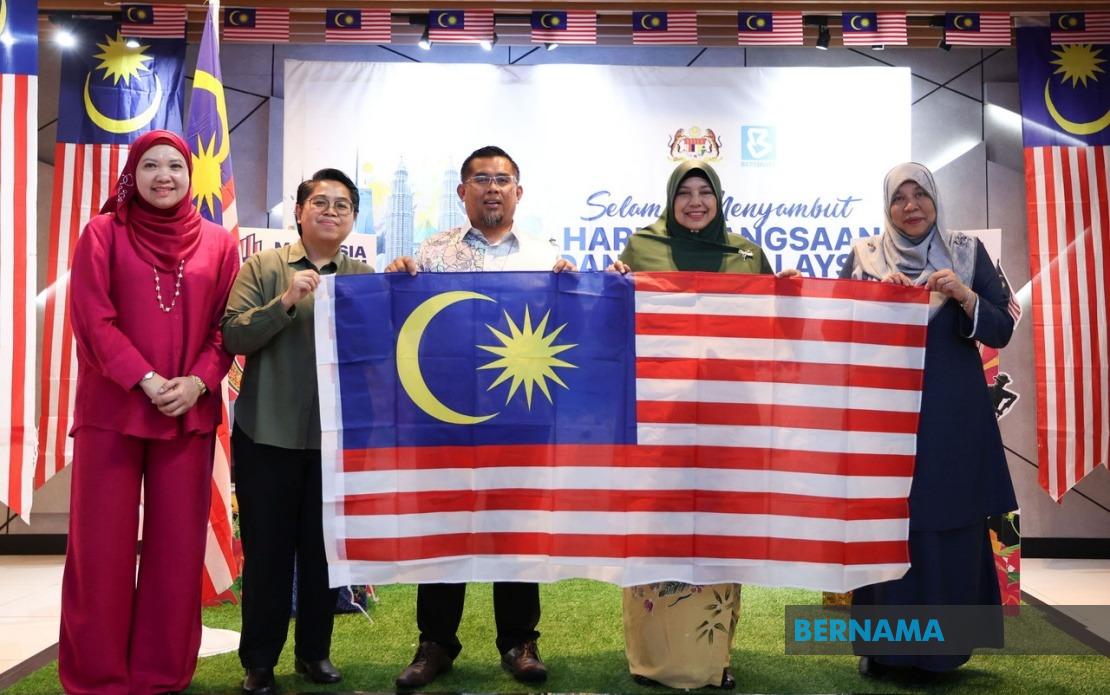
The Communications Ministry simultaneously orchestrated ceremonial transfer of Jalur Gemilang flags to Bernama staff, demonstrating institutional commitment to embedding national symbols within quotidian administrative practice. This ritualistic gesture connects individual organisations and their personnel to larger national projects, collapsing boundaries between state, media, and citizenship.
For Malaysian audiences, these announcements signal the government's sustained investment in constructing moments of national communion during periods of potential social fragmentation. The 2026 observance represents an attempt to engineer experiences of collective belonging capable of transcending factional divisions and reminding disparate communities of shared stakes in national continuity. Whether the expanded programme calendar successfully catalyses the intended emotional and political responses remains contingent upon implementation fidelity and public receptivity to government-orchestrated patriotic performance.
Regionally, Malaysia's elaborating approach to national day celebrations reflects broader Southeast Asian trajectories wherein governments increasingly choreograph symbolic occasions designed to manufacture consensus and reinforce state legitimacy. The shift toward inclusive, geographically dispersed programming mirrors strategies adopted by neighbouring nations confronting demographic complexity and competing nationalist narratives.

