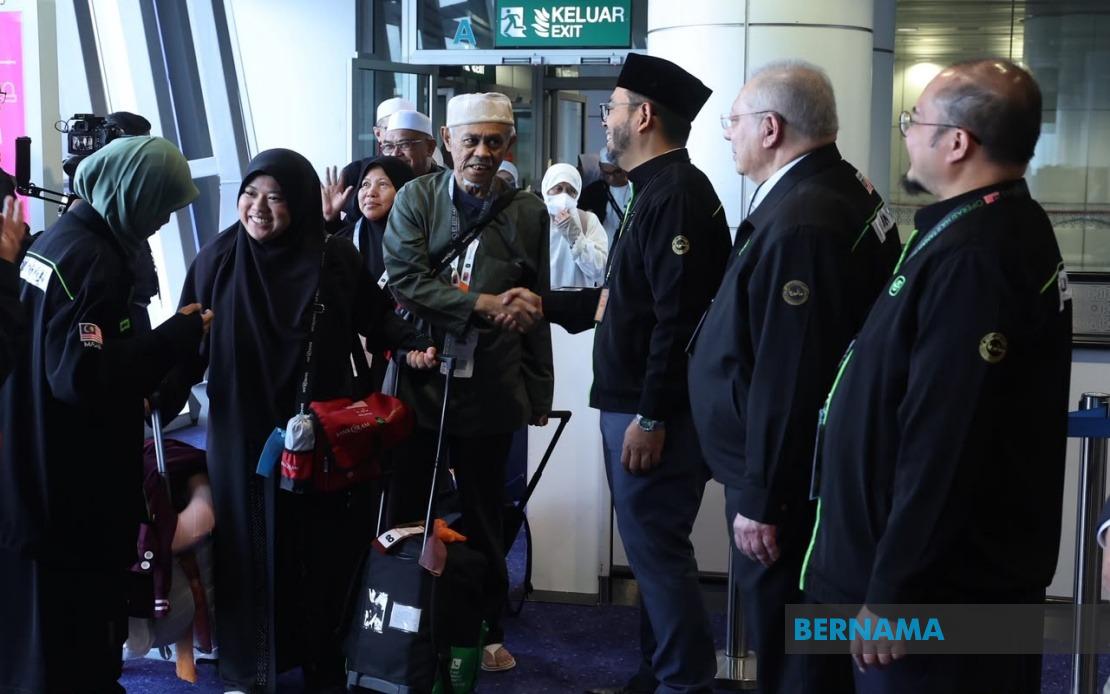
The final contingent of Malaysian haj pilgrims—258 in total—touched down at Kuala Lumpur International Airport this afternoon, bringing to a successful close the nation's 1447 Hijrah haj season after weeks of logistical coordination and intensive religious preparation. The group arrived at 12.10 pm aboard Malaysia Airlines flight MH 8385, which had departed Madinah the previous evening, marking the official completion of what officials describe as an exceptionally well-executed pilgrimage campaign conducted amid geopolitical tensions affecting the broader Middle East region.
Minister in the Prime Minister's Department (Religious Affairs) Dr Zulkifli Hasan emphasised that the safe return of all pilgrims represented not merely a logistical achievement but a collective triumph of institutional coordination and personal devotion. Speaking to journalists at the airport, he underscored that the successful completion of this year's operations reflected meticulous planning by multiple government entities working in concert, from Tabung Haji's administrative oversight to the operational support provided by airlines, health authorities, immigration officials, and private logistics partners. The minister's comments highlighted how complex modern haj management has become, requiring orchestration across diplomatic, medical, transportation, and religious domains.
The international dimension of Malaysia's performance this year gained particular prominence when the country received the Labbaikum Diamond Award from Saudi Arabia's Ministry of Haj and Umrah, an honour recognising the world's best haj management and services. This accolade carries significant prestige within Muslim-majority nations and reflects not only administrative competence but also Saudi Arabia's formal recognition of Malaysia's standing as a trusted partner in facilitating one of Islam's most sacred obligations. For a Southeast Asian nation managing the pilgrimage of over a thousand citizens annually, such recognition underscores Malaysia's capacity to navigate complex international protocols while prioritising pilgrim welfare and spiritual experience.
The success of this season's operations becomes more remarkable when contextualised against the challenging security environment affecting the region. The persistent conflict dynamics in West Asia created additional layers of uncertainty and planning complexity for Malaysian authorities. Despite these headwinds, the country maintained operational continuity and pilgrim safety throughout the season, demonstrating robust contingency planning and diplomatic coordination. The absence of any significant security incidents or pilgrim casualties stands as testament to the thoroughness of pre-departure health screening, ground-level medical support in Saudi Arabia, and constant communication between Malaysian officials stationed in the Holy Land and counterparts in Kuala Lumpur.
Dr Zulkifli attributed much of the operational success to the discipline and personal commitment demonstrated by Malaysian pilgrims themselves. This observation carries particular weight given that haj management depends significantly on pilgrim cooperation with health protocols, accommodation arrangements, bus schedules, and movement protocols within crowded sacred spaces. The minister noted that Tabung Haji had implemented intensified pre-departure preparation courses designed to equip pilgrims not only with spiritual knowledge but also practical understanding of the physical and logistical demands they would encounter. This emphasis on comprehensive preparation rather than purely administrative processing reflects an institutional learning curve across multiple seasons of operations.
Among the specific operational improvements deployed during the 1447H season were enhanced visa management capabilities through the MyNIISe system, upgraded physical infrastructure including sofa beds and improved tent facilities in accommodation compounds, round-the-clock bus transportation from mosques to residential areas, and expanded medical personnel deployment. These enhancements, while seemingly incremental, address the cumulative fatigue and health challenges that affect elderly pilgrims particularly during the physically demanding rituals of tawaf and sa'i. The provision of 24-hour bus services, for instance, accommodates the varying prayer schedules and personal pacing preferences of pilgrims, reducing stress and potential crowd-related incidents.
Tabung Haji, the dedicated pilgrim fund institution managing Malaysia's haj operations, has already initiated comprehensive post-mortem evaluations to identify further refinements for future seasons. This continuous improvement methodology reflects institutional maturity and accountability to the Malaysian public, particularly the hundreds of thousands of Malaysians who contribute to TH through savings schemes in anticipation of their haj pilgrimage. The evaluation process will examine not only operational efficiency metrics but also pilgrim satisfaction, health outcomes, and spiritual experience quality—factors that ultimately determine whether a haj season is adjudged successful beyond mere statistical measures of arrivals and departures.
The scheduled National Haj Muzakarah conference in August will convene religious scholars, government officials, TH representatives, and potentially pilgrim representatives to deliberate on emerging issues and propose structural improvements. This formal consultation mechanism ensures that operational refinements rest on Islamic jurisprudential foundations and community input rather than purely administrative considerations. Such institutionalised reflection forums distinguish Malaysia's approach from purely technocratic haj management, acknowledging that pilgrimage quality and religious authenticity remain paramount alongside logistical efficiency.
For Malaysia's broader international standing, the successful completion of the 1447H season and the Labbaikum Diamond Award recognition carry diplomatic significance. The country's demonstrated capacity to manage large-scale cross-border religious operations while maintaining security standards and pilgrim welfare positions Malaysia as a reliable partner for Islamic cooperation initiatives. This reputation becomes increasingly valuable as Malaysia navigates its role within the Islamic world while maintaining diverse international relationships and balancing economic with religious-cultural considerations in foreign policy.
The return of the final batch brings to completion another chapter in Malaysia's decades-long experience managing haj operations as a sovereign nation. Each season accumulates institutional knowledge, testing new systems and refining existing procedures based on evolving circumstances. The 1447H season's success, achieved despite regional instability, reflects this accumulated expertise and the dedication of thousands of officials and service providers whose work remains largely invisible to the public but fundamental to ensuring that Malaysian pilgrims can fulfil one of Islam's central obligations with safety, dignity, and spiritual enrichment.

