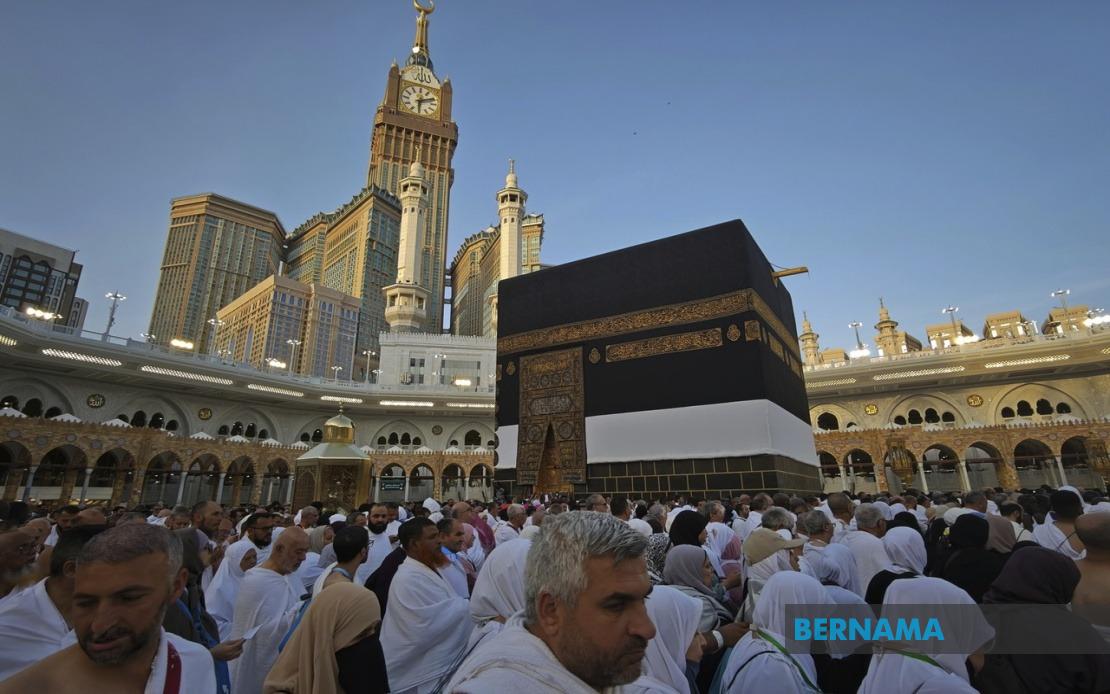
Malaysia's diplomatic mission in Saudi Arabia has moved swiftly to quash misinformation circulating on social media regarding the status of the country's haj pilgrims for the 1447H/2026 Islamic calendar season. The Consulate General of Malaysia in Jeddah issued a formal statement denying widespread claims that any Malaysian pilgrims remained in the kingdom beyond their intended departure date, emphasizing that the entire contingent had returned home according to the carefully planned repatriation schedule established by the Pilgrims Fund Board, locally known as Tabung Haji.
The diplomatic clarification comes amid a flurry of unverified posts on various social media platforms alleging that certain Malaysian haj pilgrims were still in Saudi Arabia awaiting return arrangements. Such claims, whether originating from genuine concern or deliberate mischief-making, can trigger unnecessary alarm among the families of returning pilgrims and the broader Malaysian Muslim community during the spiritually significant post-haj period. The consulate's statement serves as a reassurance that the repatriation operations had proceeded without complications and all individuals had safely touched down on Malaysian soil.
The Pilgrims Fund Board, which manages all aspects of Malaysia's national haj operations, had set out a comprehensive timeline for the return of the 1447H/2026 cohort. This institutional framework, developed over decades, ensures that the departure of roughly 30,000 Malaysian pilgrims from Saudi Arabia occurs in coordinated waves, managed through designated chartered flights and ground logistics. The board's scheduling precision has been instrumental in preventing bottlenecks at the holy sites and ensuring that no pilgrim faces extended unplanned stays in the kingdom.
The consulate's explicit denial that "there are no Malaysian haj pilgrims remaining in Saudi Arabia under the 1447H/2026 Haj operations" carries particular weight given its proximity to the events in question and its responsibility for consular affairs in the region. Officials at the mission maintain direct oversight of pilgrim movements, immigration clearances, and any emergencies requiring diplomatic intervention. Their confirmation provides authoritative closure to speculation that might otherwise persist in community channels and messaging groups.
The surge in unverified claims highlights a broader challenge facing Malaysian authorities: the rapid dissemination of information—both accurate and false—through social media networks. During major national events involving large populations abroad, such as the annual haj season, misinformation can propagate faster than official clarifications. Rumours about stranded pilgrims, flight delays, or administrative complications can spread anxiety among families, particularly among elderly relatives who rely on second-hand accounts rather than official sources. The consulate's intervention represents an attempt to restore informational integrity during a culturally important period.
Tabung Haji has long prided itself on its organisational capabilities and its track record of successfully facilitating millions of Malaysian Muslims through the pilgrimage experience. The board's coordination with airlines, Saudi authorities, and Malaysian immigration departments ensures seamless transition points for returning pilgrims. In recent years, the fund has modernised its communications channels, providing pilgrims and their families with regular updates through official portals and SMS notifications. Such institutional investment in transparency makes instances of conflicting social media narratives all the more disruptive.
The Malaysian diplomatic presence in Saudi Arabia has expanded significantly to accommodate the scale of the annual haj operations. Beyond the Consulate General in Jeddah, Malaysia maintains additional liaison offices across the kingdom to provide on-the-ground support to pilgrims. These mission facilities serve critical functions including emergency medical assistance, resolution of document issues, and handling of any unexpected complications. The presence of trained staff throughout the pilgrimage season underscores the government's commitment to pilgrim welfare and its capacity to address problems as they arise.
The consulate's appeal to the public to "refer to official sources for accurate and up-to-date information" reflects a broader effort by Malaysian authorities to establish trusted communication channels. In an era of information fragmentation, where multiple platforms compete for attention and algorithmic feeds often amplify sensational content, institutional credibility becomes paramount. The Malaysian government's various official accounts, Tabung Haji's dedicated platforms, and news releases through the national news agency BERNAMA remain the most reliable fountains of truth regarding haj operations and pilgrim status.
For Malaysian families awaiting their relatives' return, the consulate's confirmation provides definitive reassurance. The completion of the haj season marks a significant moment in the Islamic calendar, and pilgrims transitioning back to everyday life benefit from a clear, undisputed account of their status. The emotional and spiritual dimensions of the pilgrimage experience make false claims of delayed returns particularly distressing, potentially casting a shadow over what should be a joyful homecoming period.
Looking forward, the challenge for Malaysian authorities lies in developing even more robust pre-emptive communication strategies that reach pilgrims and their families before misinformation takes root. Greater integration of real-time tracking systems, more frequent official updates during the return phase, and targeted social media campaigns highlighting verified information could help neutralise false narratives before they gain momentum. The 1447H/2026 season's conclusion, while incident-free in terms of pilgrim welfare, has revealed the vulnerabilities that exist in the information ecosystem surrounding such major national events.
The successful completion of another haj season reflects positively on Malaysian institutional capacity and the cooperation between government agencies, religious authorities, and international partners. As Muslims worldwide reflect on the spiritual significance of the pilgrimage, Malaysia's seamless handling of the logistical challenges underscores the nation's capability to manage large-scale movements of its citizens across international borders. Clearing away misinformation ensures that this achievement remains undimmed by doubt or confusion.

