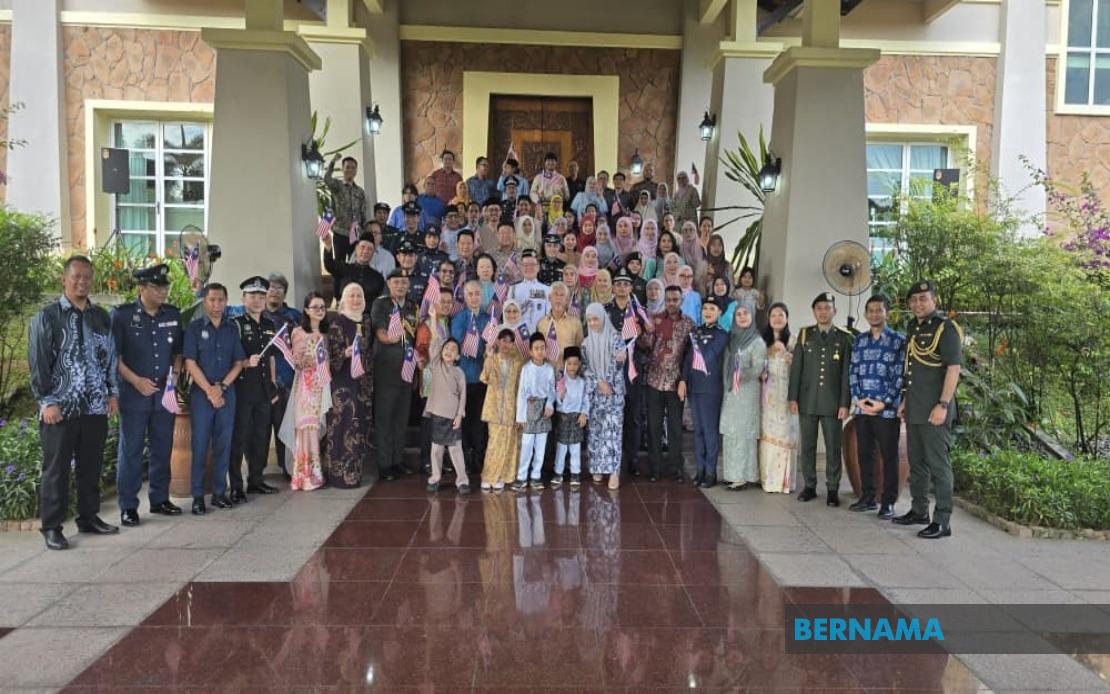
The Malaysian High Commissioner to Singapore, Datin Paduka Anizan Siti Hajjar Adnin, has underscored the pivotal role that Malaysians residing in the island nation play in fortifying the relationship between Kuala Lumpur and Singapore. Speaking during commemorations at the Malaysian High Commission's 2026 National Day parade in Singapore, she characterised these individuals as more than mere expatriates, describing them instead as "unofficial ambassadors" whose daily presence and conduct significantly influence how Malaysia is perceived across the causeway.
The High Commissioner's remarks come at a time when Malaysia-Singapore relations remain defined by complex historical, economic, and social dimensions that extend far beyond conventional diplomatic channels. Her emphasis on the role of individual Malaysians reflects a recognition that bilateral ties are sustained not merely through formal government interactions, but through the thousands of personal connections forged by citizens who live, work, and raise families across both countries. This grassroots dimension of diplomacy often receives less attention than high-level negotiations, yet it forms the foundation upon which lasting regional stability is built.
Anizan highlighted the multifaceted nature of Malaysia-Singapore connectivity, noting that the relationship transcends simple geographic proximity. The two nations are bound together by shared history dating back to their colonial past, interconnected economies that depend on cross-border trade and investment, and deep family ties that span generations. She specifically acknowledged the significant number of Malaysians who commute daily across the causeway for employment, business, or educational purposes, describing this regular movement of people as integral to the bilateral relationship's health and vitality.
For Malaysians residing permanently or semi-permanently in Singapore, the High Commissioner articulated a particular expectation: that they should embody Malaysia's finest attributes through their professional conduct and personal interactions. She called upon this community to demonstrate integrity, maintain high standards of professionalism, and approach their work with courtesy and genuine respect for those around them. Beyond individual workplace conduct, Anizan emphasised the importance of fostering mutual assistance within Malaysian communities in Singapore, suggesting that collective social responsibility reinforces Malaysia's reputation in the eyes of Singaporean neighbours and institutions.
This framing of diaspora communities as representatives of national identity carries significant implications for how Malaysians in Singapore might view their responsibilities. Rather than being encouraged to assimilate fully into Singaporean society at the expense of Malaysian identity, the High Commissioner's message suggests a balanced approach wherein cultural maintenance coexists with active participation in the broader Singaporean community. The emphasis on Malaysians making "positive contributions to the communities and countries in which we live" reflects a mature understanding that national pride and civic belonging need not be mutually exclusive.
The High Commissioner devoted particular attention to younger Malaysians in Singapore, urging them to maintain appreciation for their cultural heritage and to actively preserve the Malay language as the lingua franca of Malaysia. This intergenerational emphasis is noteworthy, as second-generation expatriates often face the greatest risk of losing connection to their homeland's cultural markers. By highlighting the Malay language specifically as a unifying national symbol, Anizan positioned cultural preservation not as a nostalgic exercise, but as an essential component of Malaysian identity that transcends borders and enables connection with fellow citizens wherever they may be.
Her vision for Malaysia itself—as a nation "confident in its identity, open to the world, yet firmly rooted in its values and cultural heritage"—reflects a reconciliation of seemingly opposing forces: globalisation and cultural preservation, outward engagement and inward reflection. For Malaysians in Singapore, this articulation provides a philosophical framework for understanding their own position: they need not retreat into cultural insularity nor abandon their heritage in pursuit of material success or social integration in their host country.
The 2026 National Day parade at which these remarks were delivered attracted more than seventy staff members and family members of the Malaysian High Commission, transforming Rumah Malaysia into a venue for celebrating Malaysian identity outside Malaysia's borders. Such events serve multiple purposes simultaneously—they provide a gathering space for Malaysians to reinforce communal bonds, they signal Malaysia's continued diplomatic presence and cultural vitality to Singapore's broader population, and they offer an opportunity for the High Commission to communicate institutional priorities to the Malaysian diaspora community.
From a regional perspective, the emphasis on diaspora communities as diplomatic assets reflects broader Southeast Asian recognition that people-to-people connections often prove more resilient than government-to-government relationships. As Malaysia and Singapore navigate economic competition, maritime boundary discussions, and other points of potential friction, the millions of interpersonal relationships maintained by Malaysians in Singapore serve as a stabilising force. These relationships create constituencies within both countries with vested interests in maintaining peaceful, productive bilateral ties.
The High Commissioner's characterisation of Malaysians in Singapore as a bridge carrying positive Malaysian values and professional excellence into Singaporean institutions also implicitly challenges stereotypes or negative perceptions that might sometimes emerge. By consciously framing diaspora members as representatives of Malaysian excellence, the High Commission invests them with a diplomatic mission that extends beyond their formal job descriptions. This approach acknowledges that individual behaviour and professional reputation contribute cumulatively to national perception in ways that official statements alone cannot achieve.
Looking forward, the continued emphasis on cultural maintenance among younger Malaysians in Singapore suggests institutional commitment to preventing the gradual erosion of Malaysian identity that sometimes accompanies long-term residence abroad. Language preservation efforts, cultural celebrations, and reminders of shared national values all serve to maintain the bridges that connect diaspora communities to their homeland, ensuring that engagement with Malaysia remains active rather than becoming merely nostalgic or ceremonial.

