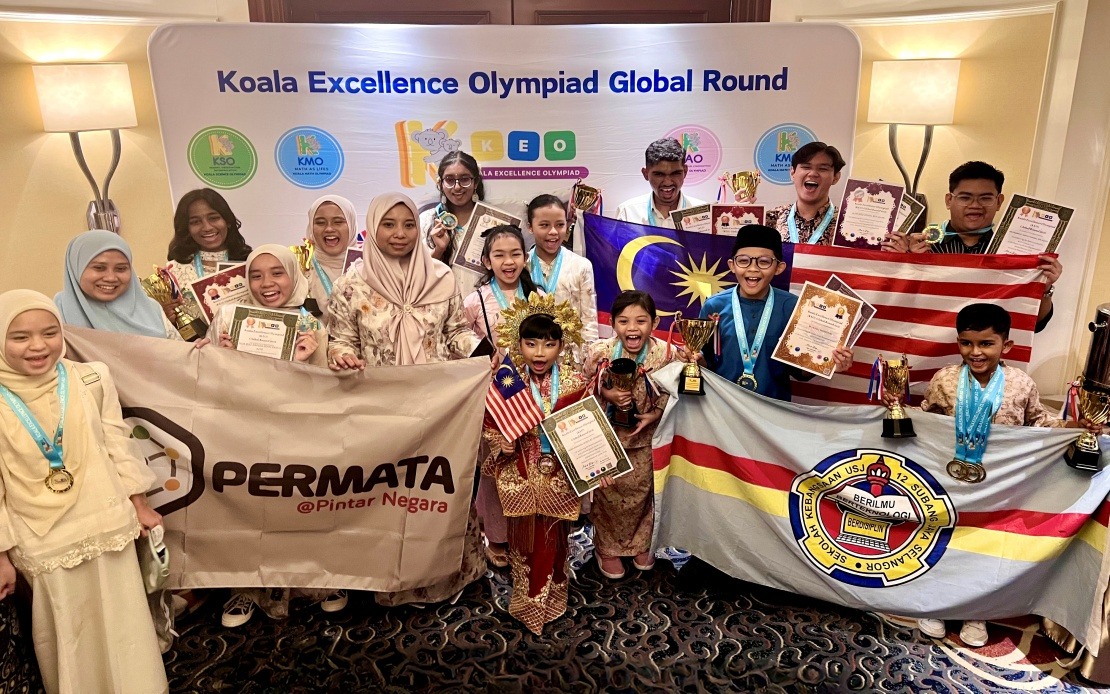
Malaysia's academic prowess received international recognition this week as a contingent of 17 students returned from the Koala Excellence Olympiad (KEO) 2026 in Macau with an impressive haul of medals and accolades. The delegation, coordinated by the Malaysian Young Scientists Organisation (MYSO), captured nine overall awards and a total of 22 medals—comprising five gold, six silver, and 11 bronze—across multiple disciplines at the prestigious international competition that wrapped up yesterday.
The triumph underscores growing momentum in Malaysia's participation in global academic competitions and reflects the calibre of young talent emerging from the country's secondary and primary schools. MYSO coordinator Aidah Misran, who led the Malaysian team to Macau, characterised the results as a validation of the rigorous preparation and commitment demonstrated by the students and their instructors. The competition, jointly organised by KEO and Miss Man International Group with MYSO handling local coordination, assembled competitors from diverse nations to test their abilities in English, Mathematics, Science, and Arts Olympiads—disciplines designed to evaluate higher-order thinking rather than rote learning.
The Malaysian contingent drew representation from eight educational institutions across the country, reflecting both the breadth of Malaysia's academic ecosystem and the concentrated strength within certain schools. Four students came from Kolej PERMATA@Pintar Negara at Universiti Kebangsaan Malaysia, six from Sekolah Menengah Kebangsaan Ungku Aziz, and smaller delegations from Sekolah Sultan Alam Shah, Sekolah Kebangsaan Convent (2) Bukit Nanas, and individual representatives from SMK Convent Teluk Intan, SK USJ 12, SK Seri Hartamas, and SK Convent Sentul 1. This distribution suggests that excellence in academic competitions remains concentrated in well-resourced institutions, though pockets of exceptional talent exist beyond the traditional powerhouse schools.
Mukridz Mardzuki, a Year Six student from SK Seri Hartamas, emerged as the standout performer of the Malaysian delegation by clinching the overall Science Olympiad championship in the primary school category. His victory demonstrates that rigorous scientific thinking and problem-solving aptitude are developing even among Malaysia's youngest competitors, a finding with encouraging implications for the nation's long-term capacity in STEM fields. Alongside Mardzuki's triumph, two Malaysian students secured runner-up positions in Science Olympiad categories: Sarah Isabel Maryam Ahmad Suhael from SK Convent (2) Bukit Nanas in the primary category and Alfie Rizq Danial Azlan from Sekolah Sultan Alam Shah in the secondary category.
Beyond the Science discipline, Malaysian students demonstrated versatility across other competition areas. Ayra 'Adani Muhammad 'Aizat from Kolej PERMATA@Pintar Negara at UKM secured the runner-up position in the overall English Olympiad, indicating that linguistic competence and communication skills among Malaysian learners continue to strengthen. The breadth of medals across different subjects and categories suggests a balanced development of intellectual capabilities rather than narrow specialisation, a characteristic that bodes well for creating well-rounded problem-solvers.
The competition framework itself carries pedagogical significance beyond mere medal-counting. The KEO platform was developed by Australian educational specialists and constructed to align with rigorous curriculum standards that prioritise critical thinking, creative problem-solving, and practical application of knowledge over mechanical memorisation. For Malaysian educators and policymakers, this emphasis on deeper learning resonates with contemporary educational reform globally—a shift away from assessment regimes that reward factual recall toward systems that cultivate analytical reasoning and innovative thinking. Malaysia's strong showing at such a competition thus signals that local schools are successfully cultivating these higher-order capabilities.
Five students earned third-place overall awards, further expanding Malaysia's medal tally and reflecting consistent performance across the competition. Notably, Marvyn Zef Mark Philip distinguished himself by securing two category victories within the third-place grouping, winning both the Science and English categories. P Prem earned third place in Science, Muhammad Khairul Mauidz Khairul Azman in Mathematics, and AK Shashini in English. This distribution across multiple subjects underscores that Malaysian academic strength spans traditional disciplines, rather than being concentrated in any single field.
The participation structure, with MYSO coordinating the Malaysian representation, reflects the growing ecosystem of youth science and academic organisations in Malaysia that identify, nurture, and advocate for talented young learners. These pathways from school-level identification through international competition experience are crucial for developing the next generation of researchers, innovators, and intellectual leaders. For students like those who competed in Macau, the international exposure provides not only competitive experience but also networking opportunities with peers from other nations, broadening their intellectual horizons and potentially sparking collaborations or research interests that span borders.
From a regional perspective, Malaysia's performance at KEO 2026 positions the nation as a credible player in the Southeast Asian academic landscape. While the competition was held in Macau and drew international participants, Malaysia's medal returns demonstrate that local students can compete effectively against peers from nations with varying educational systems and resource bases. This success carries implications for Malaysia's reputation in attracting international education partnerships and could bolster the nation's standing as a potential hub for advanced learning initiatives in the region.
Looking ahead, the results should serve as both validation and catalyst for Malaysian stakeholders invested in academic excellence. Schools that fielded successful competitors may receive increased recognition and resources, potentially creating a virtuous cycle of investment and achievement. Simultaneously, the medal results highlight which institutions are excelling and may encourage other schools to intensify their engagement with competitive academic programmes. For students who performed well, the international recognition could motivate deeper engagement with their respective disciplines and potentially influence career trajectories toward research, academia, or innovation sectors where Malaysia faces talent gaps.
The delegation's success also reflects parental and institutional commitment to extending learning beyond the standard curriculum. Participation in international olympiads requires significant time investment, financial resources for preparation and travel, and institutional support for releasing students to pursue competitive opportunities. The 17 students who travelled to Macau and the schools that enabled their participation represent a broader commitment within Malaysia's educational ecosystem to develop world-class learners, even if such opportunities remain unevenly distributed across the country's school system.

