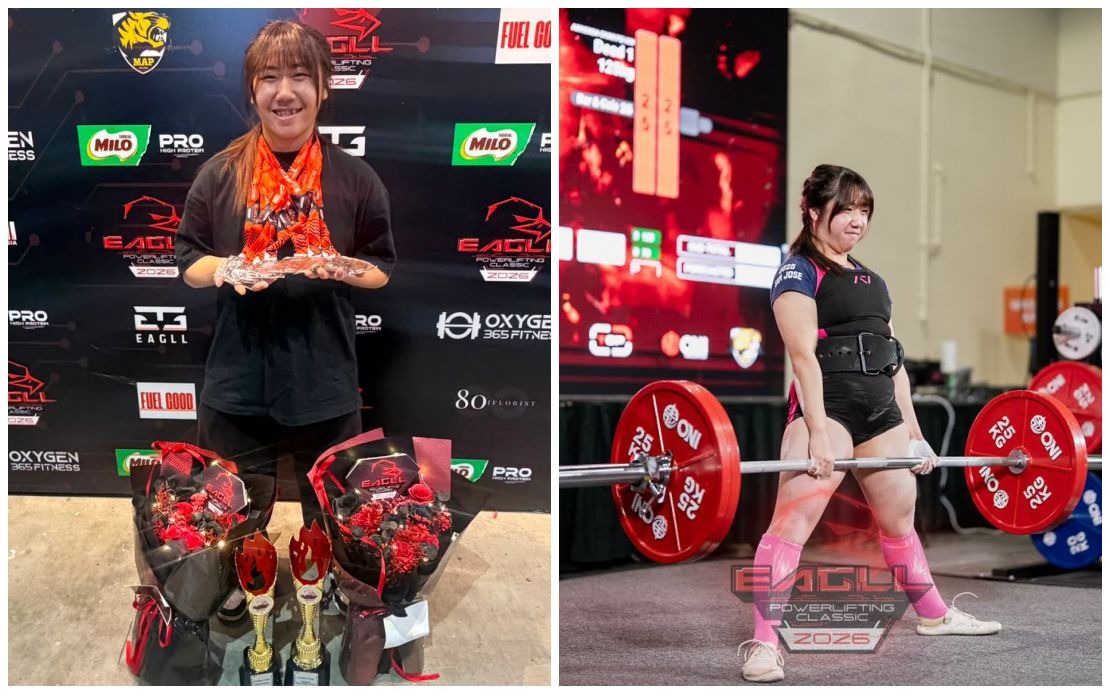
At just 151 centimetres tall and weighing under 57 kilograms, Abrienda Chan has emerged as one of Malaysia's most promising powerlifting talents, shattering five national records at the Eagll Powerlifting Classic 2026 in Kuala Lumpur to forge ahead with her ambitious plans to compete at the world stage. The 20-year-old Sarawakian athlete from Kuching has made a striking statement in a sport traditionally dominated by larger competitors, demonstrating that physical size is no barrier to exceptional athletic performance when combined with skill, discipline, and determination.
Abrienda's breakthrough haul at the recent competition included setting new national benchmarks across multiple disciplines. In the Under-57 kilogramme category, she established a new open squat record of 128 kilograms, secured the junior and open bench press records at 70 kilograms, and claimed the coveted junior and open total records of 343 kilograms. These achievements underscore her technical proficiency and strength development across the three fundamental powerlifting disciplines. The records were not achieved in isolation; she simultaneously collected seven gold medals and one silver medal across competitions in both the junior and open age divisions, a feat that highlights her competitive edge against opponents spanning multiple generations.
The magnitude of this accomplishment becomes clearer when understood against Abrienda's recent trajectory. Only weeks before the competition, she had publicly articulated her strategic goal to systematically rewrite Malaysia's national record books as a deliberate preparation pathway towards competing in two major world championships scheduled for 2027. The Eagll event effectively accelerated that plan significantly, positioning her well ahead of her own timeline. This acceleration reflects not merely good fortune but rather meticulous preparation and the physical and mental resilience required to execute at such a high level under competitive pressure.
While Abrienda dominated the junior division to claim the Junior and Sub-Junior Overall Championship title, her performance in the open category proved even more remarkable. Finishing as runner-up in the Open Overall standings despite being among the youngest competitors in that field surprised even the athlete herself. She acknowledged that this unexpected placement validated her growing capabilities and suggested that she operates at a competitive level substantially above her chronological age. This cross-generational competitiveness typically signals that an athlete possesses both the technical foundation and mental fortitude for successful international competition.
The technical decisions made during the competition reveal strategic thinking alongside raw talent. Abrienda explained that she had targeted additional records, particularly the junior squat mark, but encountered technical difficulties on her final squat attempt that prevented her from securing it. In the deadlift, she and her coaching team made a calculated decision to prioritize securing the gold medals and overall titles rather than pursuing potentially unsuccessful record attempts. This pragmatism separates serious athletes from those driven purely by individual statistics. Understanding when to push for excellence and when to secure concrete victories represents maturity in competitive sports strategy.
Abrienda's credentials extend well beyond the recent competition. She previously dominated the Under-52 kilogramme sub-junior category and continues to hold the national records in all three lifts—squat, bench press, and deadlift—plus the total for that division. This track record of sustained excellence across weight categories and age groups suggests a rare consistency that often characterizes athletes destined for international prominence. Having transitioned into the heavier U57 category, she has immediately re-established dominance, indicating that her strength development has progressed proportionally with her changing body composition as she matures.
International recognition has already begun arriving at her career. Abrienda secured the gold medal at the 2024 Asian Classic Powerlifting Championships, establishing her as a significant regional force. That achievement positioned her as a credible prospect for world-level competition, where the performance standards increase substantially. The transition from dominating national and regional competitions to contending globally requires not only greater absolute strength but also consistency, technical refinement, and psychological resilience under extreme pressure. Her preparation strategy for the 2027 competitions appears designed to build these capacities systematically.
Looking ahead, Abrienda has targeted two major international platforms for 2027: the World Classic & Equipped Bench Press Championships in Istanbul, Turkey, and the World Classic Sub-Junior & Junior Powerlifting Championships in Haining, China. Her stated ambition to break into the world's top three in the U57 junior category at these championships represents an aggressive but realistic goal given her current trajectory. The Istanbul event will test her bench press capabilities against the world's elite, while the Haining championship will place her in direct competition with junior powerlifters from across the globe. Both competitions will provide invaluable international experience and insight into the performance standards required at the highest competitive levels.
The importance of support systems in athlete development cannot be overlooked in Abrienda's narrative. She publicly acknowledged the pivotal role played by her family, coaching staff, and Turbo Fitness, her primary training facility. This organization has provided not only gym access but also financial assistance for competition travel expenses—logistical support that frequently proves decisive for athletes from smaller countries or limited financial backgrounds. Such backing allows performers to concentrate entirely on athletic development rather than diverting mental and financial resources towards solving practical obstacles. For Malaysian sports development more broadly, this case study illustrates how strategic corporate sponsorship can nurture homegrown talent.
Abrienda's emergence carries significance for Malaysian powerlifting and Southeast Asian sports more broadly. Powerlifting remains a relatively niche discipline in the region compared to more established sports, yet the International Powerlifting Federation maintains growing participation. Malaysia, with limited historical prominence in the sport, has been building capability gradually. Athletes like Abrienda represent the foundation for establishing competitive depth that could position Malaysia as a regional powerlifting hub. Her success inspires younger athletes to pursue strength sports seriously, potentially creating a pipeline of talent that strengthens the country's standing in international competitions.
The psychological dimension of Abrienda's development warrants attention. Competing as a significantly smaller athlete than most opponents in her category demands considerable mental strength. She must overcome any physical size disadvantages through superior technique, training discipline, and competitive intelligence. This adversity often produces athletes with exceptional mental resilience—a quality that becomes increasingly important as competitions grow in scale and pressure. Her capacity to set ambitious targets and execute methodically towards them suggests a mature sporting mindset.
Moving forward, Abrienda's trajectory will bear watching not only for her personal achievements but as an indicator of Malaysian powerlifting's developmental capacity. If she achieves her goal of placing in the world's top three at the 2027 championships, it would represent a major breakthrough for Malaysian representation in this strength sport and could catalyze increased investment and participation domestically. Conversely, her experience navigating international competition will generate valuable knowledge that benefits the wider Malaysian powerlifting community. Either outcome positions her as a figure of strategic importance to the sport's evolution in Southeast Asia.

