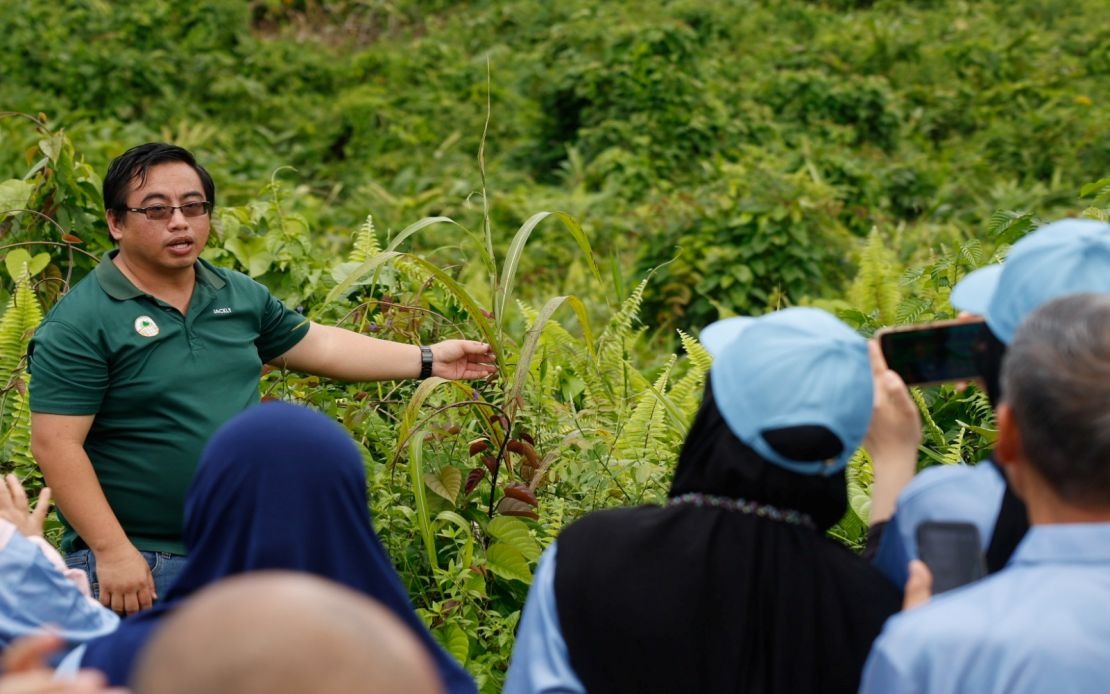
A sweeping environmental recovery is underway in Sabah's Lower Kawag, where one of Southeast Asia's most significant orangutan forests is being systematically restored after decades of fires and industrial logging. The Malaysian Palm Oil Green Conservation Foundation (MPOGCF), working in partnership with the Sabah Forestry Department, has injected RM10 million into rehabilitating the 6,000-hectare landscape within the Ulu Segama-Malua Forest Reserve, addressing one of Borneo's most pressing conservation challenges alongside measurable livelihood gains for indigenous communities.
The restoration imperative stems from a particularly destructive recent history. During the El Niño episodes of 1983, 1997 and 1998, massive fires swept through the region, destroying approximately 90 per cent of the forest canopy. These catastrophic events compounded damage from intensive logging conducted between 1980 and 2007, when conventional extraction methods combined with minimal forest management protocols left the landscape severely compromised. Jackly Ambrose, Forest Conservation Officer with the Sabah Forestry Department, explains that the convergence of fire damage and industrial logging created what amounted to an ecological crisis requiring systematic intervention rather than passive recovery.
The project, which commenced operations in 2019, follows a carefully sequenced 10-year implementation schedule extending through 2029. This phased approach recognises that forest restoration cannot be rushed; each stage builds methodically on previous successes. The first phase, launched in 2019, focused on just 25 hectares of pilot work, establishing foundational protocols and identifying best practices. The second phase, now nearly 90 per cent complete, expanded the footprint to 200 hectares. The current third phase, which commenced this year, represents the project's most ambitious stage, targeting 332 hectares and aiming to establish 132,800 tree saplings. Across all phases, 225 hectares have already been successfully restored.
The technical approach reflects international standards for degraded landscape restoration. Restoration work begins with native pioneer species—Laran, Binuang and Talisai—selected specifically for their capacity to rapidly establish canopy cover in previously barren areas. Once these pioneer species create suitable conditions, hardwood varieties from the Dipterocarpaceae family, including valuable timber species like Kapur and Seraya, are introduced for long-term forest structure and economic value. This staged botanical strategy accelerates natural succession while ensuring that restored areas develop genuine ecological complexity rather than becoming monoculture plantations.
Monitoring data validates the approach's effectiveness. Trees planted during the second phase since 2022 have demonstrated healthy growth trajectories, indicating that restoration conditions are optimising species establishment. More significantly, the project has achieved international validation through Preferred by Nature (PbN) certification under the Ecosystem Restoration Verification Standard Version 3.1, confirming that implementation aligns with globally recognised best practices for forest landscape restoration. This certification enhances Sabah's credentials as a serious conservation jurisdiction and provides external assurance to international environmental partners and investors.
Beyond mere forest regeneration, the initiative is catalysing measurable improvements in wildlife habitat quality and ecosystem connectivity. Joint monitoring conducted with the Kinabatangan Orang-utan Conservation Programme (HUTAN) last August documented that orangutan density in Lower Kawag now ranges between one and 3.5 individuals per square kilometre—a meaningful indicator of habitat adequacy following restoration implementation. The expanding forest structure is also facilitating wildlife corridor development for elephant movements, addressing a critical conservation gap. These corridors reduce human-wildlife conflict incidents in adjacent plantation zones, creating tangible benefits for both agricultural operations and forest-dependent communities.
Faunal surveys reveal the biodiversity gains already materialising. More than 20 mammal species now inhabit or traverse the restoration zone, including 12 species classified as threatened, such as banteng, Asian elephants and sun bears. Avian diversity proves equally impressive, with over 180 bird species recorded, including globally rare and Borneo-endemic varieties such as pittas, the Bornean ground cuckoo and multiple hornbill species. This expanding animal inventory demonstrates that restoration is generating genuine ecological complexity rather than producing mere tree cover.
The project's most distinctive feature lies in its community partnership model. Rather than importing labour or saplings from external sources, MPOGCF engaged the Kampung Tampenau Nursery Community, comprising 114 residents from Tambunan, Penampang and Ranau. This community-based supply chain creates a decentralised nursery network producing native tree saplings for on-site planting, fundamentally restructuring what might otherwise have been a capital-intensive imported operation. During the second phase alone, community nurseries supplied 80,000 saplings, demonstrating the scalability and reliability of this approach.
The livelihood dimension extends beyond simple employment. Participating community members, predominantly housewives seeking household income supplementation, now generate revenue by cultivating and selling saplings at prices ranging from RM5 to RM7 per polybag, adjusted for species type and order volume. This income stream provides meaningful supplementation to household budgets, particularly for children's educational expenses. Previously, participants relied on more marginal income sources such as woven bag and handicraft sales. The saplings programme represents a more stable, predictable revenue stream tied to a multi-year, institutionally-backed procurement commitment.
Capacity building has accompanied income generation. Community participants received systematic training in identifying native forest tree species such as Laran, Binuang and Seraya, alongside practical instruction in nursery propagation protocols and seedling management techniques. Individual participants now demonstrate capacity to produce approximately 200 saplings daily, translating household nursery operations into meaningful productive enterprises. This knowledge transfer creates lasting human capital within communities, enabling participants to diversify their environmental engagement beyond the formal project timeline.
The restoration initiative reflects broader regional trends in balancing environmental rehabilitation with rural economic development. In Southeast Asia, where logging legacies and climate-driven disturbances have degraded substantial forest areas, the Lower Kawag model demonstrates that restoration need not remain purely conservation-focused or divorced from livelihood considerations. By embedding community participation into restoration implementation, the project transforms what might be perceived as external environmental intervention into a shared enterprise generating tangible local benefits alongside measurable ecological gains.
From a conservation perspective, the project's phased scaling through 2029 establishes a replicable template for other degraded forest landscapes throughout Sabah and the broader region. The international certification provides evidence-based validation of methodology, while the demonstrated wildlife recovery and biodiversity gains offer compelling justification for sustained investment. As the third phase unfolds, the accumulating data on restoration success rates, species recovery and community engagement outcomes will inform broader policy conversations about forest management and degraded landscape rehabilitation across Malaysian Borneo and the wider Indo-Pacific context.

