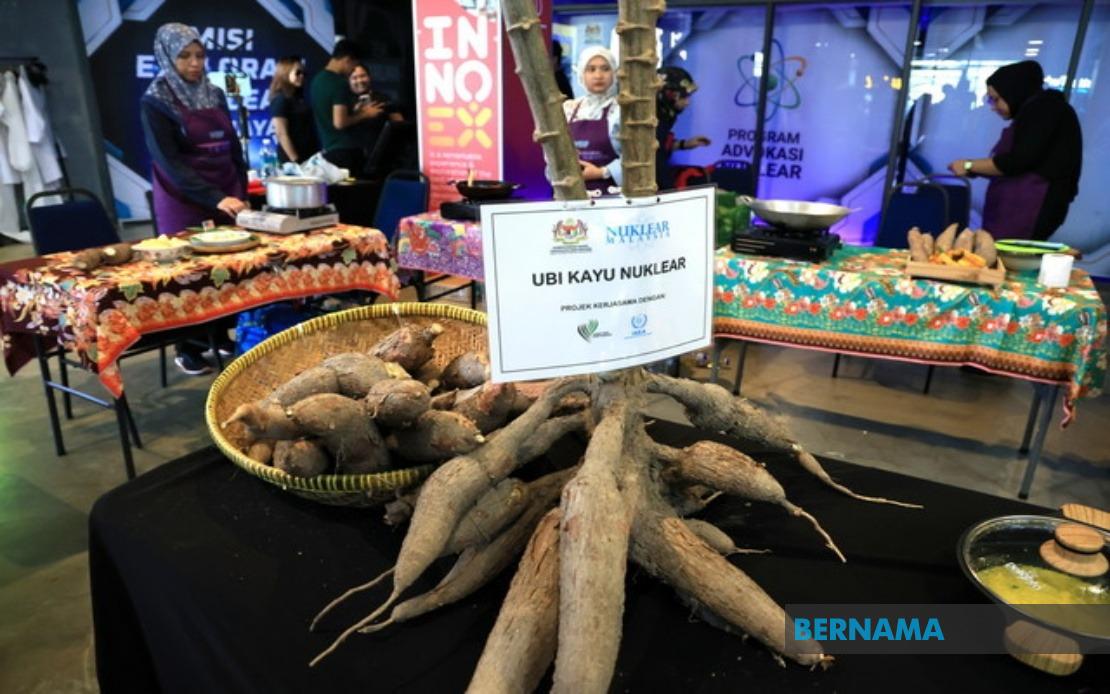
Malaysia's push to strengthen agricultural productivity has reached a significant milestone with the Malaysian Nuclear Agency's development of fast-maturing cassava varieties through nuclear technology applications. Researchers at the Agrotechnology and Biosciences Division have created several promising new cassava strains capable of reaching harvest maturity in approximately six months, dramatically reducing the 11 to 12 months typically required for locally cultivated varieties. According to Norazlina Noordin, a research officer leading the initiative, these varieties have demonstrated superior yield performance compared with conventional planting materials and are positioned for commercialisation within the coming two years.
The five-to-six-year research initiative, which commenced in 2021, was conceived to address a persistent constraint in Malaysia's cassava production landscape. Local cassava varieties demand extended growing periods that limit farmers' ability to generate multiple harvests annually from the same land. By condensing the maturity window to six months while maintaining or enhancing productivity levels, the Malaysian Nuclear Agency's work promises to unlock new economic opportunities for cassava cultivators across the nation. The research team has successfully isolated genetic modifications that deliver both the accelerated growth trajectory and the yield improvements needed to make commercial viability realistic within a relatively short timeframe.
The technical foundation of this breakthrough rests on gamma radiation exposure applied to cassava stem cuttings before planting. Norazlina emphasised that this methodology is fundamentally safe, comparing the process to medical X-ray technology where radiation passes through material without depositing radioactive residue. The irradiated cuttings are subsequently planted and systematically screened across multiple generational cycles to identify and stabilise the desired characteristics—principally early maturity combined with robust yields. This multi-generational selection process represents the most demanding component of the research programme, requiring researchers to evaluate approximately 1,000 plants continuously to ensure genetic stability across successive plantings.
The collaboration between the Malaysian Nuclear Agency and the Department of Agriculture has been central to the project's success. International support came through the International Atomic Energy Agency, which contributed a research grant of approximately RM100,000 distributed across the five-year study period. The Department of Agriculture provided practical infrastructure, including dedicated planting areas where screened materials could be evaluated under controlled conditions following nuclear technology application. This institutional partnership model demonstrates how Malaysia's scientific capabilities can be enhanced through coordinated engagement between domestic agencies and international research bodies.
The potential economic implications for Malaysian agriculture are substantial. A nearly 50 percent reduction in the time between planting and harvest could enable farmers to execute multiple cultivation cycles within a single calendar year, substantially amplifying income generation from cassava operations. This acceleration in production cycles would also improve capital utilisation efficiency, as farmers could reinvest revenue from completed harvests into new plantings without the prolonged waiting periods that currently constrain cassava farming profitability. For smallholder farmers in particular, who typically operate with limited land holdings and capital reserves, this productivity enhancement could prove transformative for household incomes and food security outcomes.
Beyond cassava, the Malaysian Nuclear Agency is applying identical nuclear technology methodologies to other strategic crops. Research programmes are underway targeting bananas, sweet potatoes, and taro, with development goals encompassing higher yields alongside enhanced resistance to diseases, pests, and climatic variability. These auxiliary crops represent critical components of Malaysia's agricultural diversity and food security framework. The nuclear technology application extends further to industrial-use crops, including kenaf for biomass-based fibreboard production and Napier grass for livestock feed applications. This comprehensive crop development strategy reflects a systematic approach to strengthening Malaysia's agricultural resilience across multiple production systems.
The screening and stabilisation process that consumes the majority of research time underscores why agricultural biotechnology development demands extended timeframes and substantial resource commitments. Genetic modifications induced through radiation exposure occur randomly throughout plant tissue, meaning researchers must evaluate enormous plant populations to identify the rare specimens manifesting the targeted characteristics. Once potentially suitable plants are identified, stability verification across successive generations becomes mandatory—characteristics that appear beneficial in early generations sometimes revert to original traits in subsequent plantings, necessitating continued observation and selection. This inherent biological unpredictability explains why developing new crop varieties through nuclear technology typically requires six to seven years minimum before confidence in stability and consistency can be established.
The food security dimension represents a critical rationale underlying this research programme. Malaysia, like many Southeast Asian nations, confronts persistent challenges in achieving self-sufficiency across diverse food categories while accommodating population growth and evolving dietary patterns. By accelerating cassava maturity while maintaining yield advantages, the Malaysian Nuclear Agency is directly addressing productive capacity constraints that currently limit domestic supply capacity. Enhanced disease and pest resistance in other crops similarly supports Malaysia's capacity to stabilise production in the face of emerging phytosanitary threats and climate-related stress factors that increasingly characterise tropical agricultural environments.
The timeline toward commercialisation within two years suggests that the foundational research validation is substantially complete, with the research team demonstrating sufficient confidence in varietal stability and agronomic performance to warrant scaling toward practical farming application. The transition from controlled research environments to farming conditions will require additional coordination with the Department of Agriculture and engagement with cassava cultivation communities to facilitate knowledge transfer and address practical implementation questions. Farmer acceptance, seed production scaling, and market development will represent subsequent challenges requiring attention alongside the scientific accomplishments already achieved.
This agricultural innovation aligns with Malaysia's broader positioning within global agricultural biotechnology advancement. While some nations have pursued genetic modification pathways through transgenic technologies, Malaysia's nuclear technology approach via induced mutagenesis represents an alternative methodology with distinct regulatory and public acceptance implications. The absence of radioactive contamination and the process's conceptual similarity to natural mutation patterns may facilitate regulatory approval and consumer acceptance compared with other biotechnology methodologies that encounter greater societal scepticism in certain Asian markets.
The implications extend beyond Malaysia's borders to regional food security considerations. Neighbouring nations with substantial cassava production—particularly Thailand, Vietnam, and Indonesia—confront identical maturity duration constraints that limit productivity. Successful Malaysian commercialisation of these fast-maturing varieties could potentially stimulate regional agricultural research cooperation and technology sharing arrangements, particularly through ASEAN agricultural development frameworks. The demonstrated feasibility of nuclear technology applications in tropical crop improvement could inspire comparable research initiatives across Southeast Asia, collectively advancing regional food production capacity and stability.

