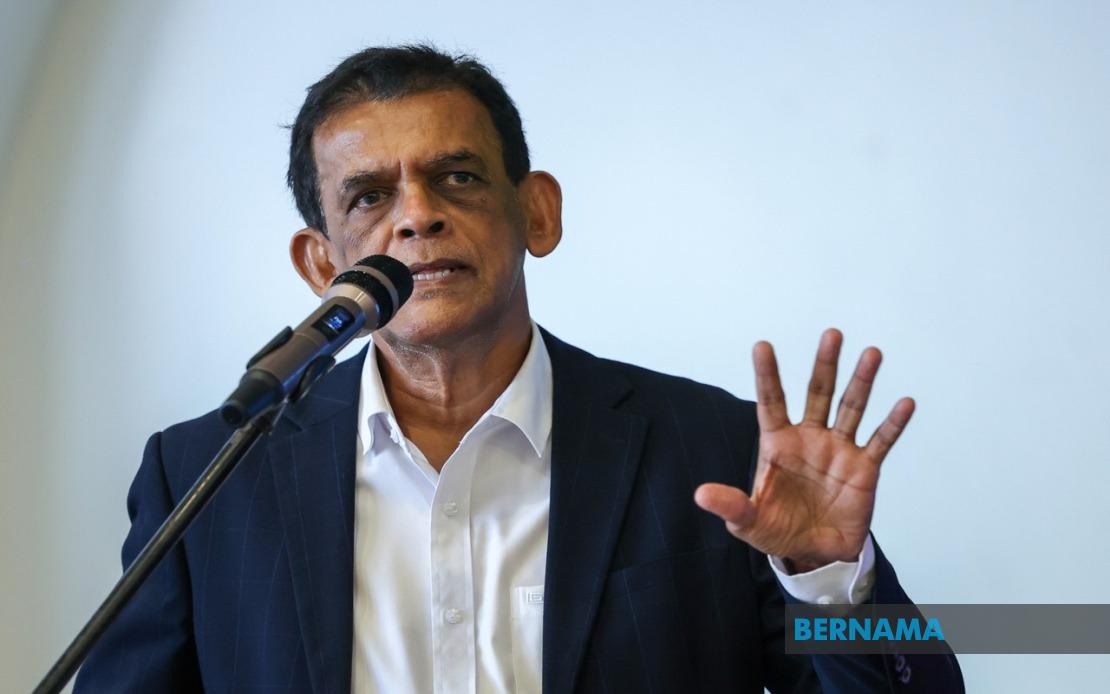
The Malaysian Artistes Association (Karyawan) is escalating its campaign to fundamentally restructure how Malaysia collects and distributes music royalties, proposing that the government assume direct management of a system that currently generates approximately RM200 million annually. Datuk Freddie Fernandez, the association's president, announced the initiative during the organisation's annual general meeting, presenting it as one of several resolutions designed to overhaul an industry framework that has generated persistent complaints among musicians and rights holders.
The proposal draws inspiration from Indonesia's approach, where a government-backed National Collective Management Institution manages the centralised collection of public performance royalties. Indonesia previously grappled with comparable difficulties before implementing this structural reform. Karyawan's proposal suggests that Malaysia could benefit from similar intervention, particularly given that the current fragmented system involving multiple collecting bodies has created inefficiencies and disputes that continue to undermine artist compensation.
Central to Karyawan's vision is the establishment of a government-supervised digital platform that would consolidate music rights registration, usage tracking, royalty calculations, and distribution within a single, auditable framework. This system would function as a national music rights repository, recording every musical work, sound recording, ownership structure, licensing agreement, usage report, collection transaction, and distribution payment. The transparency afforded by such comprehensive digital recording would fundamentally alter how the industry operates, moving away from the opaque processes that have characterised Malaysia's royalty management landscape.
The potential benefits of centralisation extend beyond transparency alone. An integrated platform would eliminate redundant administrative layers that currently inflate operational costs and fragment the royalty collection process. By automating royalty calculations and distributions based on verified ownership data and genuine usage patterns, the system could ensure that every instance of a song's use is properly tracked and compensated. This automation would significantly reduce processing delays and administrative errors that currently plague independent artists and smaller rights holders.
Fernandez emphasised that the current system's deficiencies have manifested in numerous documented cases of artists not receiving fair compensation for their work. The situation became starkly visible following the death of legendary Malaysian musician Sudirman Arshad, whose family only recently collected RM367,000 in accumulated royalties that should have been distributed over many years. This case exemplifies broader patterns in which both record label payments and streaming service distributions fail to reach artists equitably. Since Sudirman's case gained public attention, numerous Karyawan members have reported similar experiences, indicating that unfair royalty practices extend across the industry.
The association is also highlighting concerns about the existing system's vulnerability to emerging technological challenges, particularly the proliferation of artificially generated music. Without comprehensive government oversight and regulation, the expansion of AI-generated content could further complicate royalty distribution calculations and potentially undermine compensation for human creators. A centralised, government-managed system would provide the regulatory infrastructure necessary to address these emerging issues before they become entrenched problems.
Karyawan's proposal aligns strategically with the government's recent Copyright (Collective Management Organisation) Guidelines 2025, which emphasise enhanced governance, improved record-keeping, and strengthened accountability mechanisms in royalty management. This alignment suggests that the association has calibrated its recommendations to complement existing policy frameworks rather than contradict them. The timing of the proposal also reflects ongoing tensions between various industry stakeholders, including MyIPO, the Ministry of Domestic Trade and Cost of Living, and the three existing royalty collection bodies—Music Authors' Copyright Protection, Public Performance Malaysia, and Recording Performers Malaysia—which have engaged in legal disputes with the government over governance and accountability issues.
For Southeast Asian context, Malaysia's music industry challenges mirror difficulties experienced across the region. Many countries in Southeast Asia operate with similar fragmented royalty systems managed by multiple private or semi-private collecting organisations. The lack of standardisation and unified oversight has historically disadvantaged individual artists, particularly independent musicians without institutional representation. Indonesia's model, which Karyawan references, has increasingly become a regional benchmark for more equitable approaches, and Malaysia's consideration of similar reforms suggests potential for broader regional harmonisation.
The implications for Malaysian musicians could be substantial. A government-managed system would theoretically eliminate conflicts of interest that arise when private organisations control both collection and distribution functions. It would also provide stronger legal protection for artists' rights, as government-administered systems typically operate under stricter regulatory frameworks than private entities. Additionally, a centralised platform would simplify compliance for music users, from broadcasters to streaming services, by providing a single point of registration and licensing rather than requiring negotiations with multiple collecting bodies.
However, implementing such a system would require significant legislative changes and organisational restructuring. The government would need to establish new institutional capacity or designate existing agencies to manage the platform, likely MyIPO given its existing intellectual property mandate. Transitioning from the current multi-body system to a centralised government platform would necessitate coordinating across existing collecting organisations and managing potential resistance from entities that would lose independent operational control.
The broader context involves addressing systemic inequalities that have allowed record labels and streaming platforms to maintain advantageous positions in the value chain while individual artists receive diminishing shares. A transparent, automated royalty distribution system could rebalance these relationships by providing verifiable evidence of actual usage and rightful compensation. This shift would particularly benefit Malaysian independent artists and emerging musicians who currently lack bargaining power against larger institutional entities.
Fernandez indicated that Karyawan is actively documenting cases of unfair royalty practices among its membership to strengthen advocacy efforts. This evidential approach provides concrete support for systemic reform arguments, moving beyond theoretical discussions to tangible examples of industry dysfunction. The association's willingness to pursue formal channels while simultaneously documenting grievances suggests a comprehensive strategy to pressure government action on an issue that affects thousands of Malaysian creators.

