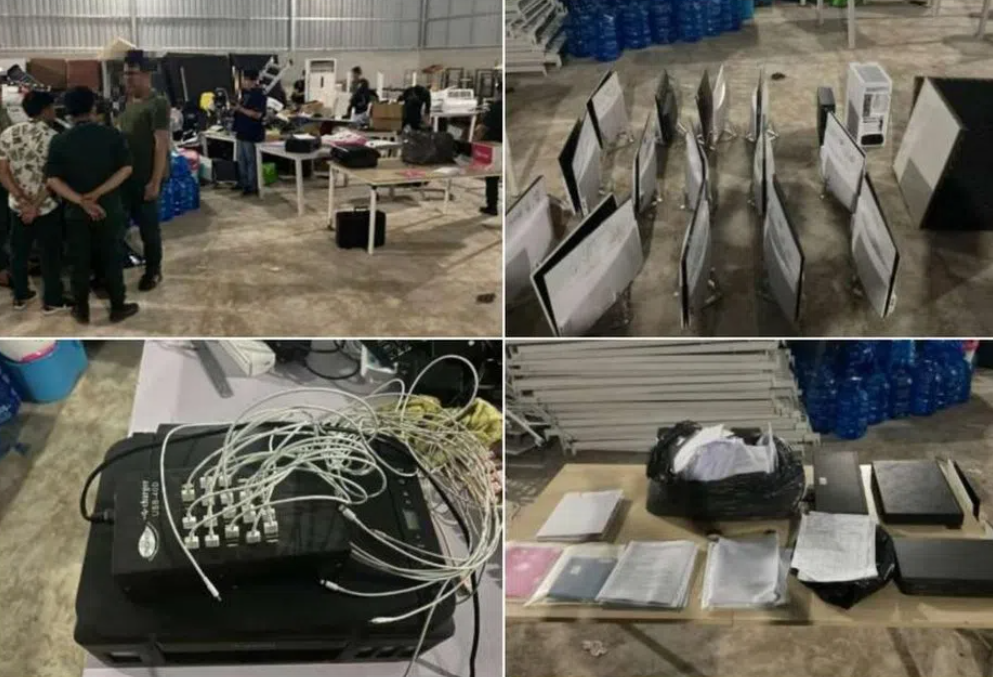
A Malaysian man has learned an expensive lesson about organised crime after spending less than 72 hours working for a sophisticated scam operation based in Cambodia before being dismissed for incompetence. Yip Chee Ming, 30, was sentenced to 16 months and two weeks' imprisonment on Friday after pleading guilty to membership in an organised crime syndicate that orchestrated one of the region's most audacious fraud campaigns targeting Singaporeans throughout 2024 and 2025.
Yip's involvement with the criminal enterprise began almost by accident when a friend named Jason approached him in October 2024 with what seemed like a lucrative job opportunity. The two men were introduced to Tang Soon Wah, identified as a leadership figure within the scam operation, who invited them to Cambodia to inspect the facilities and understand the work before committing. Intrigued by the promise of substantial monthly compensation—US$1,800 in cryptocurrency plus a one per cent commission on each successful victim—both men agreed to travel to Phnom Penh on November 21, 2024.
The scam compound itself was an impressive operation, housed within a five-storey building guarded by security personnel stationed outside its perimeter. This was no small-time fraud outfit but rather an industrial-scale criminal enterprise that had been systematically fleecing victims across the Strait. The organisation operated with clear hierarchical structure: senior leadership directed overall strategy and handled financial disbursements to participating scammers, supervisors and trainers managed the day-to-day operations, while money launderers converted stolen funds into cryptocurrency to obscure its origins. Intelligence suggests at least 78 individuals were involved in various capacities within this network.
When Yip commenced work on November 22, 2024, his assigned role involved impersonating bank officials during telephone calls to potential victims in Singapore. The syndicate provided him with detailed scripts designed to build credibility and manipulate targets into transferring funds. Trainers coached callers on techniques to sound more convincing, including instruction on adopting a Singaporean accent to bypass potential suspicions. Despite these advantages and coaching, Yip proved remarkably ineffective at the fundamental task of deceiving people over the telephone. He attempted the scam on his first day and failed to convince a single victim. Undeterred, he tried again the following day with identical results.
After just three days of employment, Tang made the decision to terminate Yip's involvement with the syndicate. Rather than processing a proper termination, Tang deleted all their Telegram messages—an apparent attempt to conceal evidence of their communications. Court documents did not clarify how Yip subsequently returned to Malaysia or what explanation, if any, was provided to him for his dismissal. What was evident was that despite receiving generous compensation offers and comprehensive training in deception techniques, Yip lacked the psychological capacity or persuasive ability necessary to victimise strangers over the telephone.
Yip's failed criminal venture proved to be merely an opening act in a much larger law enforcement response. On September 9, 2025, approximately ten months after his firing, he was arrested in Singapore during a coordinated police operation against the wider syndicate. Authorities, working in conjunction with the Cambodian National Police, arrested a total of 12 alleged members across both nations. Nine of the detainees were Singaporean citizens: Deon Tan Ke Yuan, 25; Lester Ng Jing Hai, 29; Christy Neo Wei En, 29; Heiqal Lee, 30; Tay Jun Xiang, 32; Ng Wei Kang, 33; Zachary Lee Jia An, 35; Melvin Tan Wenzheng, 35; and Lau Haoxiang, 39. The remaining three included Yip himself, Malaysian Muhamad Asyraf Anuar, 29, and Filipina De Villar Rizalyn Panganiban, 34.
The scale of the criminal operation that Yip briefly joined was staggering. Between September 3, 2024, and September 5, 2025, the syndicate orchestrated at least 528 reported scam incidents that resulted in approximately S$52.5 million in financial losses to victims. The mechanism employed was government official impersonation, a technique that exploits citizens' instinctive respect for authority and their assumption that government agencies would not defraud them. Victims were convinced they faced legal complications or financial discrepancies requiring immediate payment to resolve matters, creating artificial urgency that bypassed rational judgment.
The explosion in government impersonation scams represents a disturbing trend across the region. While Singapore reported a general decline in overall scam cases in 2025, the number of government official impersonation incidents more than doubled from 1,504 cases in 2024 to 3,363 in 2025, making it the fifth most prevalent scam category. The spike reflects cybercriminals' recognition that impersonating authorities carries psychological weight that ordinary commercial fraud schemes cannot replicate. Victims often feel too embarrassed to report incidents after realising they have transferred substantial sums to criminals posing as government representatives.
Yip's case carries implications for Malaysian citizens potentially recruited into overseas criminal ventures. His sentence of 16 months and two weeks, imposed under legislation allowing imprisonment for up to five years and fines reaching S$100,000 for organised crime group membership, demonstrates that Singapore's courts treat participation in such networks seriously regardless of an individual's actual competence or duration of involvement. Accepting recruitment into an international scam operation, even briefly and unsuccessfully, exposes individuals to significant legal consequences that can extend long after they have departed the criminal enterprise. For Malaysian authorities and community leaders, Yip's experience serves as a cautionary example of how transnational crime networks operate and the severe penalties awaiting those who become entangled in their operations.

