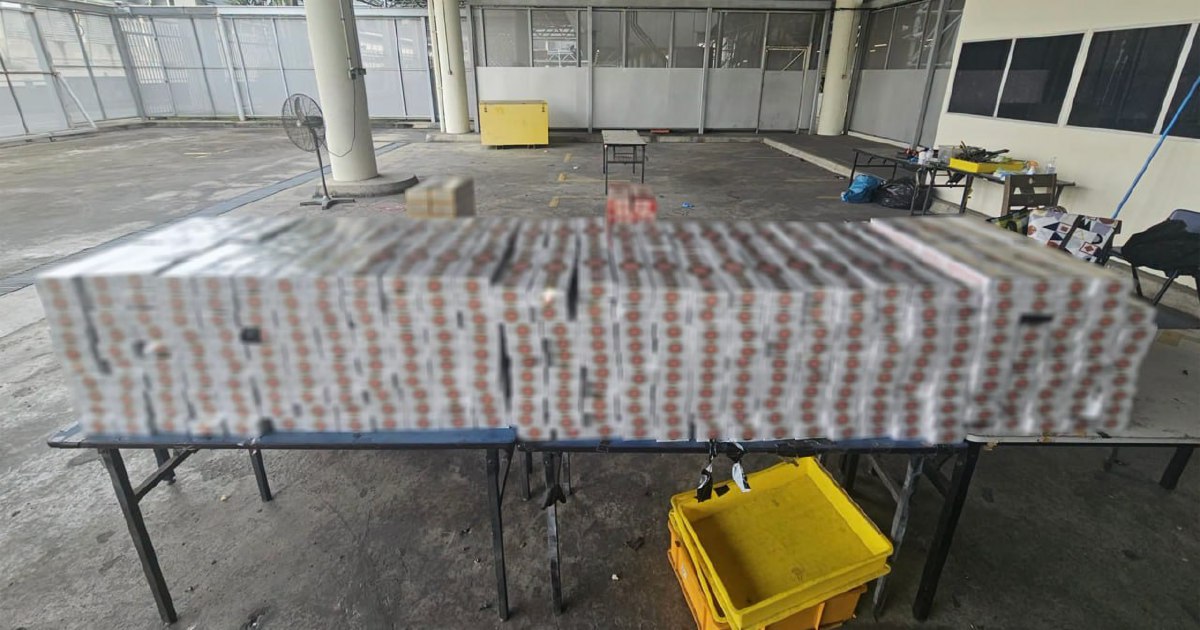
A 30-year-old Malaysian motorist has been detained by Singapore authorities following the discovery of a substantial contraband cigarette cache at the Woodlands Checkpoint, underscoring persistent smuggling pressures along one of Southeast Asia's busiest land borders. Officers conducting routine vehicle inspections uncovered more than 700 cartons alongside 100 individual packets of duty-unpaid cigarettes hidden within the suspect's car, prompting immediate arrest and launching investigations into the intended distribution network.
The seizure represents the latest in an escalating pattern of tobacco contraband interdictions at Singapore's land entry points. The sheer volume of cigarettes recovered—enough to supply an illicit retail operation for weeks—points to an organised supply chain rather than personal consumption or minor trafficking. Authorities have not disclosed details regarding the vehicle's intended destination or whether the suspect was acting as a courier for a larger smuggling syndicate, though the scale of the haul suggests coordination beyond individual enterprise.
For Malaysian readers, this incident carries particular resonance given the region's well-documented cigarette smuggling networks that often originate from or transit through Malaysian territory. The price differential between Malaysian and Singaporean cigarettes creates a substantial profit margin for traffickers willing to circumvent customs enforcement. Singapore's high taxation regime—among the world's strictest on tobacco products—generates lucrative arbitrage opportunities that criminal networks continuously exploit, drawing operatives from across the region.
The Woodlands Checkpoint remains among the world's heaviest-trafficked land borders, processing hundreds of thousands of vehicles monthly between Malaysia and Singapore. Smugglers routinely attempt passage during peak traffic hours when inspection capacity is strained, or deploy increasingly sophisticated concealment methods to evade detection. That authorities successfully uncovered this particular shipment reflects intensive intelligence and detection protocols, yet the regularity of seizures indicates that many contraband consignments slip through undetected.
Singapore's excise duties on cigarettes currently stand among the region's highest, with individual packs retailing at premium prices that encourage cross-border sourcing. The financial incentive for smuggling remains extremely robust; purchasing cigarettes in Malaysia at substantially lower tax rates and transporting them into Singapore represents potential profit margins exceeding 200 percent for organised traffickers. This economics-driven smuggling differs fundamentally from drug trafficking in its motivations, yet poses significant enforcement challenges requiring comparable resources and intelligence coordination.
The detained Malaysian faces potential prosecution under Singapore's Customs Act and related legislation governing duty evasion and smuggling. Penalties include substantial fines and custodial sentences proportionate to the value of goods involved. Prosecutions of this nature serve dual enforcement objectives: punishing individual offenders whilst deterring participation in broader smuggling networks. Customs authorities in both nations maintain active cooperation mechanisms, though practical cooperation at detection and interdiction points remains a critical enforcement frontier.
Malaysian authorities simultaneously face pressure to combat smuggling originating from their territory, particularly given Singapore's strong enforcement posture and willingness to prosecute foreign nationals. The Malaysian government has implemented various initiatives targeting organised smuggling rings, including enhanced inland checkpoint operations and intelligence sharing with regional partners. However, maintaining consistent enforcement across Malaysia's extensive coastline and internal routes presents formidable logistical and resource challenges.
For Southeast Asian trade dynamics, tobacco smuggling represents a persistent friction point complicating regulatory harmonisation efforts. While individual nations maintain sovereign rights over taxation and import policies, the resulting arbitrage opportunities create inherent smuggling incentives that no unilateral enforcement regime can completely eliminate. The incident underscores how globalised supply chains and porous borders generate opportunities for contraband networks, requiring sustained bilateral and multilateral cooperation.
Beyond immediate enforcement implications, large-scale cigarette seizures raise public health considerations. Illicit cigarettes often evade quality controls and health warnings, potentially exposing consumers to substandard products. Additionally, tax evasion through smuggling reduces government revenues that might otherwise fund healthcare and anti-smoking initiatives. Singapore's exceptionally high cigarette taxation reflects deliberate public health policy aimed at discouraging consumption, particularly among price-sensitive younger demographics; successful smuggling operations undermine these policy objectives.
The investigation into the suspect's network and intended distribution arrangements will likely reveal connections to larger smuggling operations active across Malaysia and Singapore. Authorities in both jurisdictions maintain specialised units dedicated to tobacco and related contraband trafficking, conducting extensive intelligence gathering and coordinated enforcement operations. Intelligence derived from this seizure may facilitate disruption of related networks and identification of broader trafficking patterns.
Going forward, authorities will continue deploying technological detection advances, enhanced intelligence integration, and resource intensification at critical transit points. However, fundamental economic incentives driving smuggling—rooted in deliberate taxation differentials across jurisdictions—ensure that the underlying supply-demand dynamics will persist absent major policy realignments. Both Malaysia and Singapore recognise that sustainable trafficking suppression requires not merely enforcement intensity but strategic coordination addressing the systemic factors enabling contraband flows.

