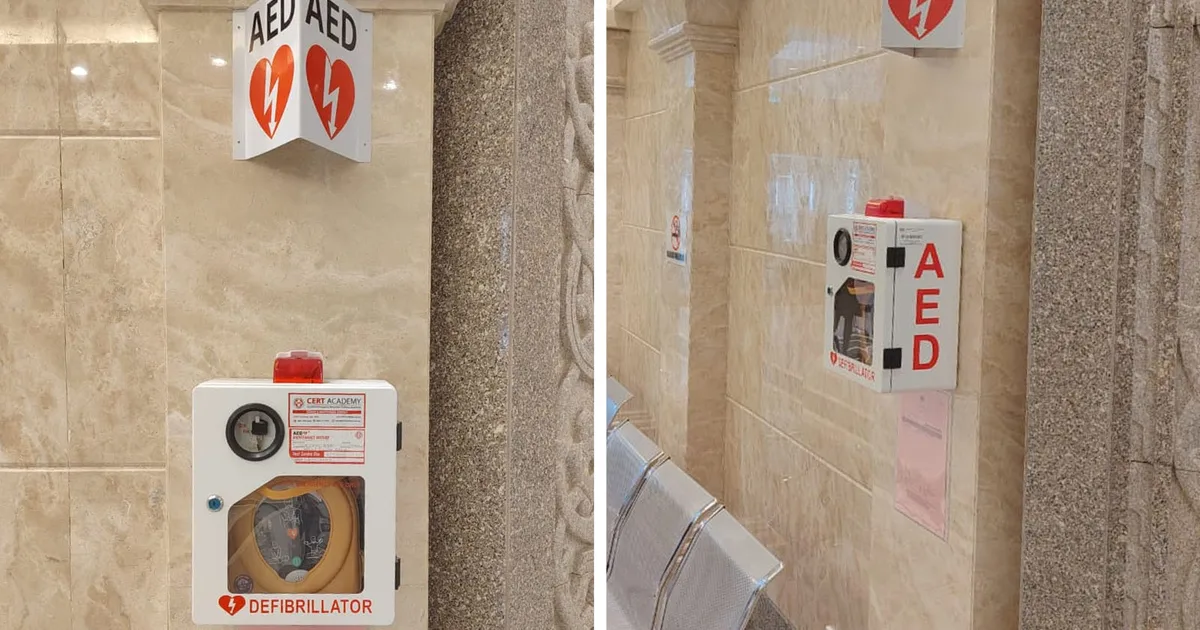
The Malaysian legal community has launched a fresh push for enhanced emergency medical infrastructure at court facilities nationwide, prompted by the death of a litigant who collapsed with cardiac arrest inside the KL High Court courtroom. The incident has galvanized lawyers into advocating for the installation of automated external defibrillators (AEDs) at all major court complexes, highlighting what they argue is a critical gap in emergency preparedness within the judicial system.
Cardiac emergencies represent a genuine public health threat in high-stress environments, and courthouses present particular challenges given their large daily footfall of judges, legal professionals, litigants, and administrative staff. The sudden nature of such medical crises means that access to life-saving equipment becomes the difference between survival and tragedy. Legal practitioners familiar with the architecture and operations of court buildings argue that the absence of strategically positioned defibrillators represents an unacceptable vulnerability, particularly in major complexes that handle thousands of cases annually and accommodate hundreds of individuals on any given day.
The KL High Court incident underscores the reality that serious health emergencies do not confine themselves to hospitals or specialized medical facilities. A litigant facing what might already be an emotionally taxing legal proceeding suddenly faced a life-threatening condition while navigating the formal atmosphere of a courtroom. The situation raises broader questions about duty of care, institutional preparedness, and whether the judiciary has adequately considered its responsibilities toward the physical wellbeing of all persons within its facilities, not merely the conduct of trials themselves.
AEDs have become standard equipment in airports, shopping malls, office buildings, and public spaces across developed nations, with substantial evidence demonstrating their effectiveness in improving survival rates from sudden cardiac arrest. The devices are relatively simple to operate, require minimal training, and can be deployed by any bystander in moments of crisis. Yet despite the clear efficacy of these machines in saving lives, their presence remains inconsistent across Malaysia's judicial infrastructure. The absence of such devices in courthouses where emergency response times might be compromised by building security protocols and procedural formalities represents a puzzles oversight.
The legal profession's advocacy reflects a broader shift toward institutional accountability and preventive health measures. Lawyers are not primarily medical professionals, yet their professional experience places them in unique position to observe systemic gaps and advocate for practical solutions. Their collective voice carries weight within government and judicial administration circles, making their call for AED installation more likely to receive serious consideration than individual complaints or suggestions from isolated quarters.
Implementing such a system would require collaboration between multiple stakeholders. The judiciary would need to coordinate with the Ministry of Health or relevant medical authorities to determine optimal placement locations within each court complex, considering factors such as accessibility, proximity to high-traffic areas, and integration with existing security systems. Training protocols would need to be established to ensure that court staff, security personnel, and administrative employees understand how to locate and deploy defibrillators in emergency situations. Regular maintenance schedules would ensure devices remain functional and battery pads remain within their usable lifespan.
The financial implications, while not insignificant, pale in comparison to the human cost of preventable deaths. Installing AEDs at all major court complexes across Malaysia would represent a modest investment relative to overall judicial budgets and equipment maintenance expenses. Cost-benefit analyses in healthcare consistently demonstrate that early intervention through defibrillation generates substantial returns in terms of lives saved and quality of life preserved. Furthermore, the liability exposure that courts might face following a death that could have been prevented by readily available equipment presents a compelling institutional incentive for action.
This push also reflects broader public expectations regarding institutional responsibility and safety standards. Contemporary society increasingly expects public buildings and gathering places to maintain basic emergency medical equipment and protocols. Courts, being formal institutions where citizens encounter state power and pursue justice, arguably carry heightened obligations to ensure the safety and wellbeing of those who enter. The judiciary's legitimacy depends partly on public confidence not merely in legal processes but in the institutional environment itself.
Regionally, Malaysia could position itself as a leader in judicial modernization and institutional healthcare preparedness. Singapore and other regional neighbors have already implemented comprehensive emergency medical provisions in public facilities. A systematic rollout of AEDs across Malaysian courts would demonstrate governmental responsiveness to legitimate concerns and commitment to both judicial functionality and public health.
The legal profession's call should prompt swift institutional review. Rather than viewing the installation of defibrillators as an extraordinary measure, court administrators and judicial policymakers should treat it as a basic infrastructure requirement consistent with contemporary standards for public safety. The incident at KL High Court provides clear justification and impetus for action that should not be delayed or subject to prolonged bureaucratic deliberation.
Moving forward, this initiative offers an opportunity to embed broader emergency medical awareness throughout Malaysia's court system. Beyond merely installing equipment, associated training programs could enhance staff preparedness for various medical emergencies, creating a culture of health and safety consciousness that benefits everyone who enters these facilities. Such measures ultimately strengthen public confidence in judicial institutions by demonstrating that courts are places where citizens' physical wellbeing, as well as legal rights, are taken seriously.

