Malaysia's paperless initiative within the civil service has delivered tangible financial and environmental results, with government officials reporting the conservation of 116,405 reams of paper and cumulative cost savings reaching RM1.99 million. The milestone was unveiled during the Digital Economy and Fourth Industrial Revolution Council meeting chaired by Prime Minister Datuk Seri Anwar Ibrahim, signalling accelerating momentum behind the nation's broader push toward administrative digitalisation.
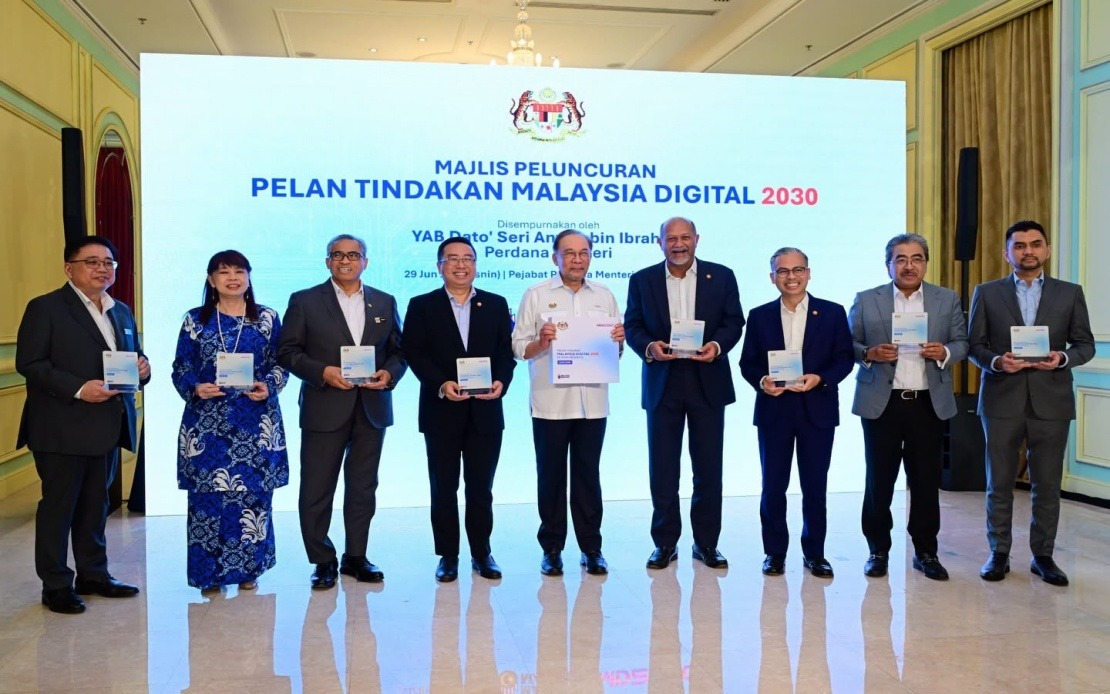
Chief Secretary to the Government Tan Sri Shamsul Azri Abu Bakar presented the findings, emphasising that the initiative represents more than budgetary efficiency. The implementation aligns with Malaysia's pivot toward becoming an AI-driven economy by 2030, a vision formalised through the Malaysia Digital 2030 framework launched by the Prime Minister during the same meeting. This strategic framework establishes digitalisation not merely as a cost-reduction mechanism but as foundational infrastructure for economic competitiveness in an increasingly technology-dependent global landscape.
The rollout of paperless processes commenced in February, when government departments began transitioning straightforward administrative transactions to digital platforms. This measured approach allowed civil service agencies to identify bottlenecks and refine workflows before scaling implementation across more complex operations. Rather than imposing blanket restrictions, the government recognised that selective digitalisation of routine procedures could yield efficiency gains whilst preserving document-based processes where citizen interaction or regulatory requirements necessitate physical records.
Shamsul Azri, representing the Government Cluster, articulated the broader strategic objectives underlying the initiative. Beyond immediate cost containment, the paperless transition facilitates knowledge management, reduces document storage requirements, and establishes digital audit trails that enhance accountability. These operational improvements carry particular significance for Southeast Asian governments managing large bureaucratic structures across geographically dispersed regions, where document transportation and physical storage impose substantial logistical burdens.
The meeting also prioritised the MyDigital ID and MyGov platforms as complementary mechanisms within the digitalisation ecosystem. MyDigital ID serves as a unified digital identity credential for citizens and residents, streamlining verification processes across government services. MyGov, meanwhile, consolidates access to government digital services under a single portal, reducing the administrative friction that citizens encounter when engaging with multiple agencies. These initiatives create network effects—their utility increases as more citizens and agencies participate—making rapid scaling essential to realising their transformative potential.
Expanding digital infrastructure into higher education institutions featured prominently in council discussions. Universities generate substantial documentation across admissions, student records, academic transcripts, and administrative functions; transitioning these workflows to digital systems multiplies the environmental and financial benefits observed in the civil service. Moreover, embedding digital-first practices within tertiary institutions cultivates technological fluency among emerging workforce cohorts, creating positive externalities that extend beyond individual institutions to influence broader labour market competitiveness.
The council endorsed development of Malaysia's digital talent pipeline through the MyMAHIR National AI Council for Industry. This initiative recognises that digitalisation requires not only technological infrastructure but human capital equipped with skills in artificial intelligence, data analytics, and digital systems management. By coordinating talent development across government, academia, and private enterprise, Malaysia seeks to address anticipated skills deficits that could otherwise constrain the nation's AI ambitions. The approach acknowledges that technology adoption falters without corresponding workforce capabilities.
From a regional perspective, Malaysia's paperless initiative and supporting digital frameworks position the nation as a potential model for other Southeast Asian governments grappling with similar administrative inefficiencies. The quantified savings and straightforward implementation approach provide demonstrable proof-of-concept that digitalisation delivers benefits beyond aspirational rhetoric. Neighbouring nations considering similar transformations can reference Malaysia's experience and draw lessons regarding phased implementation, stakeholder engagement, and integration with broader economic development strategies.
The initiative also addresses sustainability imperatives increasingly central to governance narratives across the region. The conservation of 116,405 reams represents approximately 232 million sheets of paper saved from production and eventual waste disposal. Paper manufacturing generates significant carbon emissions and water consumption; reducing paper demand cascades through supply chains, diminishing environmental footprints whilst simultaneously yielding financial returns. This alignment of environmental and economic benefits reinforces arguments for continued digitalisation investment in an era of heightened climate consciousness.
However, sustaining momentum requires ongoing attention to digital divide dimensions within Malaysia's civil service workforce. Digitalisation initiatives presume baseline technological literacy and reliable internet access—conditions not universally distributed across government agencies, particularly in rural and less-developed regions. Support systems including training programmes, technical assistance, and phased transition timelines become critical to ensuring that paperless initiatives do not inadvertently disadvantage less digitally equipped workforce segments or create service delivery disparities between technologically advanced and lagging agencies.
The Malaysia Digital 2030 framework represents multi-year commitment extending beyond current administrative cycles, implying sustained budgetary allocation and political priority. Achieving the AI Nation objective by 2030 demands consistent policy reinforcement and investment across government restructuring, educational curricula development, research funding, and infrastructure enhancement. The paperless initiative, whilst modest in financial magnitude, demonstrates institutional capacity to execute digital transformation and provides tangible evidence of government seriousness regarding the broader vision.

