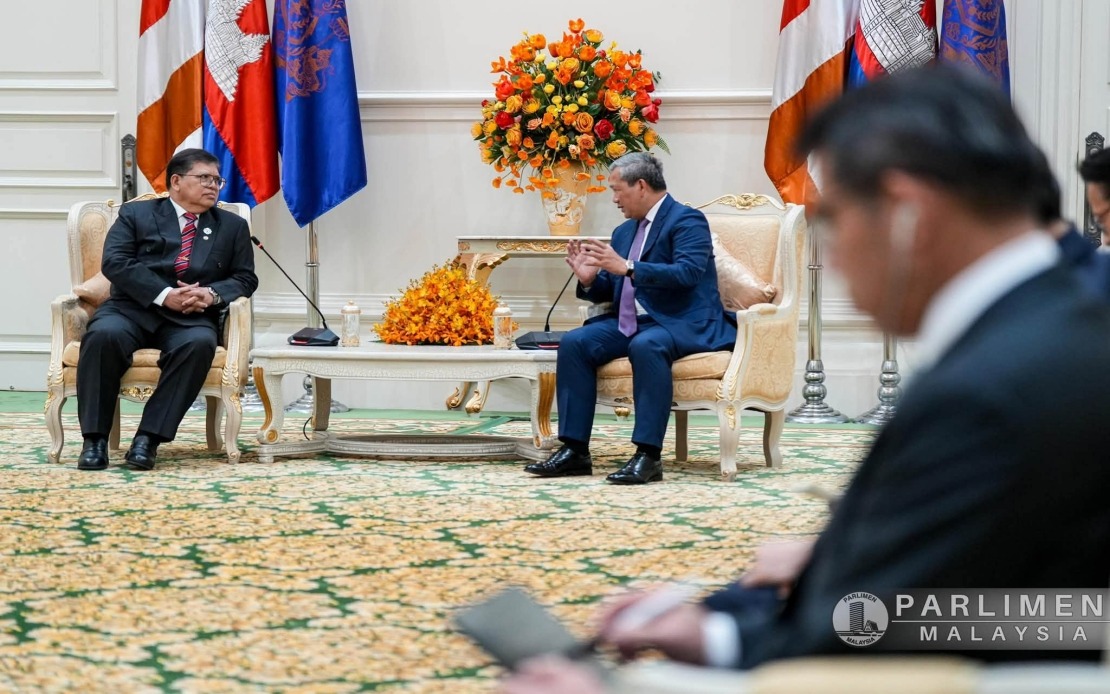
Malaysia is firmly committed to supporting peaceful resolution of the Cambodia-Thailand border tension through sustained dialogue and diplomatic channels, according to Dewan Rakyat Speaker Tan Sri Johari Abdul. Speaking during his visit to Cambodia for the Second Inter-Parliamentary Speakers' Conference, Johari emphasised that bilateral disputes between member states must not be allowed to fracture the unity that underpins the ASEAN framework. His position reflects Malaysia's consistent advocacy for constructive engagement in managing intra-regional conflicts without escalation.
The Malaysian parliamentary leader raised the Cambodia-Thailand border situation during formal discussions with Cambodian Prime Minister Hun Manet, signalling the regional attention this dispute has garnered. Johari acknowledged Cambodia's legitimate concerns regarding the ongoing border tensions and their humanitarian impact on civilian populations residing in affected zones. By explicitly validating Phnom Penh's perspective while maintaining a call for negotiated settlement, Malaysia has positioned itself as a neutral yet engaged stakeholder capable of facilitating dialogue between the two neighbours.
Johari's intervention underscores a fundamental principle that ASEAN member states have historically relied upon: the sanctity of dialogue as a mechanism for conflict prevention and management. The speaker stressed that preserving this diplomatic culture is essential to maintaining the bloc's credibility and effectiveness as a regional institution. Without such commitment, he implied, bilateral grievances risk destabilising the broader ecosystem of Southeast Asian cooperation that depends on predictable, rules-based engagement among member states.
Malaysia's role as an ASEAN member with substantial diplomatic capital positions it uniquely to encourage all parties toward negotiation tables. Johari reiterated Kuala Lumpur's readiness to support multilateral efforts aimed at de-escalation, though he stopped short of announcing any specific mediation initiatives. This measured approach reflects Malaysia's preference for working through established ASEAN mechanisms rather than pursuing high-profile bilateral diplomacy that might be perceived as taking sides in contentious disputes.
The border issue represents a longstanding source of tension between Cambodia and Thailand, with periodic flare-ups threatening wider regional security. For Malaysian policymakers, the concern extends beyond mere neighbourly interest; sustained conflict in this zone could undermine the economic integration and people-to-people connectivity that drive broader Southeast Asian development. A destabilised Cambodia-Thailand border affects supply chains, investment flows, and security cooperation across the region.
Beyond the immediate border dispute, Johari and Hun Manet used their meeting to explore avenues for deepening Malaysia-Cambodia bilateral relations. Parliamentary cooperation emerged as a priority, with both sides recognising the potential for legislators to facilitate people-to-people engagement and legislative harmonisation on matters of mutual concern. Such inter-parliamentary mechanisms often prove more nimble than formal diplomatic channels in building understanding across political systems.
Economic development and human capital advancement featured prominently in bilateral discussions, reflecting both nations' aspirations to lift living standards and create employment opportunities. Johari highlighted Malaysia's appreciation for Cambodia's supportive stance toward Malaysian investments and business operations within its territory. This commercial dimension adds practical weight to diplomatic overtures; sustained economic partnerships create stakeholder constituencies on both sides invested in maintaining stable relations.
Youth exchange programmes and educational cooperation emerged as particularly significant areas for expansion. Johari advocated for enhanced opportunities allowing young Cambodians and Malaysians to interact through structured programmes spanning academic, economic, and cultural spheres. Such initiatives generate long-term relationship resilience by cultivating networks of mutual understanding among rising generations who will inherit regional responsibilities.
Technical and Vocational Education and Training cooperation represents a concrete opportunity for Malaysia and Cambodia to address common development challenges. Proposed exchanges of expertise, institutional partnerships, and industry collaboration in the vocational sector can yield tangible economic benefits while strengthening personal and institutional ties. TVET cooperation often proves particularly effective because it addresses practical skills deficits that constrain both employment opportunities and industrial competitiveness.
The Second Inter-Parliamentary Speakers' Conference itself provided the diplomatic platform for these exchanges, demonstrating ASEAN's commitment to maintaining multiple channels for dialogue even amid bilateral tensions. By convening parliamentary leaders from across the region, such forums reinforce the principle that differences must be negotiated rather than militarised. For Malaysia, participating actively in these gatherings affirms its investment in institutionalised conflict prevention mechanisms.
Johari's statements reflect a Malaysian foreign policy philosophy that prioritises incremental relationship-building over confrontational posturing. By simultaneously validating Cambodia's security concerns while advocating for diplomatic solutions, Kuala Lumpur attempts to maintain credibility with both parties. This balanced approach, characteristic of Malaysian diplomacy since the ASEAN founding, seeks to preserve regional cohesion even when member states experience fundamental disagreements.
Looking forward, Malaysia's diplomatic intervention on the Cambodia-Thailand issue signals that Southeast Asian stability remains a paramount concern for Kuala Lumpur's leadership. The emphasis on dialogue, regional unity, and shared prosperity articulates a vision where bilateral disputes are managed within multilateral frameworks rather than through zero-sum competition. As ASEAN navigates an increasingly complex geopolitical environment characterised by great power competition and transnational challenges, the bloc's capacity to resolve internal disputes peacefully becomes ever more critical to maintaining its relevance and coherence.

